
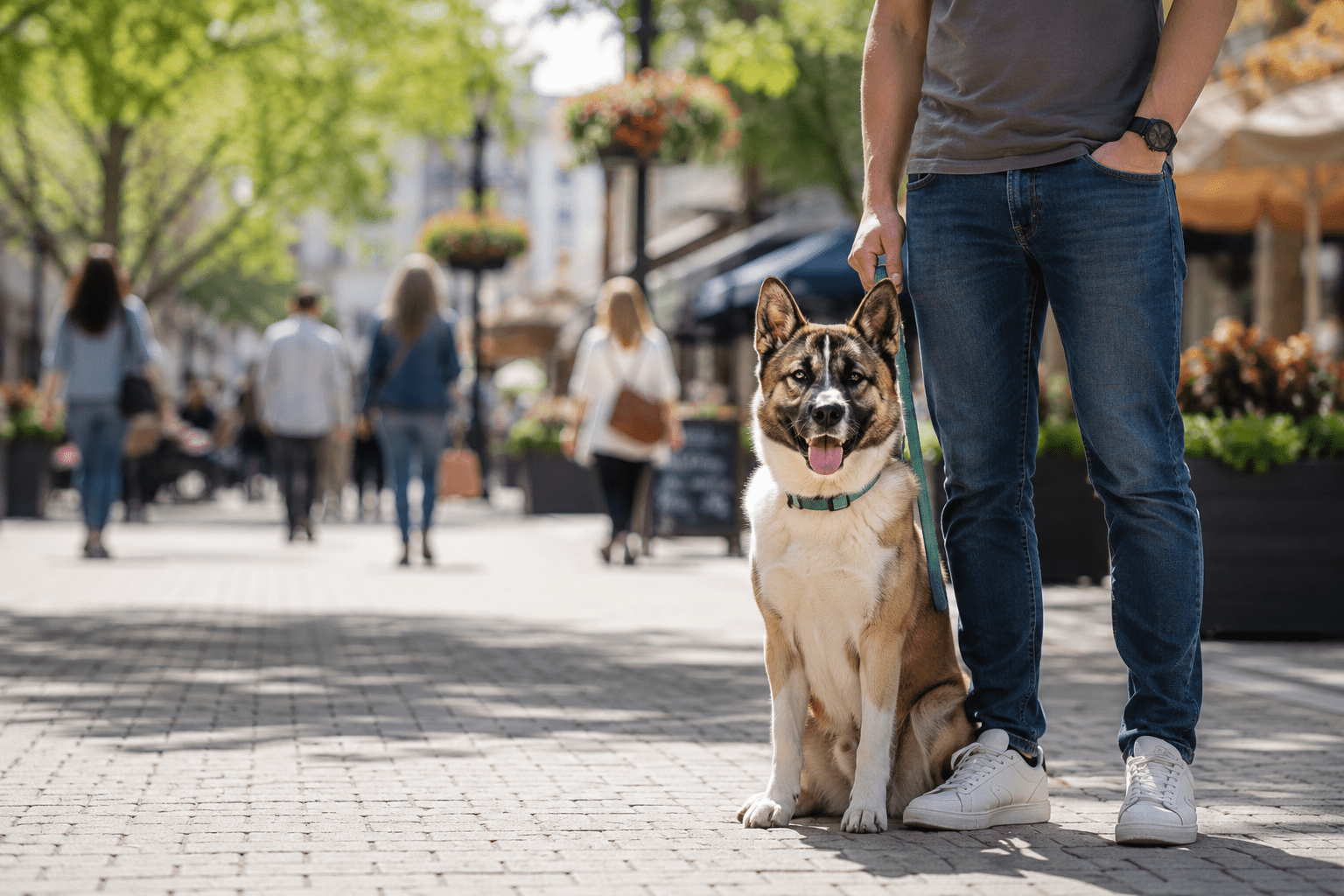
A puppy chewing furniture, pulling on the leash, jumping on everyone, or ignoring commands can be easy to excuse with one sentence: “He’s still a puppy.”
Age does matter, but puppies are also learning from their daily experiences.
Behaviors that seem funny or harmless at ten pounds may become much harder to manage when the dog is fully grown. For Los Angeles puppy owners, early training can help create clearer routines around walks, greetings, house behavior, and basic commands.
Topanga Pet Resort’s puppy training program focuses on foundational commands, controlled socialization, leash behavior, house training, and building positive habits.
Here are seven common puppy training mistakes and practical ways owners can approach them differently.
1. Waiting for a Behavior Problem Before Starting Training
Many owners think training should begin when a puppy starts “misbehaving.”
By that point, the puppy may already have practiced the unwanted behavior dozens or hundreds of times.
Consider jumping.
A small puppy jumps on people and receives attention. The puppy learns that jumping creates interaction. Months later, the same dog is larger, but the established behavior remains.
Early puppy training can focus on basic commands, leash skills, controlled socialization, house training, and appropriate household habits.
The purpose is not to demand perfect behavior from a young dog. It is to begin creating understandable routines.

2. Using Different Rules From One Day to the Next
Inconsistency is confusing for puppies.
Imagine a puppy is allowed to jump on the couch Monday, corrected for doing it Tuesday, and invited back onto the couch Wednesday.
From the puppy’s perspective, the rule is unclear.
The same problem happens with jumping, begging, leash pulling, and door behavior.
Families should discuss basic expectations together.
Questions to answer include:
- Is the puppy allowed on furniture?
- How should the puppy greet visitors?
- What command will everyone use for recall?
- Is pulling on the leash allowed?
- What should happen before the puppy goes through a door?
Consistency makes it easier for a puppy to understand what behavior is expected.
For households that want training connected to family routines, Topanga Pet Resort also offers a Family Dog Training Program.
3. Repeating Commands Without Teaching the Response
“Come. Come. Come. COME!”
Many dog owners recognize this pattern.
Repeating a command louder does not necessarily make its meaning clearer.
If a puppy repeatedly hears a word without responding, the word can become background noise. The owner is saying “come,” but the puppy is still focused on a toy, smell, or another distraction.
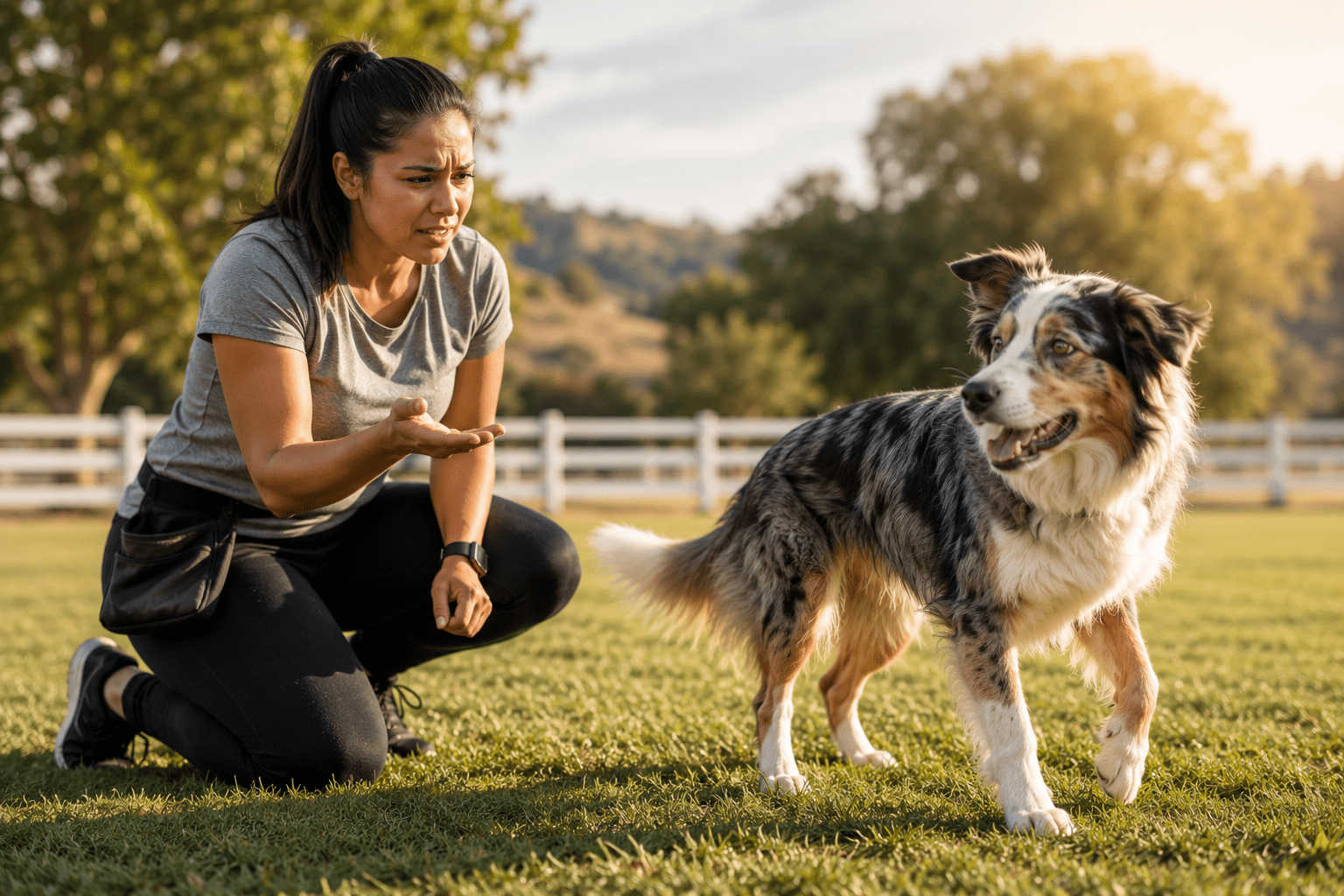
Basic commands need structured practice.
Topanga Pet Resort’s puppy program includes training around commands such as sit, come, heel, and stay.
Practice should match the puppy’s current ability.
A puppy that is learning “come” in a quiet environment should not immediately be expected to perform the command perfectly around intense distractions.
Build skills progressively.
4. Treating Socialization as Unlimited Dog-to-Dog Play
Socialization is one of the most misunderstood parts of puppy training.
Some owners assume a puppy should meet as many dogs and people as possible.
More interaction is not automatically better.
A puppy that becomes excessively excited every time another dog appears may start pulling, jumping, or ignoring the owner. A puppy that feels overwhelmed may develop a very different response.
Topanga Pet Resort’s puppy training includes controlled socialization and exercises designed to help puppies remain calmer around other dogs and people.
Owners should observe their puppy during interactions.
Is the puppy able to settle?
Does excitement continue escalating?
Is the puppy comfortable?
Can the puppy redirect attention back to the owner?
Social development should help a puppy navigate environments more appropriately, not simply create constant excitement around every dog.
5. Ignoring Leash Pulling Because the Puppy Is Small
A small puppy pulling on a leash may not seem like a problem.
The owner can easily hold the leash, so the behavior is tolerated.
Then the puppy grows.
The pulling becomes stronger, walks become frustrating, and the owner starts trying to correct a behavior the dog has practiced for months.
Leash manners are a practical foundational skill.
Puppy training can introduce calmer leash behavior and help the dog learn to pay attention during walks.
As a puppy develops, basic obedience training can further address pulling and distraction management.
For Los Angeles dog owners, better leash communication can make daily walks and outings easier to manage.
6. Correcting Destructive Behavior Without Addressing the Routine
A puppy chews a shoe. The owner removes it.
The puppy chews a table leg. The owner says “no.”
The puppy finds something else.
Simply reacting to each incident can become exhausting.
Destructive behavior should be considered in the context of the puppy’s routine, environment, and habits.
Owners should think about when the behavior occurs.
Does the puppy chew inappropriate items when left unsupervised?
Does it happen during high-energy periods?
Does the puppy repeatedly access the same objects?
Is the household expecting the puppy to understand boundaries that have never been consistently taught?
Topanga Pet Resort’s puppy training program includes house training, prevention of destructive behavior, and work on positive household habits.
Training can help owners move from constantly reacting to problems toward creating clearer expectations.
7. Expecting Training to Work Without Practice at Home
A puppy can make progress with a trainer and still need consistency from the family.
Training is not a switch that permanently changes every behavior.
Owners need to understand how to maintain the skills being taught.
If a puppy learns to walk more calmly but is allowed to pull during every weekend walk, the expectations become inconsistent.
If training addresses jumping but guests encourage the puppy to jump for attention, the behavior continues to be reinforced.
Everyone does not need to become a dog trainer.
However, household members should understand the core commands, boundaries, and routines being used.
Topanga Pet Resort offers different dog training programs based on age, temperament, and behavioral needs. Training options include puppy foundations, basic obedience, advanced obedience, behavior modification, and specialty programs.
How Do You Know If Your Puppy Needs Professional Training?
Puppy owners often wonder if a behavior is “bad enough” to contact a trainer.
You do not necessarily need to wait for a serious problem.
Consider training if you are struggling with:
- House training
- Leash pulling
- Excessive jumping
- Poor response to basic commands
- Destructive chewing
- Difficulty establishing household boundaries
- Excessive excitement around dogs or people
These are among the types of challenges addressed by Topanga Pet Resort’s puppy training program.
If behavior appears more complex or intense, a different type of program may be appropriate. Behavioral modification training or aggressive dog training may be more relevant for certain behavioral concerns.
The key is to accurately describe what your puppy is doing.
Start With Specific Training Goals
“My puppy needs to behave better” is understandable, but it is a broad training goal.
Try identifying specific situations instead.
For example:
“My puppy pulls toward every dog during walks.”
“My puppy jumps on guests when they enter.”
“My puppy ignores recall outside.”
“My puppy chews furniture when left alone.”
“My puppy is not house-trained.”
Specific examples help make the training conversation more practical.
Topanga Pet Resort recommends beginning with a First Training Session, a one-hour evaluation that helps assess the dog and determine an appropriate program.
Owners can also explore specialty dog training when their goals go beyond foundational obedience.
If you are unsure where to begin, discuss the behaviors you see at home and during walks rather than trying to choose a program based only on its name.
Frequently Asked Questions
When should I start puppy training?
Puppy training can begin with age-appropriate foundational skills and routines. Early work may focus on house behavior, basic commands, leash skills, and controlled socialization.
Can puppy training help with jumping?
Yes. Topanga Pet Resort’s puppy program addresses excessive excitement and jumping around people as part of controlled socialization and behavior training.
What commands should a puppy learn first?
Topanga Pet Resort’s puppy training includes foundational commands such as sit, come, heel, and stay. The specific training plan should reflect the puppy’s age and needs.
What if my puppy has more serious behavior problems?
More complex behavioral challenges may require an evaluation and a different training approach. Topanga Pet Resort offers behavior modification and aggressive dog training options in addition to puppy and obedience programs.
If you’re looking for puppy training in Los Angeles, explore Topanga Pet Resort in Topanga. Discuss your puppy’s current habits, daily routine, and training goals to find an appropriate next step.
Conclusion
Puppy training is easier to approach when owners stop thinking only in terms of “good” and “bad” behavior.
A puppy is learning patterns.
The way people respond to jumping, pulling, chewing, greetings, and basic commands can shape those patterns over time. Clear rules, appropriate socialization, progressive training, and consistent practice can give puppies a stronger behavioral foundation.
For Los Angeles puppy owners, starting training early can also help make everyday routines more manageable as the dog grows.
The goal is not a perfectly behaved puppy overnight. It is to identify the skills your puppy needs and build them through a structured, age-appropriate approach.





