
The canine good citizen test is a 10-item, on-leash exam from the American Kennel Club that checks whether your dog can handle everyday life politely. Dogs of any age and breed can take it, and its skills, like loose-leash walking and coming when called, help at home too. At Topanga Pet Resort, our trainers work on these skills on 6.5 acres of Topanga Canyon, where dogs practice in realistic settings. Here are the ten skills, how test day works, and how to prepare your dog.
Key Takeaways
- The canine good citizen test is the American Kennel Club’s 10-item check of everyday manners, and a dog must pass all ten.
- Skills include loose-leash walking, sit and down stays, coming when called, and staying calm around strangers, dogs, and noises.
- There’s no age limit and mixed breeds are welcome, but only an AKC-approved evaluator can give the test.
- Practice each skill around real distractions, not just at home.
- Passing the CGC doesn’t make a dog a service dog.
On This Page
- The 10 Canine Good Citizen Test Skills
- How the CGC Test Works and Who Can Take It
- Canine Good Citizen Training: How to Prepare Your Dog
- Frequently Asked Questions
- Your Next Step Toward the CGC Test
The 10 Canine Good Citizen Test Skills
Your dog stays on a leash, except for items six and seven, which use a 20-foot line. The AKC’s published test items each mirror a situation from a normal walk.
- Accepting a friendly stranger: the evaluator greets you and ignores your dog, which shouldn’t show shyness or resentment.
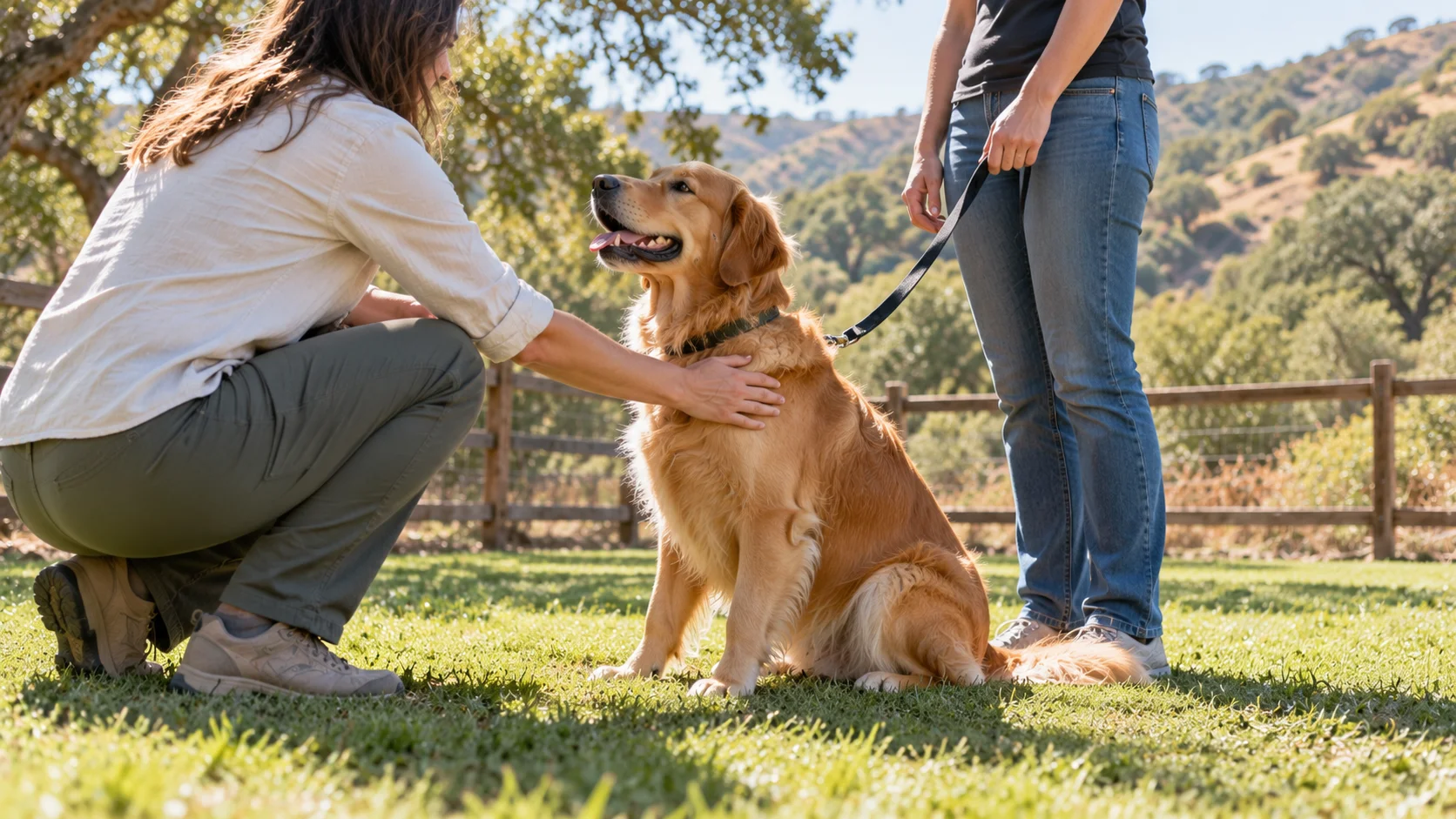
- Sitting politely for petting: the evaluator pets your dog’s head and body.
- Appearance and grooming: the evaluator brushes your dog, checks its ears, and lifts each front foot.
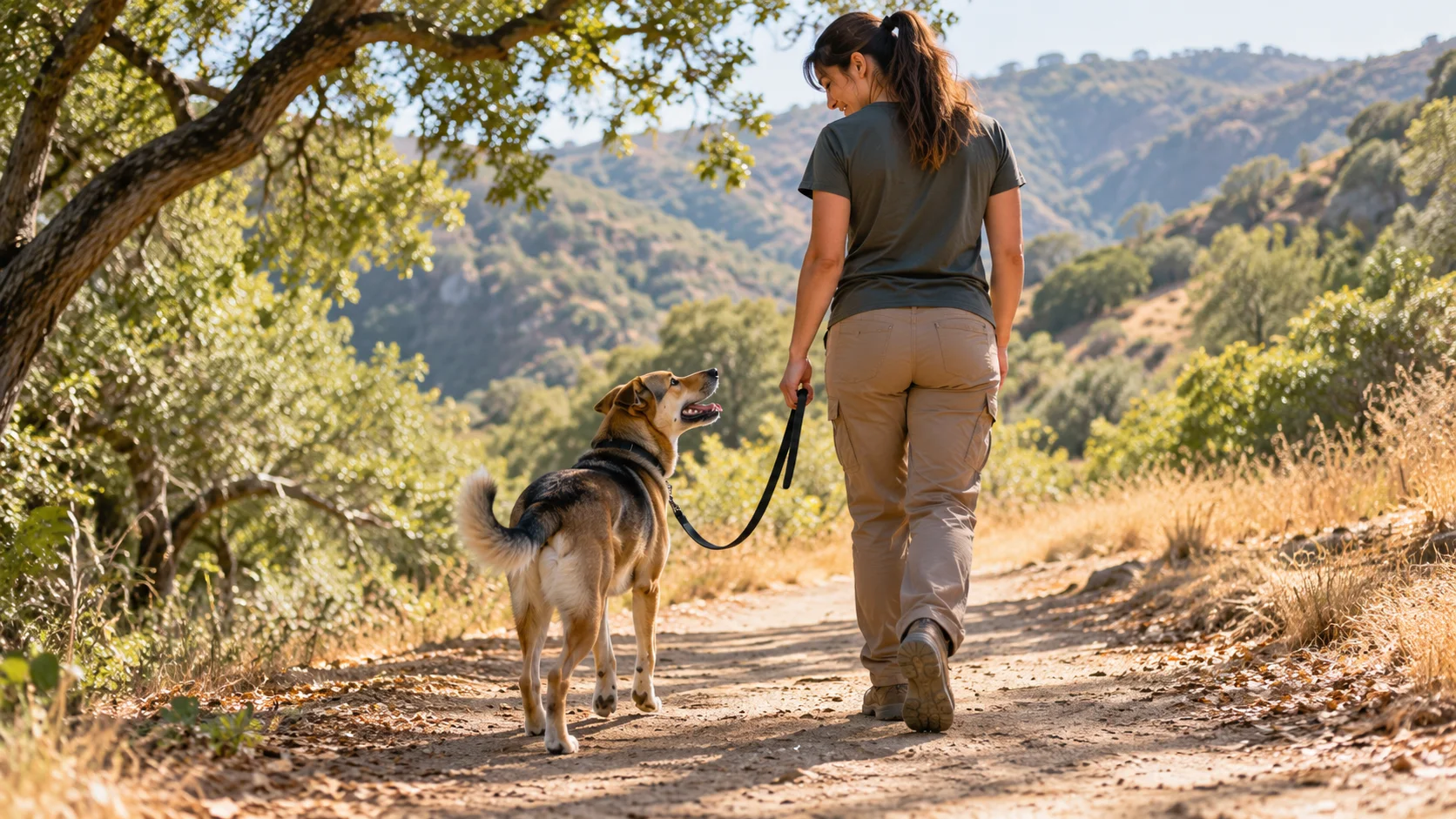
- Out for a walk: you walk a course with right, left, and about turns and stops, keeping the leash loose.
- Walking through a crowd: your dog passes at least three people without jumping or straining.
- Sit and down on cue, then stay: your dog holds its place while you walk the length of a 20-foot line and return.
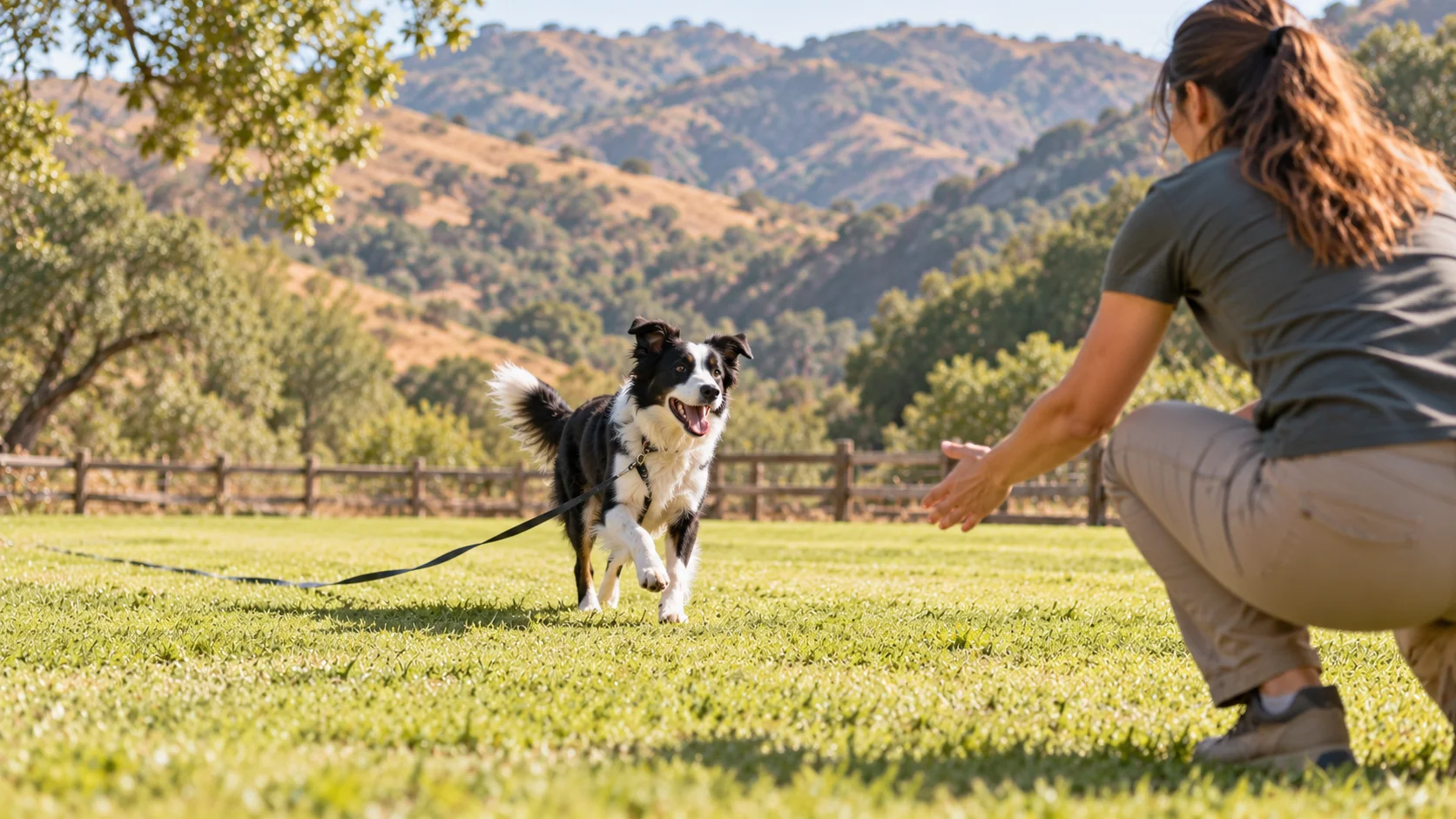
- Coming when called: you call your dog from 10 feet away.
- Reaction to another dog: two handlers meet and walk on while the dogs show no more than casual interest.
- Reaction to distraction: a dropped chair or passing crate dolly shouldn’t make your dog panic, bark, or show aggression.
- Supervised separation: you step out of sight for three minutes, and your dog shouldn’t continually bark, whine, or pace.
Count how many your dog can already do at a park, not just in your kitchen, and you’ll know where to start.
How the CGC Test Works and Who Can Take It
After training in a class, with a private trainer, or at home, you take the test with an AKC-approved evaluator. According to the AKC, it generally lasts under ten minutes and usually happens in a controlled space, like a training school’s ring.
- There’s no age limit, and both purebred and mixed-breed dogs are welcome.
- Training and testing are separate steps, so book your evaluator early.
- The AKC lists approved evaluators in an online directory.
Canine Good Citizen Training: How to Prepare Your Dog
Build the skills in layers. Start with cues your dog knows in a quiet room, then repeat them in parking lots, on sidewalks, and around other people, because the test checks reliability. Here’s where our programs line up with the ten items:
- Items 4, 6, and 7 (leash walking, stays, recall): basic obedience training for adult dogs covers sit, stay, come, down, heel, and calm leash walking.
- Items 1, 2, 5, and 9 (strangers, petting, crowds, distractions): family dog training practices polite greetings with guests and calm behavior in crowded or noisy places.
- Puppies: puppy training from 8 weeks covers housebreaking, bite inhibition, and early socialization.
AVSAB’s puppy socialization position statement says classes can begin as early as 7 to 8 weeks, once a puppy has had its first vaccines. Our trainers each have a different focus: Josh works on leash manners and recall, Beka on family dog obedience and puppies. Meet the Topanga trainers and we’ll match your dog to the right one.
If your dog lunges at other dogs or can’t settle when you leave, say so up front. Items eight through ten test exactly that, and we’ll tell you honestly whether it needs light practice or a longer project.
Frequently Asked Questions
How much does the canine good citizen test cost?
There’s no single price. The evaluator or club that gives the test sets its own fee, and the AKC may charge separately for an official title. Ask what the fee covers before you book, because the test is sometimes part of a class series.
How long does it take to train a dog for the CGC test?
It depends on what your dog already knows, how consistently you practice, and your dog’s temperament. A dog that already walks politely and holds a stay may only need work around distractions, while a young dog starts with the basics. At Topanga Pet Resort, a trainer evaluates your dog first, so you get an honest read.
How do you get AKC Canine Good Citizen certified?
Teach your dog the ten test items, then pass all ten with an AKC-approved evaluator to earn the certificate. The official AKC title is optional and requires your dog to be registered or enrolled with the AKC, which includes mixed breeds through the Canine Partners program.
Is the Canine Good Citizen certificate the same as service dog certification?
No. The CGC is a manners test, and passing it doesn’t make a dog a service dog. Under the Department of Justice’s ADA guidance, a service animal is a dog individually trained to perform tasks for a person with a disability, and service dogs don’t need certification.
Your Next Step Toward the CGC Test
Decide whether you want the certificate or simply a checklist for better manners. Either way, the first step is finding out which of the ten items your dog can’t do yet. Call (888) 818-1622 or talk to our team about your dog, and we’ll tell you where to start.





