
- Home
- Dog Counter Surfing
Dog Destructive Chewing When Left Alone Causes and Fixes
If you come home to a damaged couch, chewed furniture, shredded bedding, or a collection of destroyed shoes, you’re probably wondering why your dog keeps doing it.
Dog destructive chewing is frustrating and expensive, especially when your dog seems perfectly well behaved while you’re home and turns into a demolition crew the moment you leave.
But destructive chewing isn’t usually your dog being “bad” or trying to get revenge.
The important question is why your dog is chewing.
A puppy may be exploring the world with their mouth. An under-stimulated adult dog may be looking for something to do. A dog with separation anxiety may chew because being alone triggers intense distress. Each situation requires a different response.
At Topanga Pet Resort, our trainers look at the behavior behind the chewing rather than simply trying to stop the visible destruction. With individualized training, structured activity, and appropriate enrichment, we help dogs develop better ways to spend their energy and cope with everyday situations.
119+
Yelp Reviews
132+
Google Reviews
6
Certified Trainers
119+
Yelp reviews
132+
Google Reviews
6
Certified Trainers

119+ reviews

132+ reviews
6
Certified Trainers
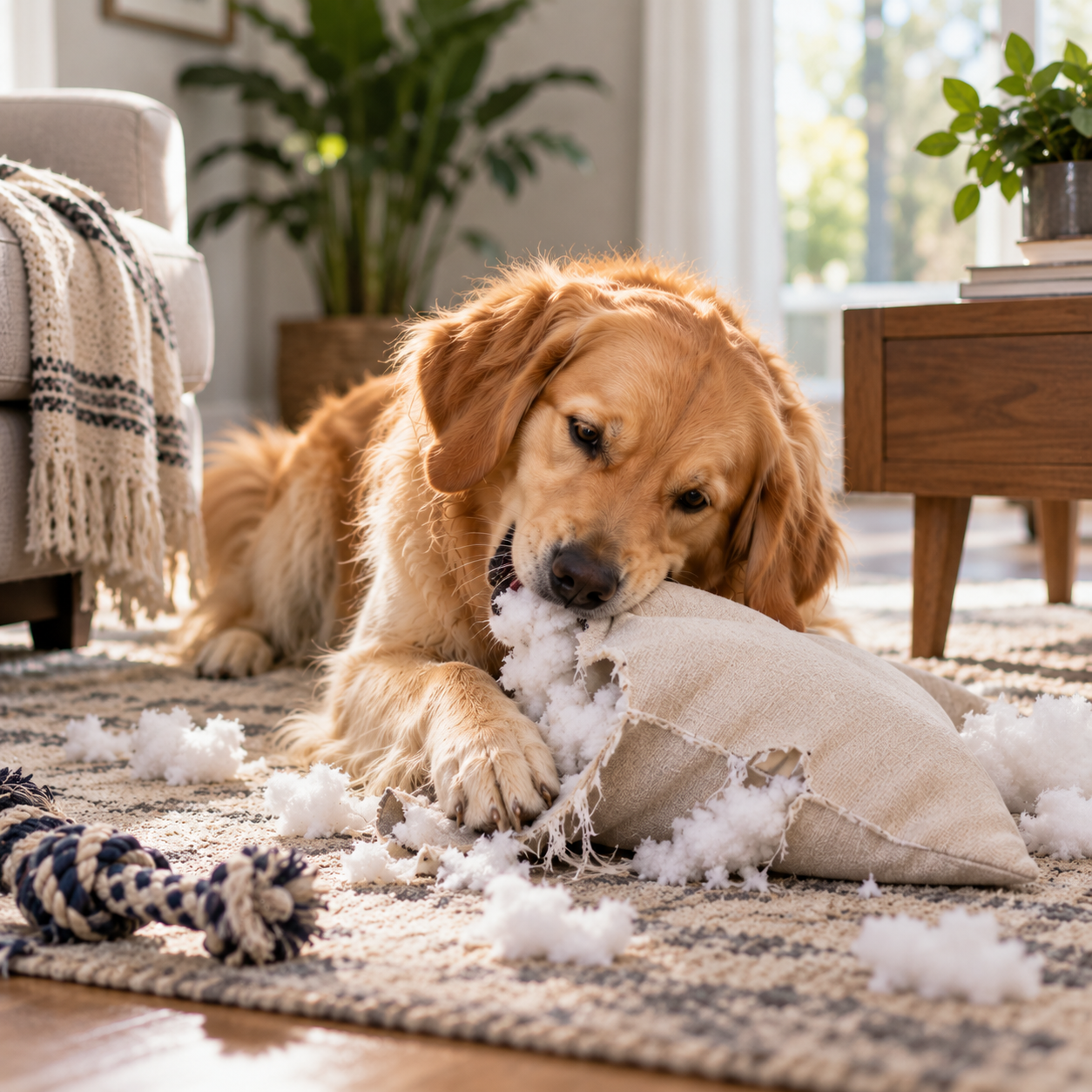
What Destructive Chewing Actually Signals
Chewing is normal canine behavior. The problem is when your dog chooses furniture, doors, walls, shoes, or other inappropriate objects, particularly when the behavior creates a safety risk or significant damage.
Dogs chew for real reasons. Chewing helps puppies explore and ease teething discomfort, gives adult dogs a way to use their jaws, and can help some dogs settle during stressful moments. The goal is never to stop your dog from chewing altogether. It is to understand why the chewing has moved onto things it shouldn’t.
How to Tell Which Cause Applies to Your Dog
Before buying another chew toy or putting your dog in a crate for longer periods, look at when, where, and how the chewing happens.
Observational Clues
Ask yourself:
Does your dog chew while you're home?
Does destruction happen only after you leave?
How soon after leaving does it begin?
What objects does your dog target?
Are doors, windows, or exit points being damaged?
Does your dog bark, howl, pace, or eliminate when alone?
Does your dog settle after receiving exercise or enrichment?
Is the behavior worse after a change in routine?
Does your dog destroy things even after substantial physical activity?
The answers can point toward very different causes.
For example, a dog that quietly chews a toy throughout the afternoon may simply need better enrichment.
A dog that scratches at doors, destroys window frames, vocalizes, and appears frantic shortly after the owner leaves may need evaluation for separation anxiety rather than simply “more exercise.”
Anxiety, Boredom, or Teething?
There are several common reasons a dog may develop a chewing problem. Puppies and young dogs often chew because they’re exploring their environment and going through normal developmental stages. Bored dogs may chew because they have excess physical or mental energy with nowhere appropriate to put it. Anxious dogs may chew as a coping behavior. If destruction happens specifically when you’re gone, separation-related distress should be considered. Dogs with strong chewing needs may simply need better outlets, especially if their daily routine doesn’t provide enough appropriate chewing and enrichment opportunities. The behavior itself doesn’t tell you which explanation is correct. The pattern does.
Is Destructive Chewing Always Separation Anxiety?
No.
This is one of the most important distinctions to make.
Destructive Chewing vs. Separation-Related Behavior
A dog that chews furniture only when left alone may have separation-related distress, but alone-time chewing doesn’t automatically prove separation anxiety.
Look for other signs such as:
- persistent barking or howling
- pacing
- frantic attempts to escape
- scratching at doors
- destruction concentrated around exits
- excessive drooling
- inability to settle
- accidents that occur specifically during absences
If these behaviors occur together, professional evaluation can help determine whether anxiety is part of the picture.
Treating every chewing problem as separation anxiety can lead you toward the wrong solution.
Why Crating Alone Does Not Solve This
A crate can be an excellent management tool when a dog has been properly introduced to it and genuinely feels comfortable there.
But a crate isn’t a behavior modification program.
Management vs. Solution
If your dog destroys the couch while you’re away, putting them in a crate may prevent couch destruction.
That’s useful.
But if the underlying issue is boredom, anxiety, lack of training, or insufficient enrichment, the underlying problem still exists.
And if your dog panics when confined, crating can create another safety concern.
The goal should be to determine why the behavior is happening and then use management alongside appropriate training.
Enrichment That Actually Reduces Chewing
If your dog is chewing because they need more appropriate outlets, simply adding more toys isn’t always enough.
Give Your Dog a Job
Useful enrichment can include:
1. Food puzzle toys
2. Appropriately selected chew items
3. Scent-based activities
4. Food-search games
5. Short obedience sessions
6. Structured play
7. Supervised exploration
8.Training exercises that require problem solving
The best enrichment matches the individual dog.
A toy that keeps one dog occupied for 30 minutes may be completely ignored by another.
Rotate Instead of Leaving Everything Out
You don’t need to give your dog access to every toy at once.
Rotating appropriate enrichment can keep familiar items more interesting and makes it easier to see which activities actually hold your dog’s attention.
Safety matters too. Any chew or enrichment item should be appropriate for your dog’s size, chewing style, and individual risk profile, and dogs should be supervised when necessary.
Exercise Helps, But a Tired Dog Isn't the Whole Answer
Physical and Mental Needs Are Different
Exercise Helps, But a Tired Dog Isn't the Whole Answer
A dog can run for an hour and still come home looking for something to do.
Training, scent work, problem solving, appropriate chewing, social interaction, and structured rest all contribute to a balanced routine.
For some dogs, the most useful change isn’t simply adding another long walk.
It’s giving the dog a predictable daily structure with meaningful activities and opportunities to settle.
Why Daycare Can Help Some Dogs With Destructive Chewing
For dogs whose chewing is strongly connected to boredom, excess energy, or a lack of daytime structure, well-managed daycare can be part of the solution.
Daycare Is Management and Enrichment, Not a Magic Fix
A good daycare environment can provide: supervised activity social interaction where appropriate physical exercise mental stimulation structured routines opportunities to rest between activities At Topanga Pet Resort, dogs receive 5 to 6 hours of supervised playtime in spacious outdoor exercise areas, alongside professional care and individualized attention. For some dogs, having a structured day can reduce the amount of unused energy they bring home. But daycare won't automatically fix separation anxiety or every type of destructive chewing. If your dog panics specifically when you're absent, that behavior needs to be addressed directly.
What About Dogs That Chew Furniture Only When Left Alone?
This pattern deserves closer attention.
Look at the Timing
If your dog is calm while you’re home but immediately starts destroying furniture after you leave, consider recording what happens during your absence.
A camera can reveal behaviors you wouldn’t otherwise see.
You may discover that your dog:
- watches you leave
- paces around the house
- vocalizes
- checks doors or windows
- becomes increasingly distressed
- eventually begins chewing or scratching
Or you may see something completely different:
- your dog settles
- wakes up later
- becomes bored
- finds the couch
- starts chewing
Those two situations may look identical when you return to a damaged couch.
They’re not.
Why Punishing Your Dog After You Come Home Doesn't Work
Finding a destroyed piece of furniture can be infuriating.
But punishment after the fact won’t teach your dog which behavior caused your reaction.
Your Dog Doesn't Connect Delayed Punishment With the Earlier Chewing
If the destruction happened 30 minutes ago, your dog isn’t likely to understand that your anger is about the damaged furniture.
You may instead teach your dog that your return home is unpredictable or stressful.
A better approach is to prevent access to inappropriate objects, provide appropriate alternatives, identify the reason for the chewing, and reinforce desirable behavior.
When Professional Training Is Needed
Not every chewing problem requires intensive professional intervention.
But there are situations where getting help early makes sense.
Consider Professional Help If:
- your dog repeatedly destroys furniture
- chewing happens specifically when you’re away
- your dog damages doors, windows, or walls
- your dog has injured their mouth or swallowed foreign objects
- chewing is accompanied by panic or escape attempts
- your dog cannot settle when left alone
- you’ve tried enrichment without improvement
- the behavior is getting worse
- you’re considering rehoming because you can’t manage the destruction
The more serious the behavior becomes, the more important it is to understand the cause rather than repeatedly treating the symptoms.
What Actually Helps a Chronic Chewing Problem?
A sustainable solution usually combines several pieces rather than relying on one trick.
1. Identify the Trigger
Determine whether you’re dealing primarily with teething, boredom, anxiety, habit, insufficient enrichment, or another issue.
2. Prevent Rehearsal
Limit access to furniture and other tempting objects when you cannot supervise your dog.
3. Provide Appropriate Alternatives
Give your dog safe, engaging outlets for chewing and problem solving.
4. Build Better Daily Structure
Balance exercise, training, enrichment, social activity, and rest.
5. Teach Appropriate Behavior
Reward your dog for choosing approved chew items, teach “leave it” and “drop it” so you can redirect without chasing, and build calm alone time gradually.
Why Choose Topanga Pet Resort for Destructive Chewing Training
Topanga Pet Resort provides dog boarding and training services in Los Angeles from our peaceful location in Topanga Canyon.
We serve families throughout Woodland Hills, Calabasas, Malibu, Santa Monica, Pacific Palisades, Sherman Oaks, Westwood, and nearby communities.
Our team combines professional training with a structured environment designed around each dog’s needs.
With:
50+
50+ Years of Combined Experience
6
Certified trainers
5–6
Hours of Supervised Play
6.5
Acres to explore
Our facility provides a balanced routine with premium care, supervised activity, and structured training opportunities. Dogs benefit from a large indoor and outdoor environment with 5 to 6 hours of supervised playtime in spacious outdoor exercise areas, helping support physical activity, confidence, and better daily behavior.
For counter surfing, the solution is not simply keeping food away forever.
It is teaching your dog the skills needed to make better choices around temptation.
Comprehensive dog boarding & training at Topanga Pet Resort
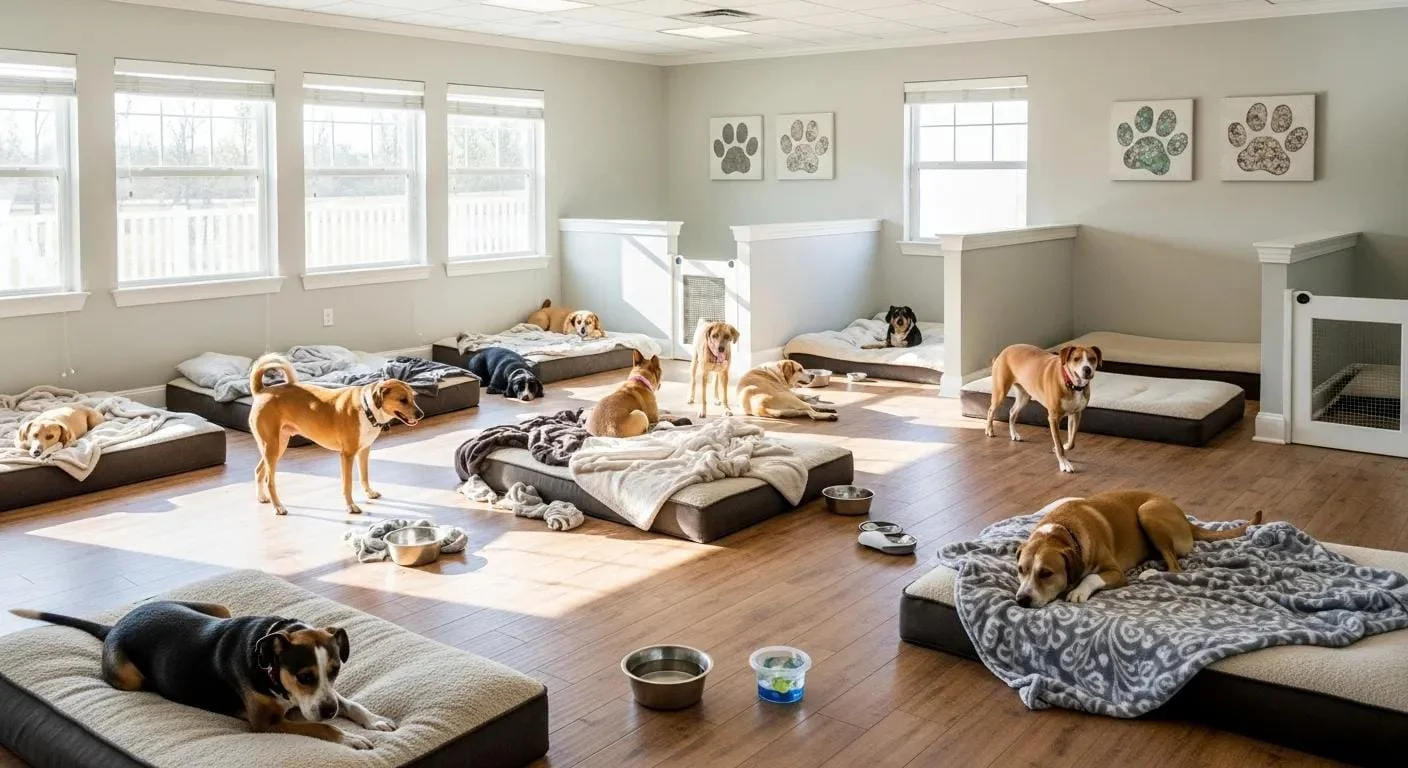
Dog Boarding
Offers a comfortable and safe overnight stay with attentive 24/7 care to make your pet feel right at home.
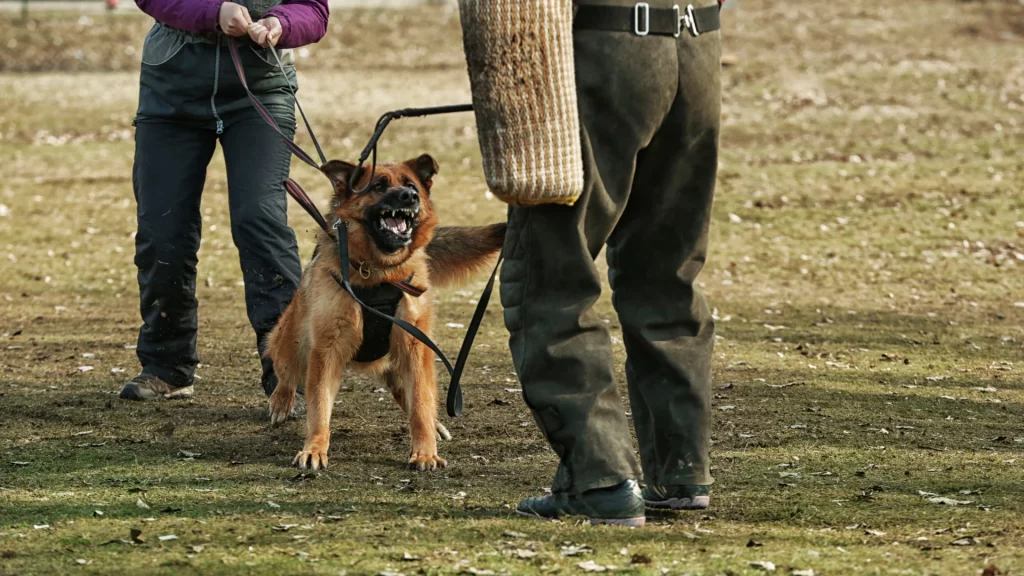
Board & Train
Combines immersive boarding with structured training to instill reliable real-world obedience and good habits.

Puppy Training
Covers housebreaking, biting, and basic obedience to build a strong foundation for a well-behaved dog.
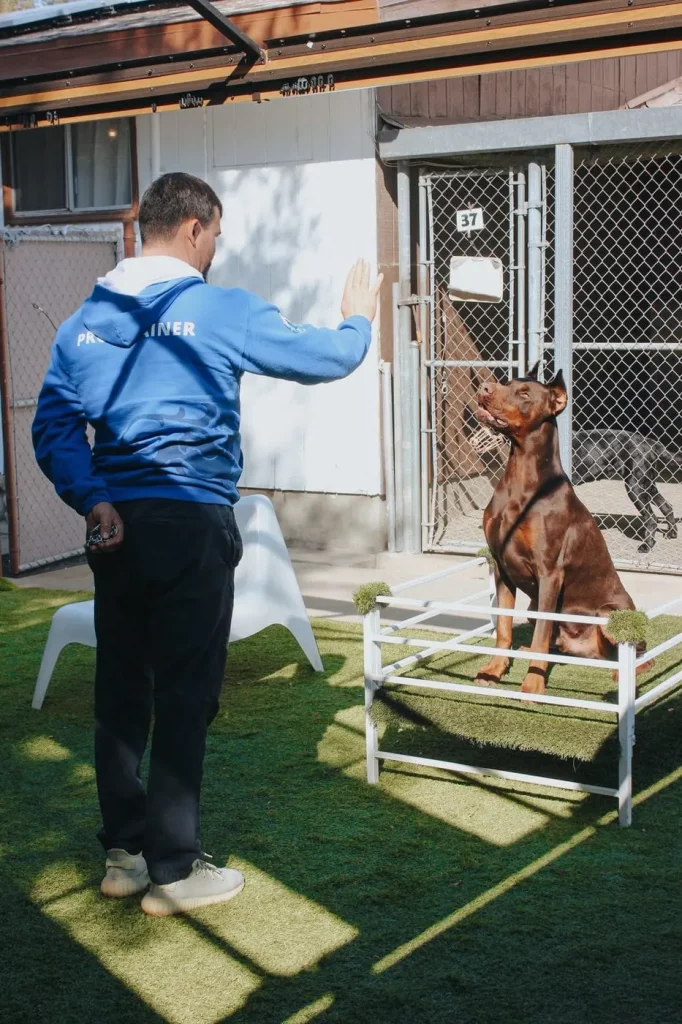
Obedience & Behavior Modification
Provides expert behavioral modification to safely manage triggers, eliminate dangerous reactivity, and build reliable control in public spaces.
Daycare / Grooming
Provides supervised daytime play and professional grooming services to keep your dog happy and clean.
Dog Boarding
Enjoy comfortable overnight boarding with attentive care, private accommodations, and plenty of supervised activity.

Board & Train
Combines comfortable boarding with structured training to build reliable real-world obedience and better everyday habits.

Puppy Training
Builds a strong foundation through house training, bite inhibition, socialization, and basic obedience.
Obedience & Behavior Modification
Addresses reactivity and challenging behaviors through structured training, trigger management, and reliable real-world obedience.
Daycare & Grooming
Combines supervised daytime activity with professional grooming and bathing services to keep your dog comfortable, active, and well cared for.
What Dog Parents Are Saying
EXCELLENTTrustindex verifies that the original source of the review is Google. This is the best dog camp my dogs love coming here. The staff are very professional.Posted on GoogleTrustindex verifies that the original source of the review is Google. What a place! My wife and I visited a dear friend's dog at Topanga Pet Resort this past weekend. When we encountered Ivy, a precious 2 year old Pitty, she seemed very relaxed and well fed. We found the boarding facility to truly feel like a resort. The surrounding trees and ample greenery make the place very serene. All the dogs that were being housed and those who were coming in for training seemed genuinely happy to be there. Additionally, we met a couple of the trainers during our visit there and they were extremely knowledgeable and compassionate towards their canine friends. If you need a place to take your furry friend, Topanga Pet Resort is the place!Posted on GoogleTrustindex verifies that the original source of the review is Google. Our experience with Topanga Pet Resort was absolutely amazing. We were thoroughly impressed with how they handled everything from start to finish. The staff was kind, professional, attentive, and genuinely cared about our pet’s comfort and well-being. The facility was clean, organized, and gave us peace of mind the entire time. Communication was excellent, and it was clear our pet was being treated with love and attention. It’s hard to find a place you can fully trust with your fur baby, but this team truly exceeded expectations. We will definitely be returning and highly recommend them to anyone looking for quality pet care!Posted on GoogleTrustindex verifies that the original source of the review is Google. This is my 2nd time using them. First time was for 6 weeks and it went so well I went back for a 3 week stay for my two dogs. They are great at training puppy's, taking care of my big dog, and most importantly training my wife on how to walk a dog ;)Posted on GoogleTrustindex verifies that the original source of the review is Google. We boarded our first dog for over 15 years when we were out of town. We're excited to begin boarding/ training there with our new rescue puppy.Posted on GoogleTrustindex verifies that the original source of the review is Google. They did such a great job! My daughters dog had been so consistent since his training! Well worth the money!Posted on GoogleTrustindex verifies that the original source of the review is Google. Amazing place to take your pet! We met with them for a meet and greet since our dog is pretty nervous around new people and has never been left, but they did everything they could to make sure he was comfortable, didn’t push his boundaries and took their time thoroughly answering all of our questions! They do a great job of meeting every individual pup’s needs and have excellent trainers on the property at all times! I can definitely feel good about bringing my dog here for boarding ❤️ prices are also very reasonable and they give lots of outside timePosted on GoogleTrustindex verifies that the original source of the review is Google. Topanga Pet Resort — absolute love???? I can say with full confidence: these people REALLY know what they’re doing. I’ve left my dog Chuck there several times, and every time he comes home happy, calm, and full of good energy — like he spent time with friends, not just in a boarding facility. They don’t just watch the dogs, they train them, guide them, and do it with heart. You can feel how much respect and care they give to every animal. We also use their grooming regularly, and Chuck always comes out looking like a handsome glossy boy — fresh, clean, and proud of himself. I fully trust them. This place is honestly the best thing I’ve found for my dog. Thank you for caring for Chuck as if he were your own. ❤️❤️❤️Posted on GoogleTrustindex verifies that the original source of the review is Google. We have had our dog stay here for several week long stays and have had good experiences! They have a large outdoor area for the dogs to play. They also can accommodate any food requirements and special servicesVerified by TrustindexTrustindex verified badge is the Universal Symbol of Trust. Only the greatest companies can get the verified badge who has a review score above 4.5, based on customer reviews over the past 12 months. Read more
See Exactly What Boarding & Training Costs
Boarding rates, Board & Train packages, and add-ons — all clearly outlined.
Frequently Asked Questions
Everything you need to know before your dog’s first stay or Training Assessment.
Have questions? Give us a call
+1 888-818-1622
Why does my dog only chew things when I'm not home?
Chewing only when you’re away usually means something about being alone is the trigger. For some dogs, it’s boredom once the house goes quiet. For others, it’s distress about being separated from you. A camera recording of the first 30 minutes after you leave can help show which pattern your dog fits.
How can I tell if my dog's chewing is separation anxiety or boredom?
Look at what happens alongside the chewing. Bored dogs tend to chew calmly, often hours after you leave, and target random items. Dogs with separation-related distress often start soon after you leave, focus on doors and windows, and bark, pace, drool, or have accidents. A professional evaluation can confirm the cause.
Will my puppy grow out of destructive chewing?
Teething chewing usually eases once adult teeth come in, around six to seven months of age. But chewing habits formed during puppyhood can continue into adulthood if your puppy keeps finding rewarding things to destroy. Giving approved chews and limiting access to furniture now helps prevent a long-term problem.
Is it too late to stop destructive chewing in an adult dog?
No. Adult dogs can learn new habits at any age. The process may take longer when chewing has gone on for years, because the behavior is well practiced. Finding the cause, preventing access to damaged items, and giving your dog better outlets can still lead to real improvement.
Should I crate my dog to stop destructive chewing?
A crate can protect your home and keep your dog safe, but only if your dog is comfortable in it. Crating doesn’t address why your dog is chewing. If your dog panics in a crate, drools heavily, or tries to escape, stop crating and talk to a trainer, since confinement can make distress worse.
Do bitter sprays or deterrents stop destructive chewing?
Taste deterrents can make certain items less appealing and may help protect furniture while you work on training. They don’t solve the underlying problem. Some dogs ignore the taste, and others simply move on to an untreated object. Use deterrents alongside enrichment and training, not as the only fix.
What should I do if my dog swallowed something they chewed?
Contact your veterinarian right away, even if your dog seems fine. Pieces of fabric, foam, wood, or plastic can cause choking or intestinal blockages. Watch for vomiting, loss of appetite, lethargy, or straining to poop. Don’t try to make your dog vomit unless your vet tells you to.
Can dog daycare help with destructive chewing when left alone?
Daycare can help dogs whose chewing comes from boredom, excess energy, or long days alone. A structured day with supervised play and rest means less unused energy at home. Daycare won’t fix separation anxiety on its own, but it can be part of a larger training plan.
How does Topanga Pet Resort help dogs with destructive chewing?
Our trainers start by identifying why your dog is chewing, then build an individualized plan around the cause. Depending on your dog, that may include training, structured daycare with 5 to 6 hours of supervised play, and enrichment guidance for home. We serve Woodland Hills, Calabasas, Malibu, Santa Monica, and nearby communities.
Have Questions? Give Us a Call
+1 888-818-1622
Ready to Start Your Dog’s Training Program?
Have questions about our training programs? Fill out the form below and our team will get back to you shortly.
