
- Home
- Dog Counter Surfing
Dog Reactive on Walks Barking and Lunging at Other Dogs
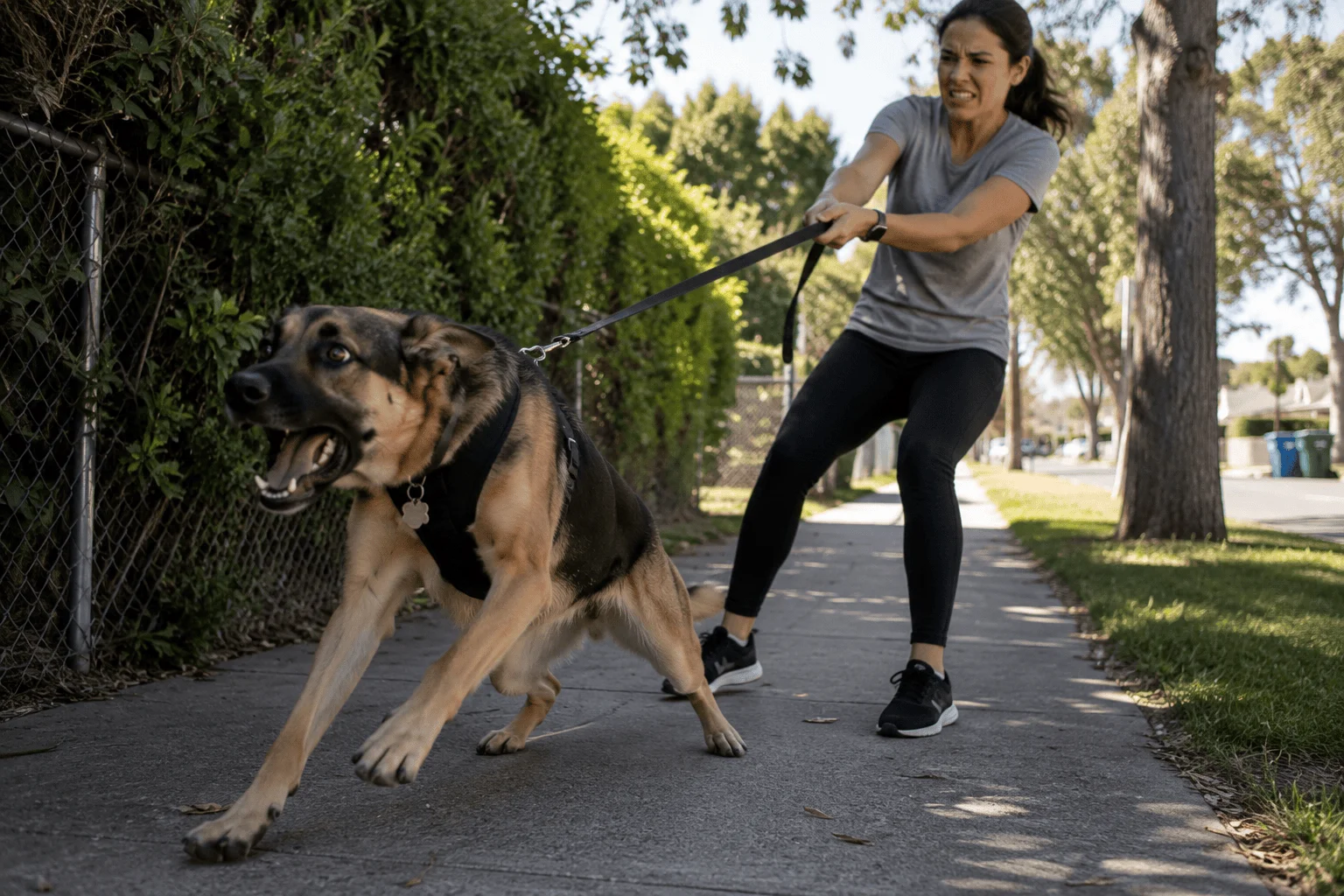
If your dog barks at other dogs on walks, lunges at the end of the leash, or becomes impossible to redirect when another dog approaches, you’re probably already changing your walking routine around the behavior.
Maybe you cross the street when you see another dog. Maybe you turn around, avoid busy parks, or only walk at certain times because you know exactly what is coming.
Living with a leash reactive dog can make ordinary walks feel stressful. It can also be confusing. Your dog may be perfectly relaxed at home or friendly with familiar dogs, yet suddenly explode the moment another dog appears across the street.
That behavior does not automatically mean your dog is aggressive.
Leash reactivity can come from fear, frustration, excitement, overstimulation, or a combination of factors. The right training approach starts by figuring out what is actually happening before trying to change it.
At Topanga Pet Resort, our trainers work with dogs on individualized behavior and obedience programs designed to improve focus, impulse control, and calmer responses around real-world distractions.
119+
Yelp Reviews
132+
Google Reviews
6
Certified Trainers
119+
Yelp reviews
132+
Google Reviews
6
Certified Trainers

119+ reviews

132+ reviews
6
Certified Trainers
Why Dogs Become Leash Reactive
A dog that barks and lunges at another dog is communicating that something about the situation is overwhelming, exciting, frustrating, or threatening.
The leash itself often plays a role. Off leash, dogs usually approach each other slowly and at an angle, or simply walk away when they feel uneasy. On a leash, that choice is gone. Your dog can’t create space or greet naturally, and narrow sidewalks often force a head-on approach that feels tense. That’s why many dogs who get along well at daycare or at home react strongly on walks.
The visible behavior can look similar even when the underlying motivation is completely different.
The Reactivity Spectrum From Mild to Severe
Not every reactive dog presents the same level of difficulty.
Mild Reactivity
A mildly reactive dog may: stare at another dog, become tense, raise their tail, whine, pull toward the trigger, bark briefly, recover quickly after the dog passes. These dogs may still be able to respond to their handler with enough distance.
Moderate Reactivity
A moderately reactive dog may: bark repeatedly, lunge toward other dogs, ignore familiar commands, pull hard against the leash, struggle to take treats, remain highly aroused after the trigger passes. Training becomes more difficult because the dog is already close to or above their threshold.
Severe Reactivity
A severely reactive dog may become completely fixated on other dogs and show intense barking, lunging, snapping, or prolonged recovery. If you're dealing with this level of behavior, don't deliberately expose your dog to close encounters to "get them used to it." The goal is controlled exposure, not overwhelming the dog.
Frustration vs. Fear vs. Excitement
A frustrated dog may want to reach the other dog but becomes increasingly agitated because the leash prevents them from doing so. A fearful dog may lunge because creating distance feels necessary. Barking and forward movement can actually be attempts to make the perceived threat go away. An excited dog may simply have difficulty controlling their arousal when another dog appears. Some dogs also have learned that barking and lunging works. If another dog consistently disappears after your dog reacts, your dog may begin to believe that their behavior successfully controls the situation. This is why simply telling a reactive dog to “stop barking” usually isn’t enough.
How to Tell Whether Your Dog Is Over Threshold
One of the most useful concepts in reactive dog training is the threshold.
This is the point at which your dog becomes too emotionally aroused to process information normally.
You may notice that your dog can look at another dog from 100 feet away and still respond to you, but completely loses focus at 30 feet.
That difference matters.
Training should generally begin at a distance where your dog can still think, respond, and learn.
As your dog’s ability to remain calm improves, the distance can gradually decrease.
What Actually Changes Reactive Dogs
Effective reactivity training doesn’t rely on simply correcting the bark or lunge.
The trainer needs to work on the emotional and behavioral pattern underneath it.
Controlled Desensitization
Your dog is exposed to a trigger at a level they can handle.
That might mean seeing another dog from a significant distance rather than passing one at close range.
The exposure remains controlled so the dog can notice the trigger without immediately exploding.
Over repeated sessions, the dog can learn that another dog appearing doesn’t automatically mean something exciting or threatening is about to happen.
Counterconditioning
Counterconditioning changes the association your dog has with the trigger.
Instead of:
“Another dog appears, I need to react.”
the goal becomes closer to:
“Another dog appears, I can stay calm and check in with my handler.”
Rewards, distance, timing, and repetition all matter.
Teaching an Alternative Response
Your dog also needs a behavior they can perform instead of barking and lunging.
Depending on the dog, this might include:
- checking in with the handler
- walking beside you
- changing direction
- sitting or standing calmly
- targeting a hand
- moving away from the trigger
- responding to a trained cue
The alternative behavior needs to be practiced before you expect it to work around a highly exciting trigger.
Why Punishing the Bark Doesn't Solve the Problem
When a dog barks or lunges, it’s tempting to focus entirely on stopping the visible behavior.
But a quiet dog isn’t necessarily a calm dog.
If your dog is frightened by another dog and you punish the barking without addressing the fear, the underlying emotional response may remain.
In some situations, harsh corrections can also increase stress around the trigger.
That doesn’t mean a reactive dog should simply be allowed to rehearse dangerous behavior.
Good training combines appropriate boundaries, management, safety, and behavior modification.
Why Avoidance Is Only a Short-Term Solution
Management vs. Training
Management reduces opportunities for the behavior to occur.
Training changes the dog’s response to the trigger.
You may need both.
For example, you can:
- choose quieter walking routes
- walk during less busy hours
- cross the street when necessary
- create distance from approaching dogs
- use secure walking equipment
- avoid crowded dog parks
- give your dog enough recovery time
At the same time, structured training can teach your dog to notice another dog without immediately reacting.
The objective isn’t to force your dog to interact with every dog they see.
The objective is to make passing another dog manageable.
What If Your Dog Barks at Other Dogs on Every Walk?
Start by reducing the number of situations where your dog reaches the point of losing control.
If you can see another dog approaching, create distance before your dog reacts.
A Practical Walking Strategy
When you spot another dog:
- Notice your dog’s body language.
- Increase distance before the reaction starts.
- Keep your own movements calm and predictable.
- Use a familiar attention or movement cue.
- Reward your dog for remaining connected to you.
- Move away if your dog is becoming overwhelmed.
- Give your dog time to recover afterward.
The earlier you intervene, the more options you have.
Waiting until your dog is already barking, lunging, and pulling at full strength makes learning much harder.
How Long Does Reactive Dog Training Take?
There isn’t a universal timeline.
A dog that occasionally barks at other dogs from a manageable distance may improve much faster than a dog with years of intense lunging behavior.
What Influences the Timeline
Progress depends on: the dog's underlying motivation, how intense the reaction is, how close the trigger can get, how quickly the dog recovers, previous training history, consistency at home, frequency of controlled practice, the handler's ability to recognize early warning signs. The first meaningful improvement isn't necessarily walking directly past another dog without reacting. It may be your dog noticing another dog and recovering faster. Then staying focused for several seconds. Then walking past at a greater distance. Those smaller changes are important because they build toward reliable behavior.
Is Board and Train Effective for Leash Reactivity?
A structured board and train program can provide intensive practice in a controlled environment.
Instead of getting one training session per week, a dog may have repeated opportunities to practice obedience, impulse control, engagement, and appropriate responses.
The Professional Advantage
A structured program can help trainers:
- identify specific triggers
- establish appropriate working distances
- practice controlled exposures
- reinforce alternative behaviors
- build obedience around distractions
- track recovery and progress
But board and train isn’t a magic reset button.
The skills your dog develops need to transfer back into everyday life.
Owner participation remains essential.
Should You Use a Muzzle While Training a Reactive Dog?
A muzzle can be an appropriate safety tool for some dogs, particularly when there is a bite risk.
However, a muzzle should not be treated as a solution for reactivity itself.
If a muzzle is recommended, your dog should be gradually and positively conditioned to wearing it rather than having one placed on them suddenly before a stressful walk.
For dogs with a known bite history, professional guidance is particularly important when deciding how to manage encounters with other dogs.
When Professional Reactive Dog Training Makes Sense
You don’t have to wait until your dog’s behavior becomes severe before getting help.
Professional training is especially useful when:
- your dog regularly lunges at other dogs
- your dog has attempted to bite
- you cannot physically control your dog
- your dog redirects onto you during reactions
- your dog takes a long time to recover
- walks have become something you avoid
- you’ve tried several training methods without progress
Why Choose Topanga Pet Resort for Leash Reactivity Training
Topanga Pet Resort provides dog boarding and training services in Los Angeles from our peaceful location in Topanga Canyon.
We serve families throughout Woodland Hills, Calabasas, Malibu, Santa Monica, Pacific Palisades, Sherman Oaks, Westwood, and nearby communities.
Our team combines professional training with a structured environment designed around each dog’s needs.
With:
50+
50+ Years of Combined Experience
6
Certified trainers
5–6
Hours of Supervised Play
6.5
Acres to explore
Our facility provides a balanced routine with premium care, supervised activity, and structured training opportunities. Dogs benefit from a large indoor and outdoor environment with 5 to 6 hours of supervised playtime in spacious outdoor exercise areas, helping support physical activity, confidence, and better daily behavior.
For counter surfing, the solution is not simply keeping food away forever.
It is teaching your dog the skills needed to make better choices around temptation.
Comprehensive dog boarding & training at Topanga Pet Resort
Dog Boarding
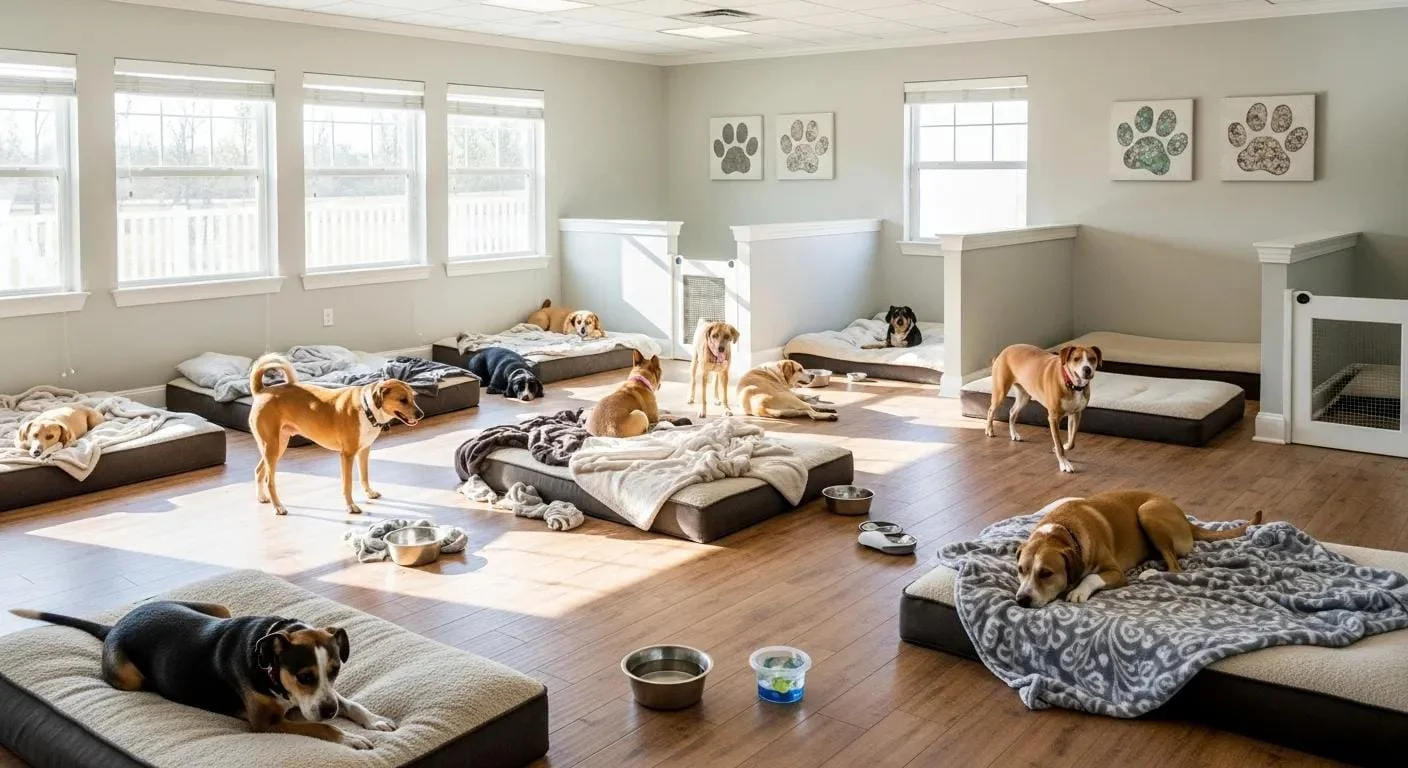
Offers a comfortable and safe overnight stay with attentive 24/7 care to make your pet feel right at home.
Board & Train
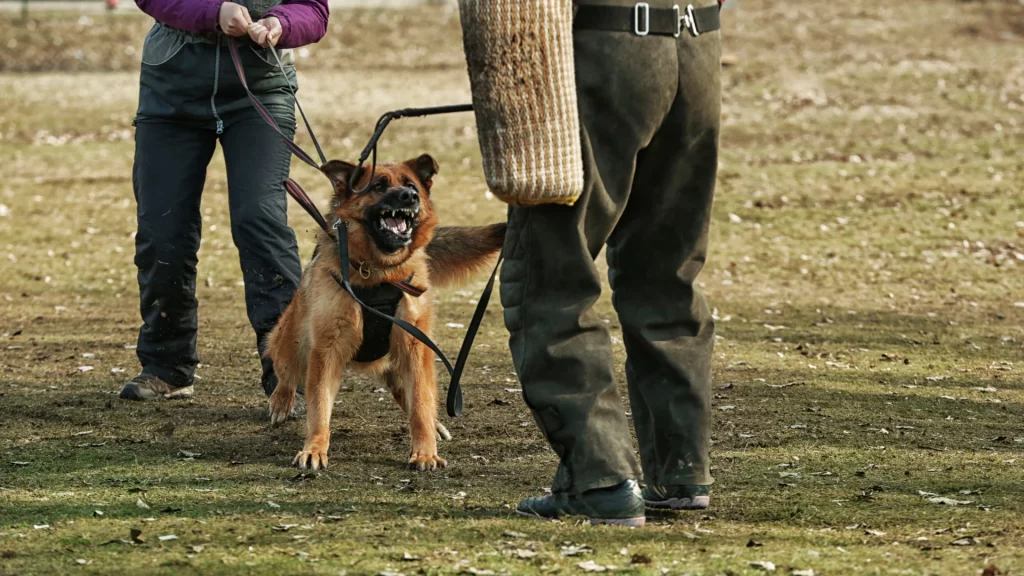
Combines immersive boarding with structured training to instill reliable real-world obedience and good habits.
Puppy Training
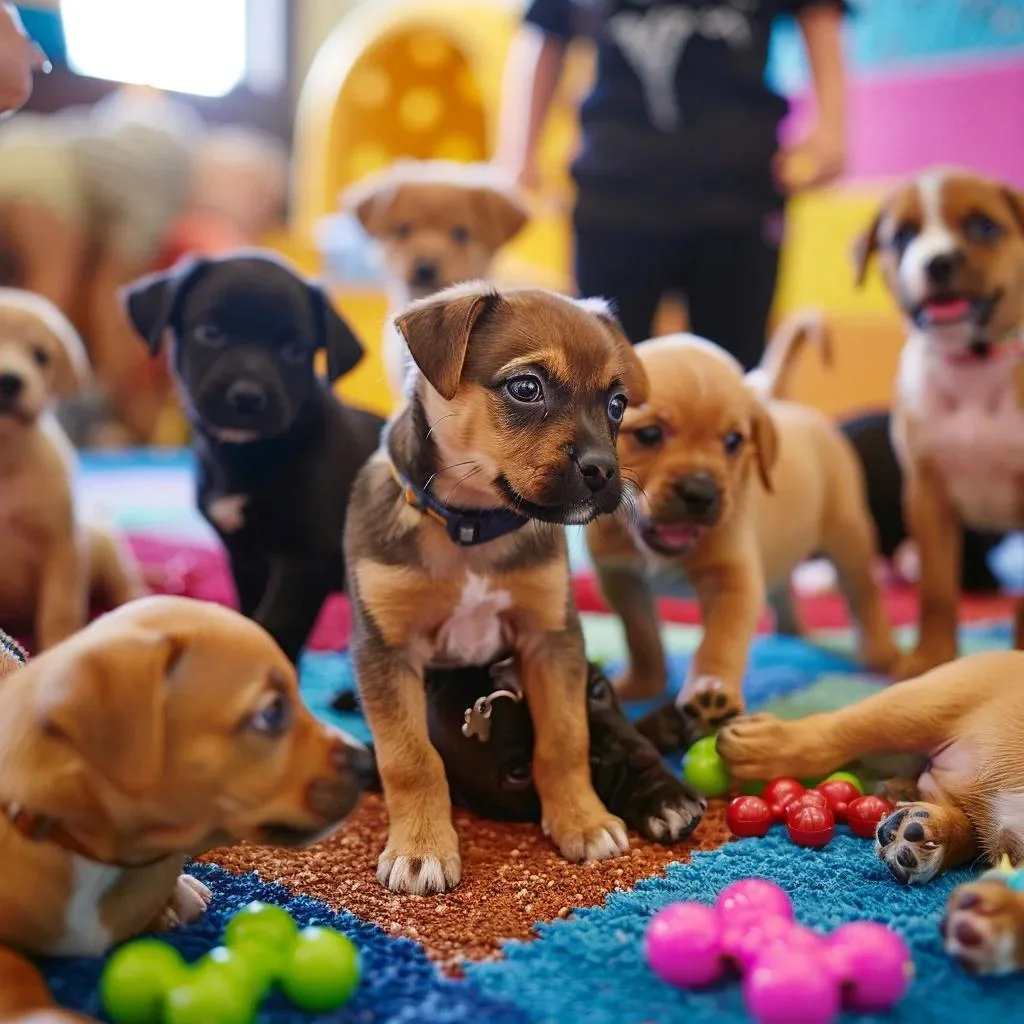
Covers housebreaking, biting, and basic obedience to build a strong foundation for a well-behaved dog.
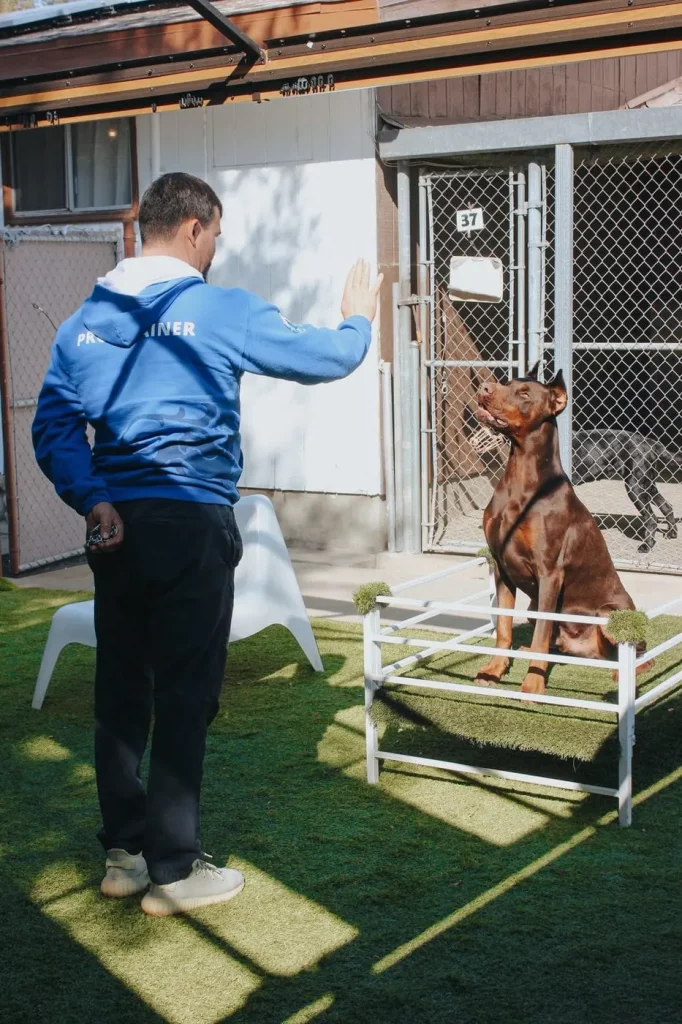
Obedience & Behavior Modification
Provides expert behavioral modification to safely manage triggers, eliminate dangerous reactivity, and build reliable control in public spaces.

Daycare / Grooming
Provides supervised daytime play and professional grooming services to keep your dog happy and clean.
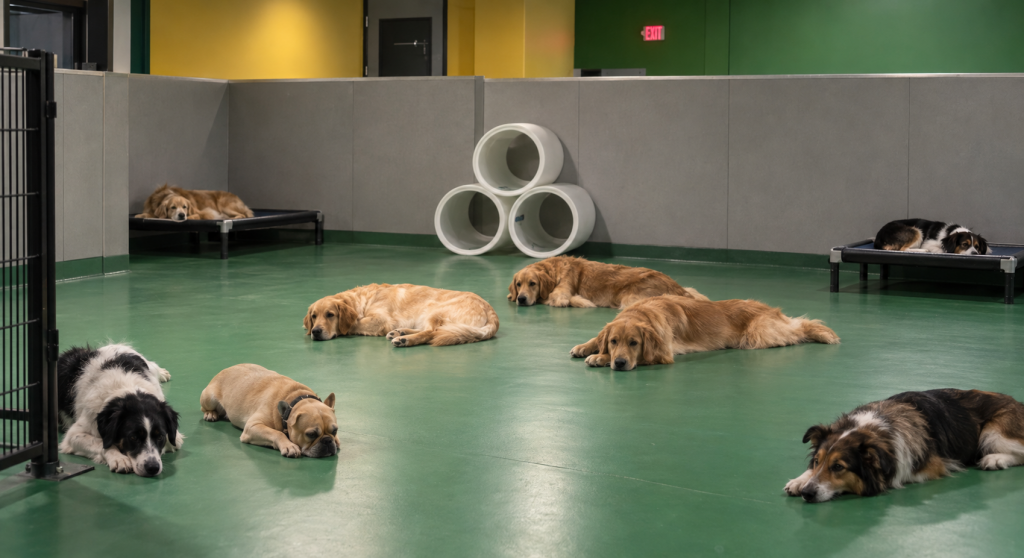
Dog Boarding
Enjoy comfortable overnight boarding with attentive care, private accommodations, and plenty of supervised activity.
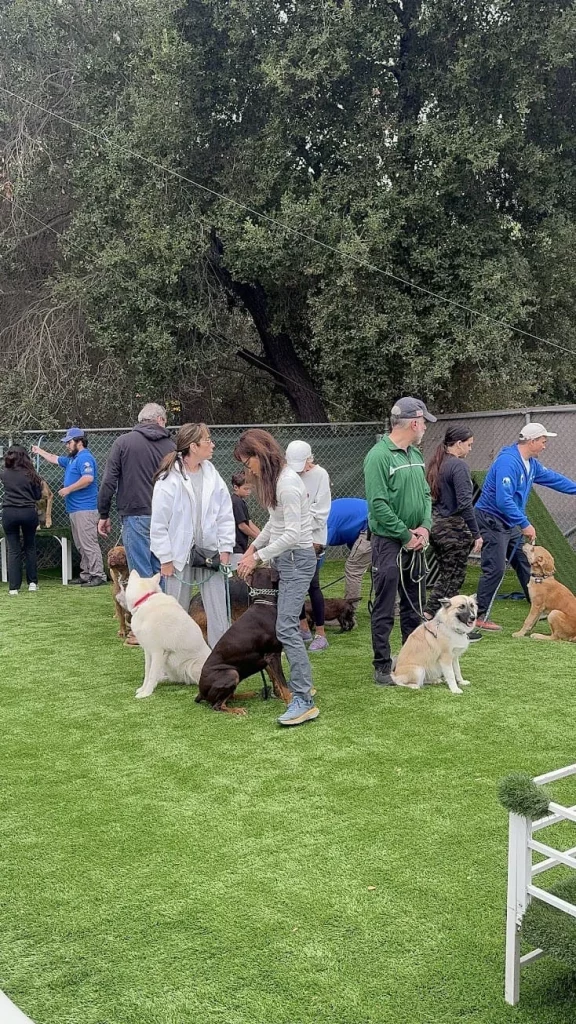
Board & Train
Combines comfortable boarding with structured training to build reliable real-world obedience and better everyday habits.

Puppy Training
Builds a strong foundation through house training, bite inhibition, socialization, and basic obedience.
Obedience & Behavior Modification
Addresses reactivity and challenging behaviors through structured training, trigger management, and reliable real-world obedience.
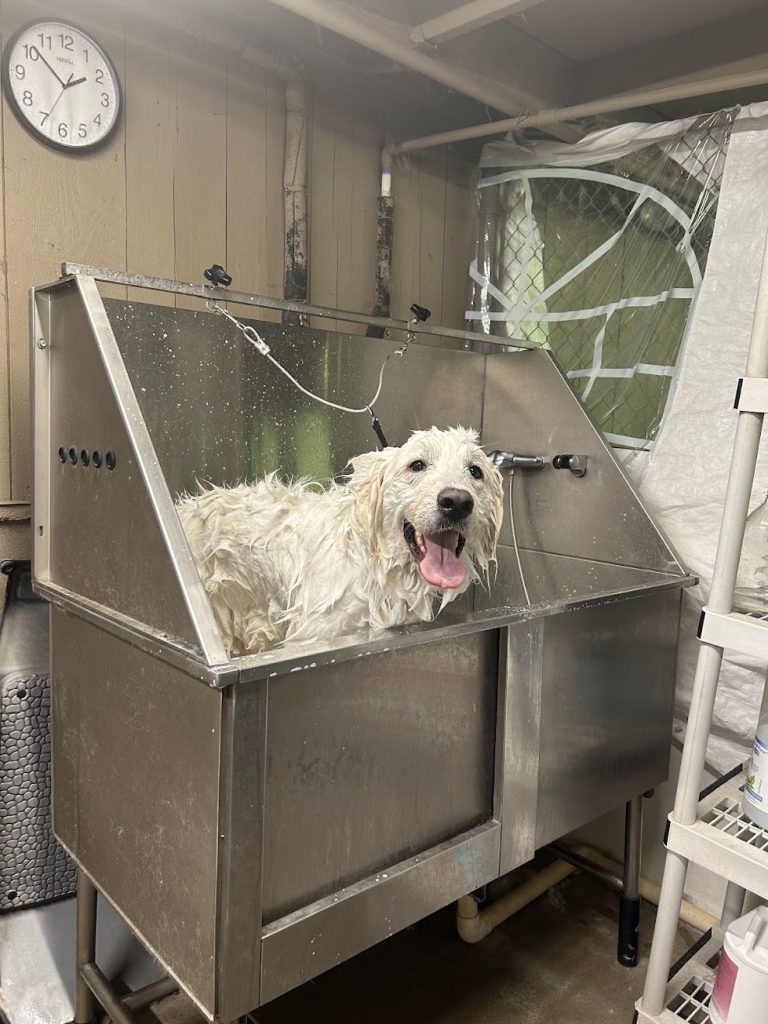
Daycare & Grooming
Combines supervised daytime activity with professional grooming and bathing services to keep your dog comfortable, active, and well cared for.
What Dog Parents Are Saying
EXCELLENTTrustindex verifies that the original source of the review is Google. This is the best dog camp my dogs love coming here. The staff are very professional.Posted on GoogleTrustindex verifies that the original source of the review is Google. What a place! My wife and I visited a dear friend's dog at Topanga Pet Resort this past weekend. When we encountered Ivy, a precious 2 year old Pitty, she seemed very relaxed and well fed. We found the boarding facility to truly feel like a resort. The surrounding trees and ample greenery make the place very serene. All the dogs that were being housed and those who were coming in for training seemed genuinely happy to be there. Additionally, we met a couple of the trainers during our visit there and they were extremely knowledgeable and compassionate towards their canine friends. If you need a place to take your furry friend, Topanga Pet Resort is the place!Posted on GoogleTrustindex verifies that the original source of the review is Google. Our experience with Topanga Pet Resort was absolutely amazing. We were thoroughly impressed with how they handled everything from start to finish. The staff was kind, professional, attentive, and genuinely cared about our pet’s comfort and well-being. The facility was clean, organized, and gave us peace of mind the entire time. Communication was excellent, and it was clear our pet was being treated with love and attention. It’s hard to find a place you can fully trust with your fur baby, but this team truly exceeded expectations. We will definitely be returning and highly recommend them to anyone looking for quality pet care!Posted on GoogleTrustindex verifies that the original source of the review is Google. This is my 2nd time using them. First time was for 6 weeks and it went so well I went back for a 3 week stay for my two dogs. They are great at training puppy's, taking care of my big dog, and most importantly training my wife on how to walk a dog ;)Posted on GoogleTrustindex verifies that the original source of the review is Google. We boarded our first dog for over 15 years when we were out of town. We're excited to begin boarding/ training there with our new rescue puppy.Posted on GoogleTrustindex verifies that the original source of the review is Google. They did such a great job! My daughters dog had been so consistent since his training! Well worth the money!Posted on GoogleTrustindex verifies that the original source of the review is Google. Amazing place to take your pet! We met with them for a meet and greet since our dog is pretty nervous around new people and has never been left, but they did everything they could to make sure he was comfortable, didn’t push his boundaries and took their time thoroughly answering all of our questions! They do a great job of meeting every individual pup’s needs and have excellent trainers on the property at all times! I can definitely feel good about bringing my dog here for boarding ❤️ prices are also very reasonable and they give lots of outside timePosted on GoogleTrustindex verifies that the original source of the review is Google. Topanga Pet Resort — absolute love???? I can say with full confidence: these people REALLY know what they’re doing. I’ve left my dog Chuck there several times, and every time he comes home happy, calm, and full of good energy — like he spent time with friends, not just in a boarding facility. They don’t just watch the dogs, they train them, guide them, and do it with heart. You can feel how much respect and care they give to every animal. We also use their grooming regularly, and Chuck always comes out looking like a handsome glossy boy — fresh, clean, and proud of himself. I fully trust them. This place is honestly the best thing I’ve found for my dog. Thank you for caring for Chuck as if he were your own. ❤️❤️❤️Posted on GoogleTrustindex verifies that the original source of the review is Google. We have had our dog stay here for several week long stays and have had good experiences! They have a large outdoor area for the dogs to play. They also can accommodate any food requirements and special servicesVerified by TrustindexTrustindex verified badge is the Universal Symbol of Trust. Only the greatest companies can get the verified badge who has a review score above 4.5, based on customer reviews over the past 12 months. Read more
See Exactly What Boarding & Training Costs
Boarding rates, Board & Train packages, and add-ons — all clearly outlined.
Frequently Asked Questions
Everything you need to know before your dog’s first stay or Training Assessment.
Have questions? Give us a call
+1 888-818-1622
Can a leash reactive dog be completely fixed?
Many reactive dogs improve significantly with consistent training, and walks become calmer and more predictable. How far a dog progresses depends on the cause, how long the behavior has gone on, and consistency. Some dogs eventually pass other dogs with little reaction, while others still need some distance and management around triggers.
Should I let my reactive dog greet other dogs on leash?
It’s usually best to skip on-leash greetings while you work on reactivity. Leashes limit a dog’s body language and ability to move away, which can make greetings tense even for social dogs. Instead, let your dog observe other dogs from a comfortable distance and reward calm behavior. Your trainer can guide when controlled meetings make sense.
What leash and equipment work best for a reactive dog?
A well-fitted harness or flat collar with a standard 4 to 6 foot leash gives steady, reliable control. Avoid retractable leashes, since they make it hard to create distance quickly. Head halters can help some strong pullers but need gradual introduction. Check that equipment fits securely so your dog can’t slip out during a reaction.
What should I do if an off-leash dog runs up to my reactive dog?
Stay as calm as you can and try to create distance. Turn and walk away briskly, and ask the other owner to call their dog. Stepping between the dogs or tossing a handful of treats toward the approaching dog can buy time. Never reach between dogs that are fighting, since you could be bitten.
Can pain or a health issue cause leash reactivity?
Yes. Pain, vision or hearing loss, and other medical issues can make a dog feel more vulnerable and quicker to react. If reactivity starts suddenly, gets worse quickly, or appears in an older dog, schedule a veterinary checkup before starting a training plan. Treating an underlying problem can make training far more effective.
Will neutering or spaying stop my dog from being reactive?
Neutering or spaying isn’t a reliable fix for leash reactivity. Reactivity is usually driven by fear, frustration, or learned patterns, which surgery doesn’t change. Some dogs show no difference afterward. Talk to your veterinarian about the timing and health considerations, and plan on training to address the behavior itself.
My dog also reacts to people, bikes, or cars. Can training help?
Yes. The same training principles used for dog reactivity, like working at a comfortable distance, building positive associations, and teaching an alternative response, can apply to other triggers. Many dogs react to more than one thing. A trainer can identify each trigger and decide which to work on first.
How does Topanga Pet Resort help leash reactive dogs?
Our trainers start with an assessment to understand what triggers your dog and why. From there, we create an individualized plan that may include board and train, obedience work around distractions, and coaching so you can handle walks confidently at home. We serve families across Los Angeles, including Woodland Hills, Calabasas, Malibu, and Santa Monica.
Have Questions? Give Us a Call
+1 888-818-1622
Ready to Start Your Dog’s Training Program?
Have questions about our training programs? Fill out the form below and our team will get back to you shortly.
