Socialization 101: Why Dog Daycare Helps Behavior and Confidence
| Program Type | Focus Area | Key Features |
|---|---|---|
| Puppy Training | Early Socialization | Introduces puppies to various stimuli and other dogs |
| Basic Obedience | Command Reinforcement | Teaches essential commands and social etiquette |
| Aggressive Dog Training | Behavior Modification | Addresses specific aggressive behaviors with tailored strategies |
This comparison shows the training options available to dog owners who want to improve their pets’ social skills with professional help.
Research shows that early, structured intervention helps puppies develop into well-adjusted adults.
Standardized Puppy Socialization Programs for Behavior
This was the first socialization program designed for puppies from birth to six weeks, and it demonstrated measurable, long-term effects on individual dogs.
Improving puppy behavior using a new standardized socialization program, H Vaterlaws-Whiteside, 2017
For Los Angeles dog owners seeking comprehensive training, family dog training can be an excellent choice, typically covering a wide range of skills and behaviors.
These foundational programs are key; studies confirm basic obedience and behavior correction help shape a dog’s conduct.
Basic Dog Obedience & Behavior Correction Training Approaches
This chapter describes the interaction level of HCS basic dog training—Obedience Training (OT), Behavior Correction Training (BCT), and Pursuit Training (PT)—and then presents each approach in detail.
Interaction: Basic Training Obedience, Behavior Correction, and Pursuit Training, 2024
Many owners explore specialized options like aggressive dog training to address specific behavioral issues; these programs are tailored to help dogs overcome aggression.
Severe challenges like aggression often need specialized approaches; studies examine the effectiveness of different treatment and modification programs.
Canine Aggression Treatment & Behavior Modification Programs
Study of 963 dogs (owners n = 800) reported at least one form of aggressive behavior. Owners were asked to indicate the resolutions employed, including
An investigation into the effectiveness of various professionals and behavior modification programs, with or without medication, for the treatment of canine aggression, IR Dinwoodie, 2021
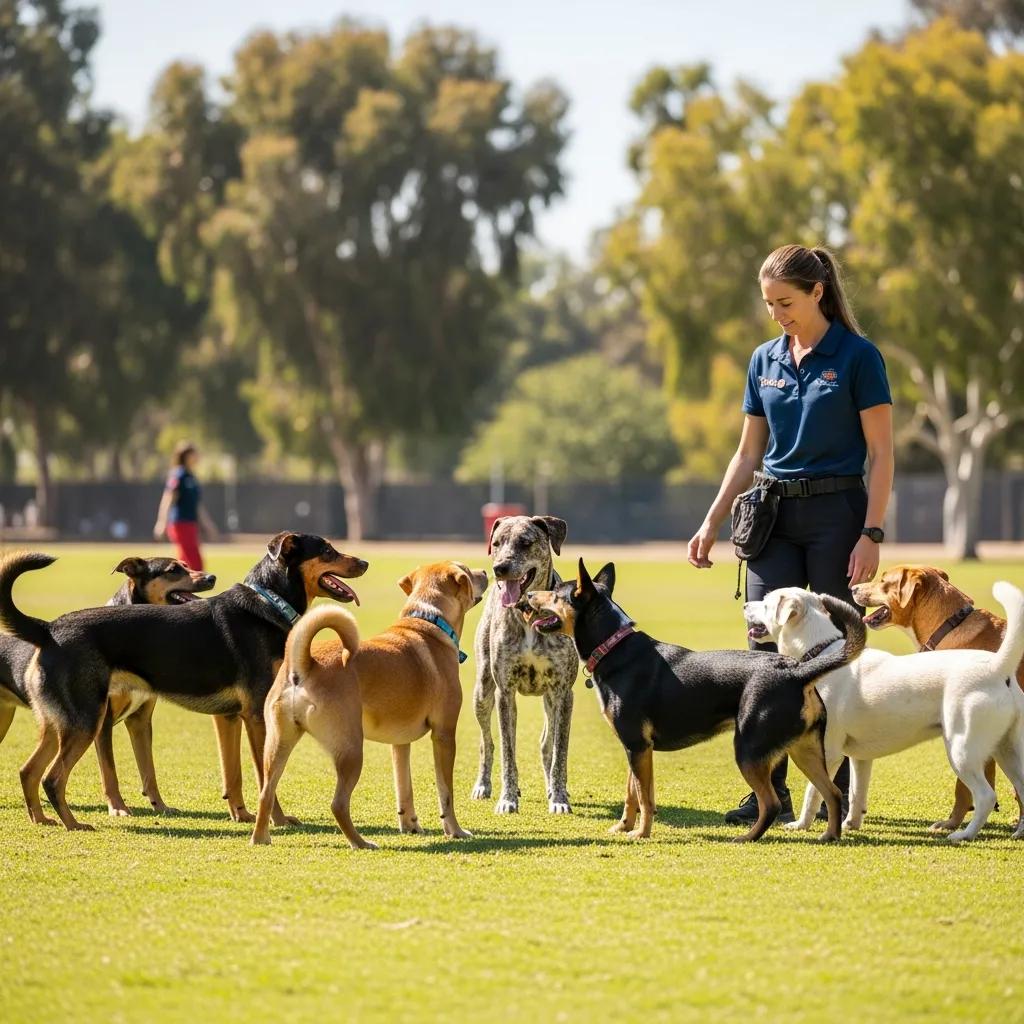
If you want a safe, fun place for your dog to socialize, consider dog daycare in Los Angeles, which offers structured activities and supervision.
Some owners may consider protection dog training for advanced skills, focusing on security and defense.
Frequently Asked Questions
What are the benefits of early socialization for puppies?
Early socialization helps puppies become well-adjusted adults. Exposing them to different stimuli, places, and other dogs during critical stages reduces fear and aggression. Studies find puppies in structured socialization programs show more positive behavior, adapt better, and are easier to train and integrate into family life.
How can I choose the right training program for my dog?
Choose a program based on your dog’s age, temperament, and specific issues. Puppies need early-socialization courses. Dogs with aggression require specialized training that targets those behaviors. Check the trainer’s qualifications, methods, and program structure to ensure they match your goals.
Are group classes or private sessions more effective for dog training?
Both group classes and private sessions have benefits. Group classes provide socialization and real-world practice, while private sessions offer focused, personalized attention for specific problems. Many owners combine both to get social learning plus targeted training.
What should I expect during a typical dog training session?
A session usually starts with a warm-up where the trainer assesses your dog’s skills and behavior. It can include commands, socialization exercises, and behavior-modification work. Trainers often use positive reinforcement, rewarding desired actions with treats or praise. Sessions run 30 to 60 minutes and may mix individual and group activities to boost learning and engagement.
How long does it take to see results from dog training?
Results depend on age, temperament, and training consistency. Many owners see improvement within a few weeks of regular sessions. Complex issues like aggression or anxiety often need longer, specialized work. Consistency, patience, and daily practice are essential for lasting change.
Can I train my dog at home, or should I seek professional help?
You can train many behaviors at home using books and videos, but professional help is valuable for specific or severe issues. Trainers bring experience and tailored strategies that are hard to reproduce with DIY resources. If you’re struggling or want the best results, seek professional guidance to boost your efforts and improve your dog’s behavior.
Conclusion
Specialized training in Los Angeles can improve your dog’s social skills and lead to a well-adjusted pet. Choose the right program—puppy training, basic obedience, or aggression work—to build positive behaviors that benefit your dog and family. Professional guidance gives you the tools for effective training. Find the right option for your dog and take the first step toward a more harmonious relationship.