
- Home
- Dog Won't Come When Called
Dog Won’t Come When Called? Fixing Recall Permanently
If your dog suddenly seems to forget you exist the moment you call them, you are dealing with more than an annoying training problem.
A dog that ignores recall can turn an ordinary walk into a chase. One distraction becomes a sprint toward another dog, a road, wildlife, or terrain you cannot safely reach. In Topanga Canyon, where dogs may encounter coyotes, snakes, steep terrain, and other hazards, unreliable recall can become a genuine safety concern.
The good news is that most dogs are not simply choosing to be disobedient. Recall is a trained behavior, and it can be rebuilt.
At Topanga Pet Resort, we help dogs develop stronger obedience, responsiveness, and off-leash skills through structured training tailored to the individual dog. Whether your dog ignores recall at the park, runs away when called, or only listens when there is nothing interesting happening, the goal is the same: make coming back to you a behavior your dog can perform reliably.
119+
Yelp Reviews
132+
Google Reviews
6
Certified Trainers
119+
Yelp reviews
132+
Google Reviews
6
Certified Trainers

119+ reviews

132+ reviews
6
Certified Trainers
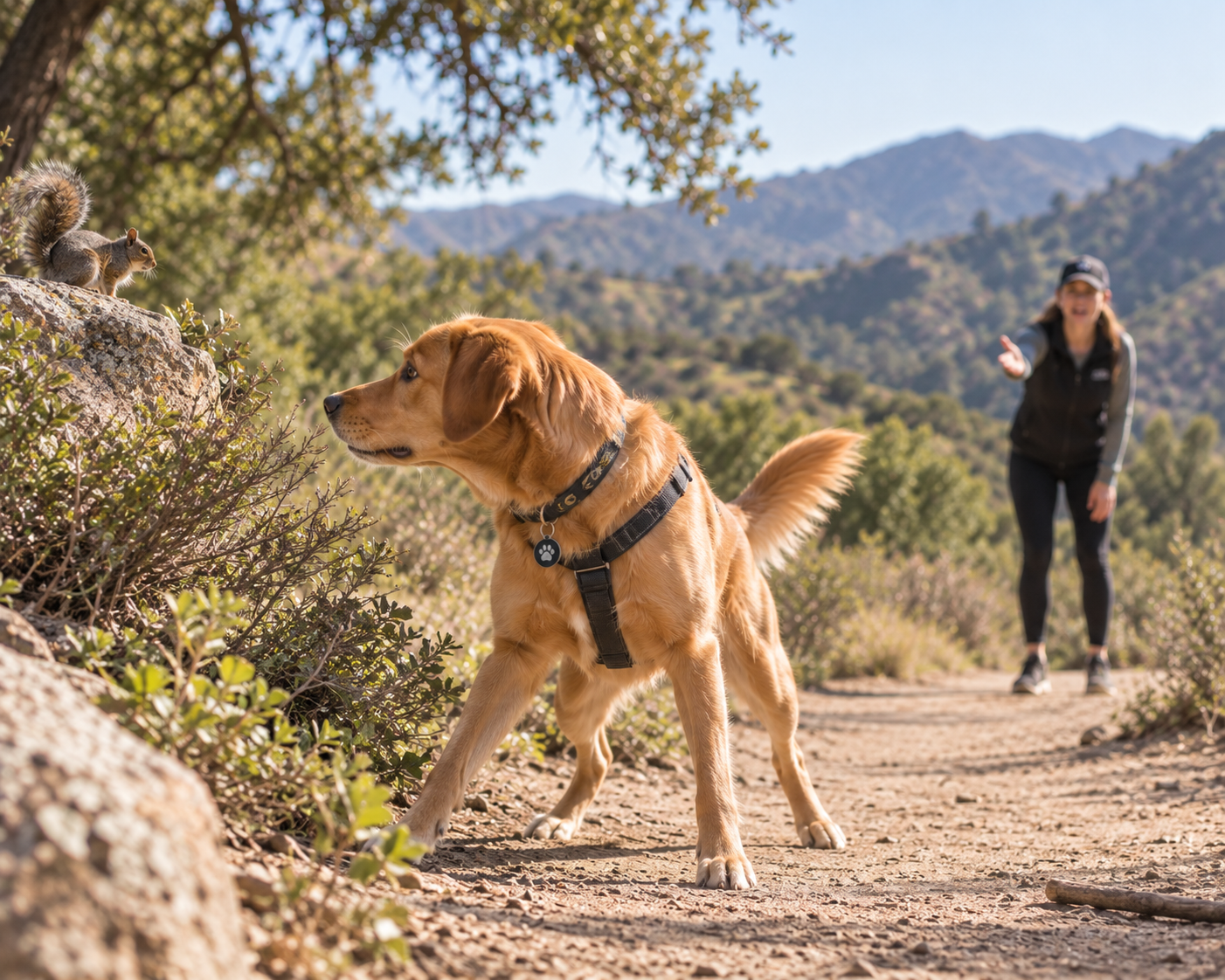
Why Most Dogs Ignore Their Recall Command
When a dog won’t come when called, owners often assume the dog is being stubborn.
Usually, there is more going on.
Your dog may have learned that the environment is more rewarding than responding to you. They may have never developed recall around distractions, or they may have learned that hearing their name means something unpleasant is about to happen.
Training History Issues
Recall is not automatically transferred from one environment to another.
A dog might come immediately when called inside the house but completely ignore the same cue at a park.
That is because the difficulty has changed.
At home, there may be few competing distractions. Outside, your dog may have access to:
- Other dogs
- Squirrels and birds
- Scents
- People
- Food
- Open space
- Wildlife
- New environments
- Exciting movement
A reliable recall needs to be progressively practiced around increasingly difficult distractions.
Your Dog May Have Learned That Ignoring You Works
Every time you call your dog and they continue doing what they want, the behavior gets rehearsed.
The sequence can become:
Owner calls → dog ignores → nothing happens → dog keeps exploring.
Over time, your recall cue becomes background noise.
The solution is not simply to call louder.
You need to change the value and reliability of responding to the cue.
The Poisoned Cue Problem
Sometimes the problem is not the dog. It is the recall word itself.
A cue can become what trainers call a poisoned cue when a dog repeatedly hears it without successfully responding, or when the cue consistently predicts something unpleasant.
For example:
“Buddy, come!”
Dog comes.
Leash goes on.
Fun ends.
Dog goes home.
If this happens repeatedly, your dog may learn that “come” means the good stuff is over.
Why Your Dog Learned to Run
Some dogs actually develop a pattern of avoidance.
You call.
They look at you.
They realize what is coming.
They run.
You chase.
Now the dog has accidentally turned recall into a game.
This is particularly common with dogs that have learned that running away gets them attention, freedom, or another exciting interaction.
If your current recall cue has become unreliable, rebuilding the behavior may require introducing a new cue rather than repeatedly testing the old one.
How to Rebuild a Reliable Recall From Scratch
A strong recall is built progressively, not tested repeatedly in situations where your dog is almost guaranteed to fail.
Step 1: Start Where Your Dog Can Succeed
Begin in a low-distraction environment.
Reward your dog for immediately orienting toward you and moving in your direction.
The objective is to establish a simple pattern:
Cue → turn toward handler → return → reward.
Step 2: Increase Distance Gradually
Once your dog responds consistently at short distances, increase the distance.
A long training line can provide additional control while allowing your dog to experience more freedom.
Step 3: Add Distractions
Only after the basic behavior is reliable should you introduce increasingly difficult distractions.
You might progress from:
- Quiet room
- Yard
- Quiet outdoor area
- Mild distractions
- Other dogs at a distance
- Higher-distraction environments
- Controlled off-leash environments
The exact progression depends on the dog.
Step 4: Reward Fast Responses
There is an important difference between:
“Eventually wandered back.”
and:
“Immediately turned around and ran toward me.”
The second response is what you want to reinforce.
A strong recall should become fast, enthusiastic, and automatic.
Step 5: Practice Without Constantly Ending the Fun
Don’t make every recall mean:
“We’re leaving.”
Call your dog, reward them, and sometimes release them back to what they were doing.
This helps prevent the recall cue from becoming a predictor of the end of freedom.
The Most Critical Mistake Owners Make With Recall
One of the biggest recall mistakes is only calling your dog when you need something from them.
Calling Only for Bad Things
Imagine your dog is happily exploring at the park.
You call:
“Come!”
They return.
You immediately put the leash on and leave.
Do this often enough, and your dog has a reason to think twice before coming back.
Instead, recall should frequently produce something worthwhile.
That could mean:
High-value food
Praise
Play
A favorite toy
Brief interaction
Release back to exploration
You are teaching your dog that responding to you does not automatically end the good part of the outing.
Why Topanga Canyon Off-Leash Recall Is Life or Death
Off-leash freedom comes with responsibility.
In an environment like Topanga Canyon, a dog that runs away when called can encounter hazards much faster than an owner can react.
Coyotes, Snakes, Cliffs
Depending on where you are walking, your dog may encounter wildlife, uneven terrain, roads, steep slopes, or other environmental hazards.
A dog chasing an animal may cover a surprising amount of ground before you can catch up.
A reliable recall gives you an important safety tool.
It can help you interrupt your dog’s movement before curiosity becomes a dangerous situation.
Important: strong recall does not make every location safe for off-leash activity. Follow local leash rules and only allow off-leash freedom in appropriate, permitted areas.
Professional Training for Bulletproof Recall
There is no truly “bulletproof” dog in every possible situation. Even highly trained dogs can make mistakes.
The realistic goal is reliable recall under increasingly challenging conditions.
Professional training can be especially useful when:
- Your dog routinely ignores recall
- Your dog runs away when approached
- Your dog chases wildlife
- Your dog becomes completely focused on other dogs
- Your dog has already escaped from a yard or leash
- You cannot safely practice off-leash
- Your current recall cue has lost its meaning
- You need reliable obedience before giving your dog more freedo
Accelerated Program
A structured training environment allows a dog to practice responsiveness throughout the day rather than only during occasional owner-led sessions. At Topanga Pet Resort, individualized training can be combined with daily exercise, structured routines, and supervised interaction. Our team works with dogs according to their temperament, existing training, and behavioral needs rather than treating every dog exactly the same. With 12 professionals and 627 trained dogs, Topanga Pet Resort provides a structured setting for building obedience skills while your dog stays in a peaceful Topanga Canyon environment. The objective is not simply to make your dog respond to one trainer. The objective is to build behaviors that owners can continue using in everyday life.
How Long Does Recall Training Take?
There is no universal timeline.
A dog with a basic foundation may show meaningful improvement relatively quickly. A dog that has spent years ignoring recall, chasing wildlife, escaping, or rehearsing avoidance will generally need more structured work.
Progress depends on:
- Age
- Temperament
- Training history
- Motivation
- Distraction level
- Consistency at home
- How frequently the behavior has been rehearsed
- The owner’s ability to maintain the training
The first milestone is not letting your dog off leash.
It is getting consistent responses in controlled environments.
Freedom comes later, when the dog’s behavior justifies it.
What If Your Dog Runs Away When You Call?
Do not turn recall into a chase.
If your dog has learned that running away starts a fun pursuit, chasing can reinforce exactly the behavior you are trying to stop.
Instead, focus on preventing opportunities for escape while rebuilding recall in controlled conditions.
Until your dog has a dependable response, use appropriate physical management such as a secure leash or long line where permitted.
The safest recall training is training that does not repeatedly give your dog opportunities to practice ignoring you.
Can You Fix Recall in an Adult Dog?
Yes.
Adult dogs can learn new recall behaviors.
In fact, many adult dogs need recall training precisely because they have accumulated years of reinforcement for doing their own thing.
The process may take longer if your dog already has a deeply established pattern, but age alone does not mean reliable recall is impossible.
A professional trainer can assess what your dog is actually responding to and build a training plan around those motivations.
Is an E-Collar Necessary for Strong Recall?
No single training tool is automatically necessary for every dog.
An e-collar should not be treated as a shortcut around foundational training, and improper use can create fear, confusion, or avoidance.
For some advanced off-leash programs, trainers may incorporate specific tools as part of a broader training system. The appropriate method depends on the dog, the handler, the environment, and the training objective.
The foundation should always be clear communication and a behavior the dog understands.
Why Topanga Pet Resort Approach Works for Everyday Behavior Problems
Topanga Pet Resort provides dog boarding and training services in Los Angeles from our peaceful location in Topanga Canyon.
We serve families throughout Woodland Hills, Calabasas, Malibu, Santa Monica, Pacific Palisades, Sherman Oaks, Westwood, and nearby communities.
Our team combines professional training with a structured environment designed around each dog’s needs.
With:
50+
50+ Years of Combined Experience
6
Certified trainers
5–6
Hours of Supervised Play
6.5
Acres to explore
Our facility provides a balanced routine with premium care, supervised activity, and structured training opportunities. Dogs benefit from a large indoor and outdoor environment with 5 to 6 hours of supervised playtime in spacious outdoor exercise areas, helping support physical activity, confidence, and better daily behavior.
For counter surfing, the solution is not simply keeping food away forever.
It is teaching your dog the skills needed to make better choices around temptation.
Build a Recall You Can Trust
If your dog won’t come when called, you do not have to accept unreliable recall as a permanent part of life.
At Topanga Pet Resort, we can help build stronger obedience and recall through structured, individualized training in Topanga Canyon.
Ready to work toward safer off-leash reliability?
Call to discuss your dog’s training needs and find out which program may be appropriate.
Comprehensive dog boarding & training at Topanga Pet Resort
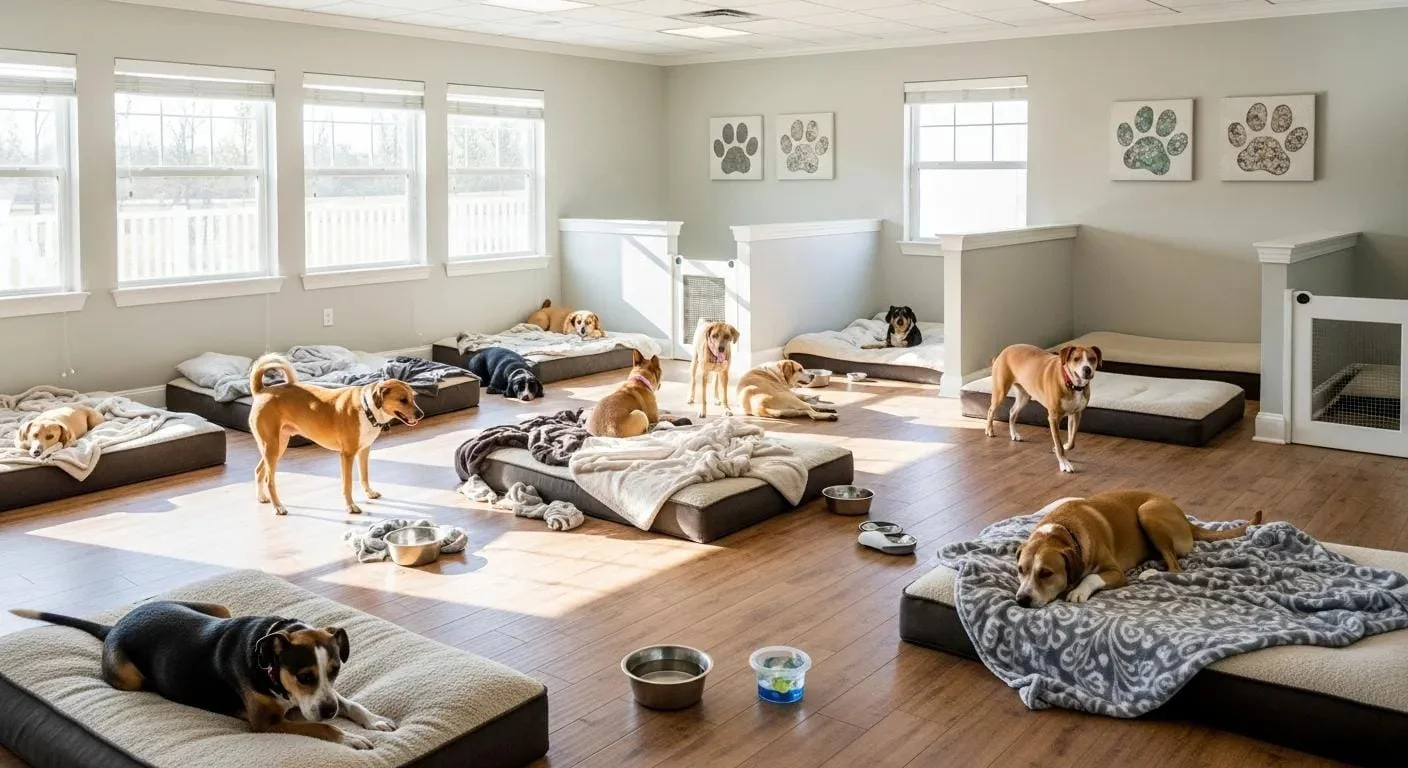
Dog Boarding
Offers a comfortable and safe overnight stay with attentive 24/7 care to make your pet feel right at home.
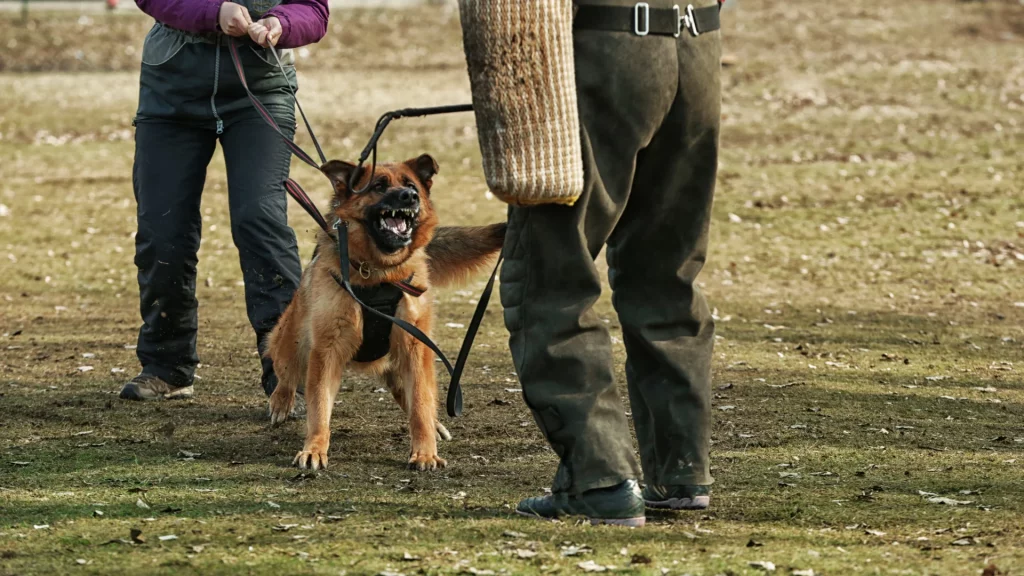
Board & Train
Combines immersive boarding with structured training to instill reliable real-world obedience and good habits.
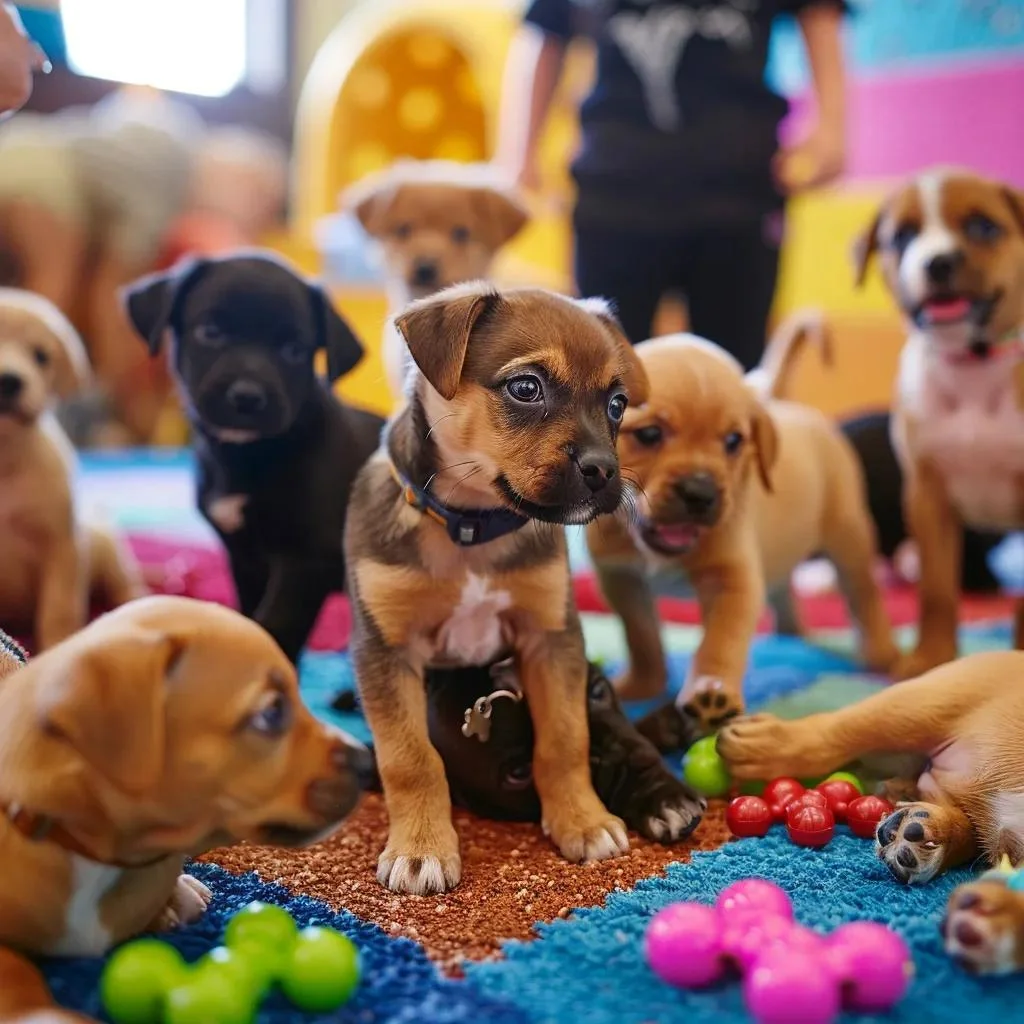
Puppy Training
Covers housebreaking, biting, and basic obedience to build a strong foundation for a well-behaved dog.
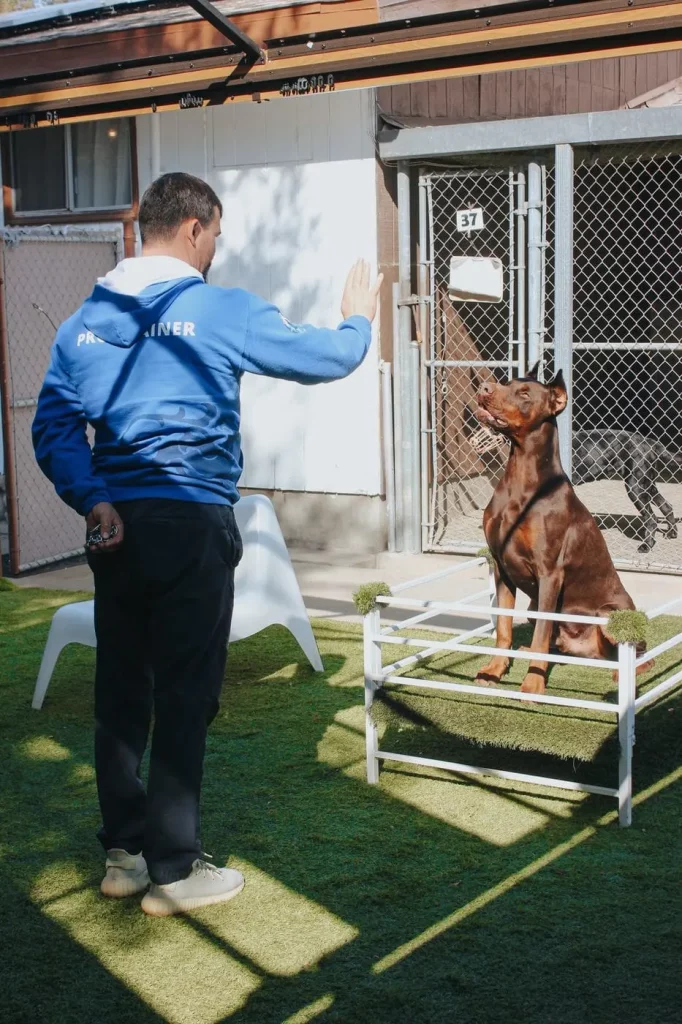
Obedience & Behavior Modification
Provides expert behavioral modification to safely manage triggers, eliminate dangerous reactivity, and build reliable control in public spaces.

Daycare / Grooming
Provides supervised daytime play and professional grooming services to keep your dog happy and clean.
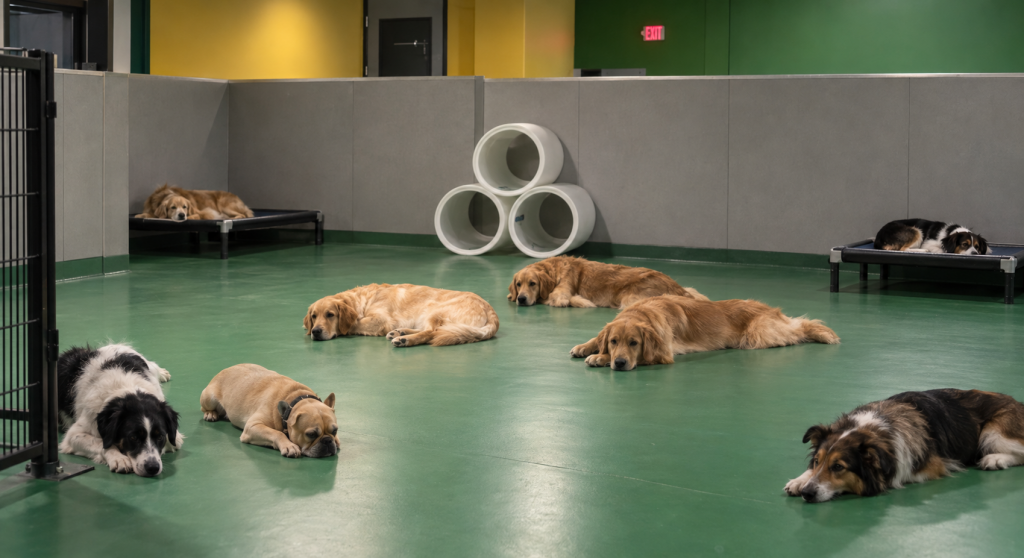
Dog Boarding
Enjoy comfortable overnight boarding with attentive care, private accommodations, and plenty of supervised activity.
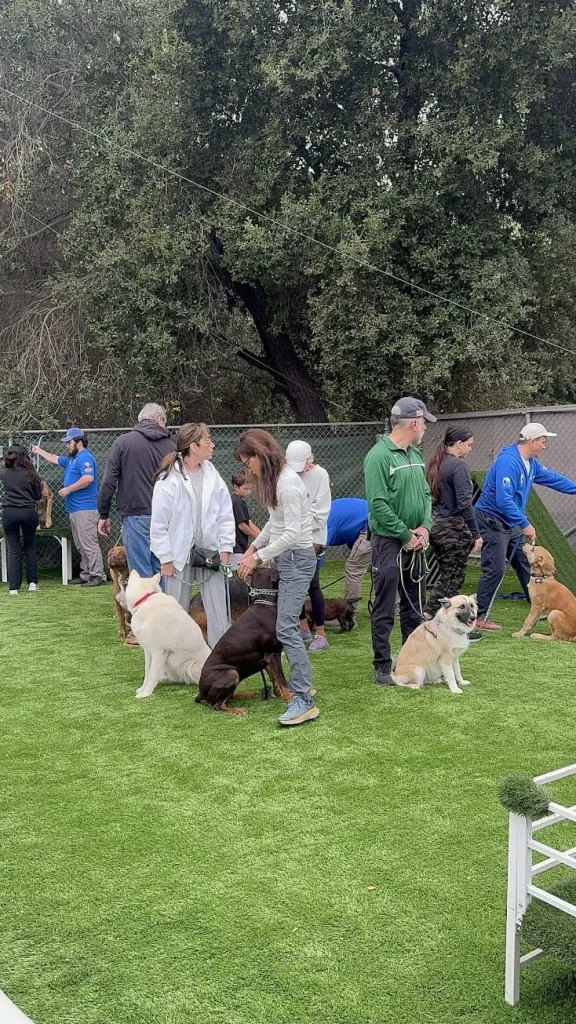
Board & Train
Combines comfortable boarding with structured training to build reliable real-world obedience and better everyday habits.

Puppy Training
Builds a strong foundation through house training, bite inhibition, socialization, and basic obedience.
Obedience & Behavior Modification
Addresses reactivity and challenging behaviors through structured training, trigger management, and reliable real-world obedience.
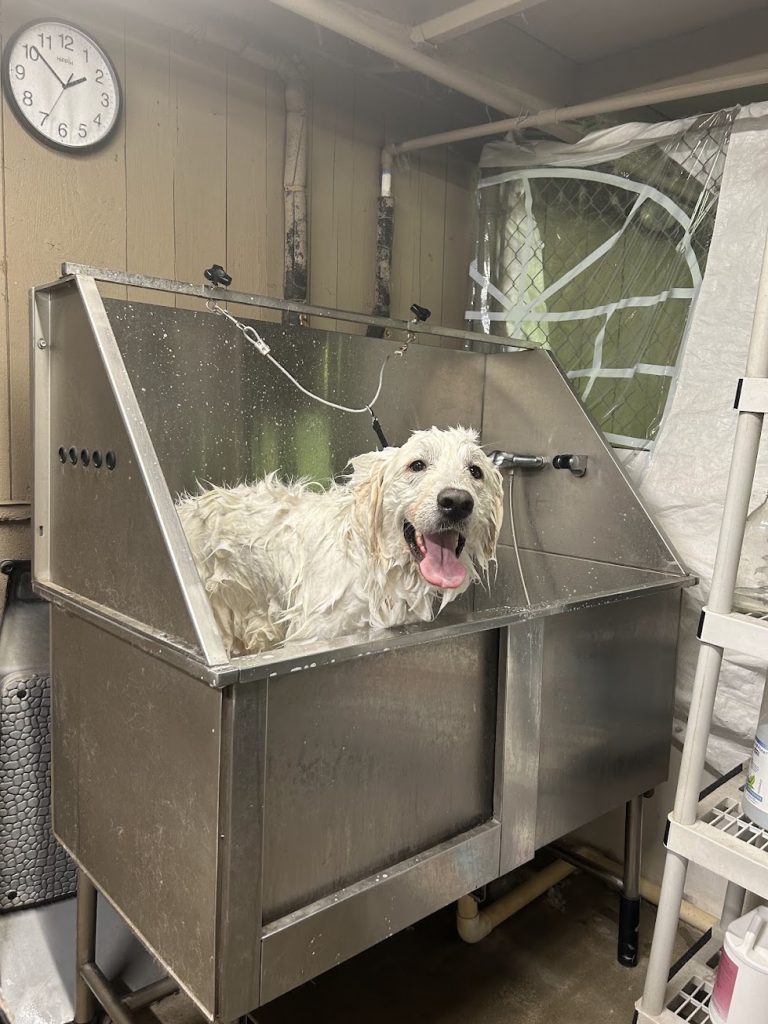
Daycare & Grooming
Combines supervised daytime activity with professional grooming and bathing services to keep your dog comfortable, active, and well cared for.
What Dog Parents Are Saying
EXCELLENT Based on 132 reviews
 Posted on Google

 Nick Carr
Trustindex verifies that the original source of the review is Google.
This is the best dog camp my dogs love coming here. The staff are very professional.Posted on Google Daniel EWhat a place! My wife and I visited a dear friend's dog at Topanga Pet Resort this past weekend. When we encountered Ivy, a precious 2 year old Pitty, she seemed very relaxed and well fed. We found the boarding facility to truly feel like a resort. The surrounding trees and ample greenery make the place very serene. All the dogs that were being housed and those who were coming in for training seemed genuinely happy to be there. Additionally, we met a couple of the trainers during our visit there and they were extremely knowledgeable and compassionate towards their canine friends. If you need a place to take your furry friend, Topanga Pet Resort is the place!Posted on Google
 Tony VOur experience with Topanga Pet Resort was absolutely amazing. We were thoroughly impressed with how they handled everything from start to finish. The staff was kind, professional, attentive, and genuinely cared about our pet’s comfort and well-being. The facility was clean, organized, and gave us peace of mind the entire time. Communication was excellent, and it was clear our pet was being treated with love and attention. It’s hard to find a place you can fully trust with your fur baby, but this team truly exceeded expectations. We will definitely be returning and highly recommend them to anyone looking for quality pet care!Posted on Google
 David StupplerThis is my 2nd time using them. First time was for 6 weeks and it went so well I went back for a 3 week stay for my two dogs. They are great at training puppy's, taking care of my big dog, and most importantly training my wife on how to walk a dog ;)Posted on Google
 Joel FishmanWe boarded our first dog for over 15 years when we were out of town. We're excited to begin boarding/ training there with our new rescue puppy.Posted on Google
 Kimberly MishThey did such a great job! My daughters dog had been so consistent since his training! Well worth the money!Posted on Google
 Cara DreherAmazing place to take your pet! We met with them for a meet and greet since our dog is pretty nervous around new people and has never been left, but they did everything they could to make sure he was comfortable, didn’t push his boundaries and took their time thoroughly answering all of our questions! They do a great job of meeting every individual pup’s needs and have excellent trainers on the property at all times! I can definitely feel good about bringing my dog here for boarding ❤️ prices are also very reasonable and they give lots of outside timePosted on Google
 Леон МTopanga Pet Resort — absolute love???? I can say with full confidence: these people REALLY know what they’re doing. I’ve left my dog Chuck there several times, and every time he comes home happy, calm, and full of good energy — like he spent time with friends, not just in a boarding facility. They don’t just watch the dogs, they train them, guide them, and do it with heart. You can feel how much respect and care they give to every animal. We also use their grooming regularly, and Chuck always comes out looking like a handsome glossy boy — fresh, clean, and proud of himself. I fully trust them. This place is honestly the best thing I’ve found for my dog. Thank you for caring for Chuck as if he were your own. ❤️❤️❤️Posted on Google
 Hannah SomWe have had our dog stay here for several week long stays and have had good experiences! They have a large outdoor area for the dogs to play. They also can accommodate any food requirements and special servicesVerified by TrustindexTrustindex verified badge is the Universal Symbol of Trust. Only the greatest companies can get the verified badge who has a review score above 4.5, based on customer reviews over the past 12 months. Read more
See Exactly What Boarding & Training Costs
Boarding rates, Board & Train packages, and add-ons — all clearly outlined.
Frequently Asked Questions
Everything you need to know before your dog’s first stay or Training Assessment.
Have questions? Give us a call
+1 888-818-1622
Why does my dog ignore me when I call at the park?
The park may contain significantly more rewarding distractions than your training environment. Your dog may understand the recall cue but lack enough practice responding to it around competing stimuli. Build difficulty gradually rather than expecting a home-trained recall to automatically work at the park.
How long does it take to train a reliable recall?
It depends on the dog’s age, temperament, training history, motivation, and the difficulty of the environments involved. Some dogs improve quickly, while dogs with deeply established avoidance or chasing behaviors need substantially more practice.
Is an e-collar necessary for a strong recall?
No. A strong recall begins with appropriate training and clear communication. Some professional off-leash programs may use an e-collar as one component of a broader training approach, but it is not a substitute for teaching the behavior.
Can rescue dogs learn reliable recall?
Yes. Rescue dogs can absolutely learn recall. Their previous experiences may affect how quickly they progress, so training should be adapted to their history, confidence, motivation, and behavior.
Is off-leash safe in Topanga Canyon without strong recall?
No. If your dog does not reliably return when called, off-leash freedom can create significant risks around wildlife, roads, steep terrain, and other hazards. Follow local leash regulations and use only appropriate areas for off-leash activity.
How long does it take to see real change with this behavior?
Many dogs can show improvement once training becomes consistent and the difficulty is appropriate. Reliable recall across challenging environments takes longer. Early progress should be measured by faster, more consistent responses, not simply by whether the dog eventually returns.
Will this behavior come back after training ends?
It can if recall is not maintained. Dogs need continued reinforcement and practice, particularly as environments and distractions change. Owners should continue incorporating recall into everyday routines after professional training.
Is this a dominance issue or a fear issue?
Usually, unreliable recall should not automatically be labeled a dominance problem. Dogs may ignore recall because of insufficient training, competing rewards, fear, anxiety, excitement, chasing instincts, or a history of reinforcement for staying away.
Can positive reinforcement alone fix this serious behavior?
Positive reinforcement is an important part of effective recall training, but successful recall also requires appropriate management, gradual increases in difficulty, timing, consistency, and sometimes additional training tools. The right approach depends on the individual dog.
Is board and train more effective than weekly sessions for this?
Board and train can provide more frequent structured practice, which may be helpful for dogs needing intensive work. However, owner participation remains important because the dog ultimately needs to respond reliably to their handler in everyday situations.
What happens if the behavior is too severe for typical training?
A professional trainer can assess the behavior and determine whether the dog needs a more controlled progression. Dogs with escape behavior, intense prey drive, extreme distraction, or a history of dangerous running should not simply be given more off-leash freedom and expected to figure it out.
Will my dog ever be safe and trustworthy again with this issue?
Many dogs can develop substantially more reliable recall with appropriate training and consistent maintenance. However, responsible owners should always account for the environment, local regulations, and the fact that no recall is guaranteed in every situation.
Have Questions? Give Us a Call
+1 888-818-1622
Ready to Start Your Dog’s Training Program?
Have questions about our training programs? Fill out the form below and our team will get back to you shortly.
