
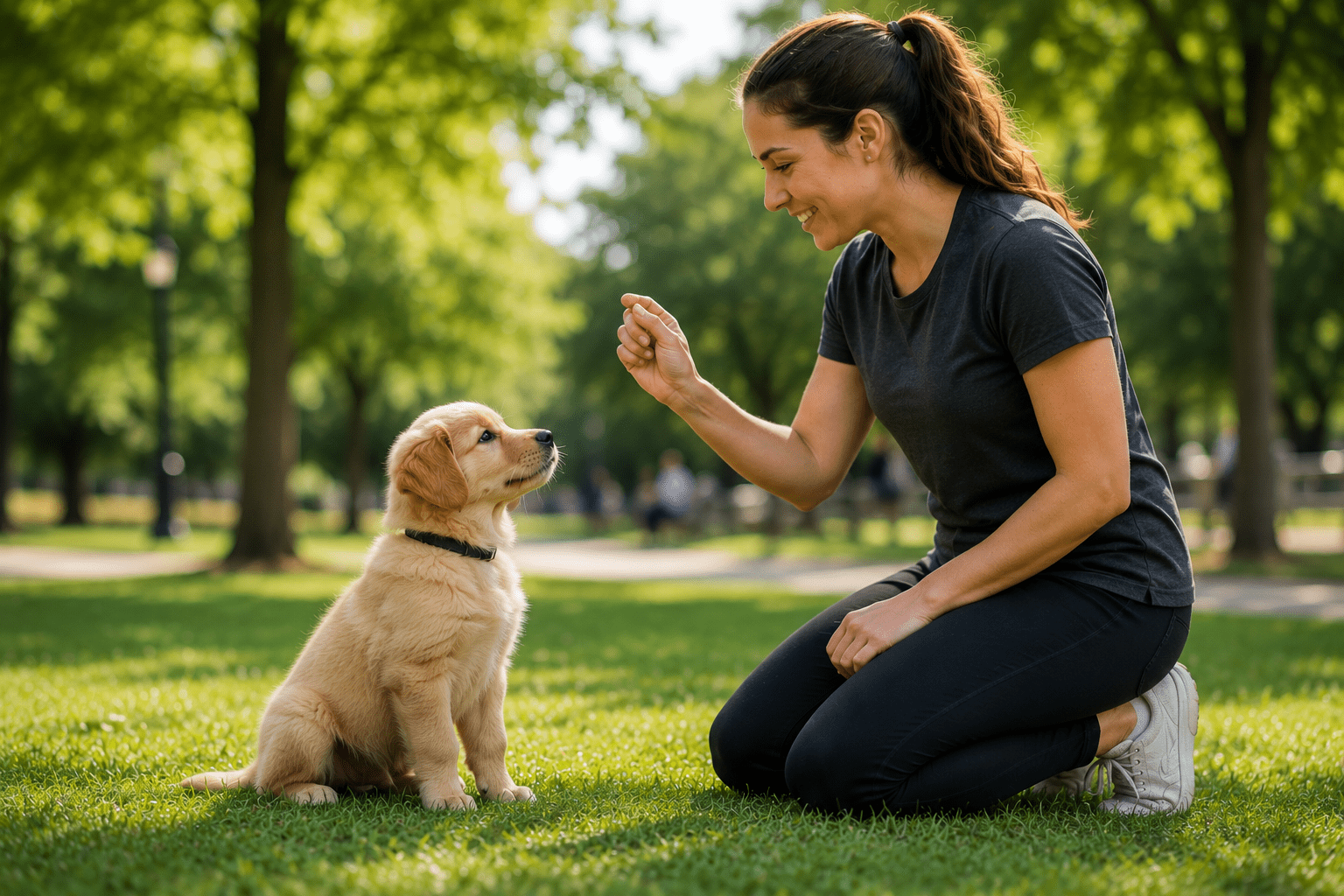
You just brought home a new puppy. Everything is chaos in the best possible way. There are accidents on the floor, shoes getting chewed, and a tiny creature who has absolutely no idea what “no” means yet. And somewhere between cleaning up the third mess of the morning, you start wondering whether it’s too soon to do something about all of this.
It’s not. In fact, the question most new dog owners ask too late is not “how do I train my puppy” but “why didn’t I start sooner.”
The research on this is clear, and so is the experience of anyone who has trained hundreds of dogs. The earlier you start, the easier everything gets. Not just for basic commands. For behavior, socialization, confidence, and the kind of relationship you’re going to have with your dog for the next ten to fifteen years. Every week you wait during those early months is a week of habits forming on their own, without your guidance.
This guide covers exactly when to start puppy training, what your dog is actually capable of learning at each age, the mistakes most owners make in the early weeks, and how to set your pup up for a life of being genuinely well-behaved.
The Answer Most People Get Wrong About Puppy Training Age
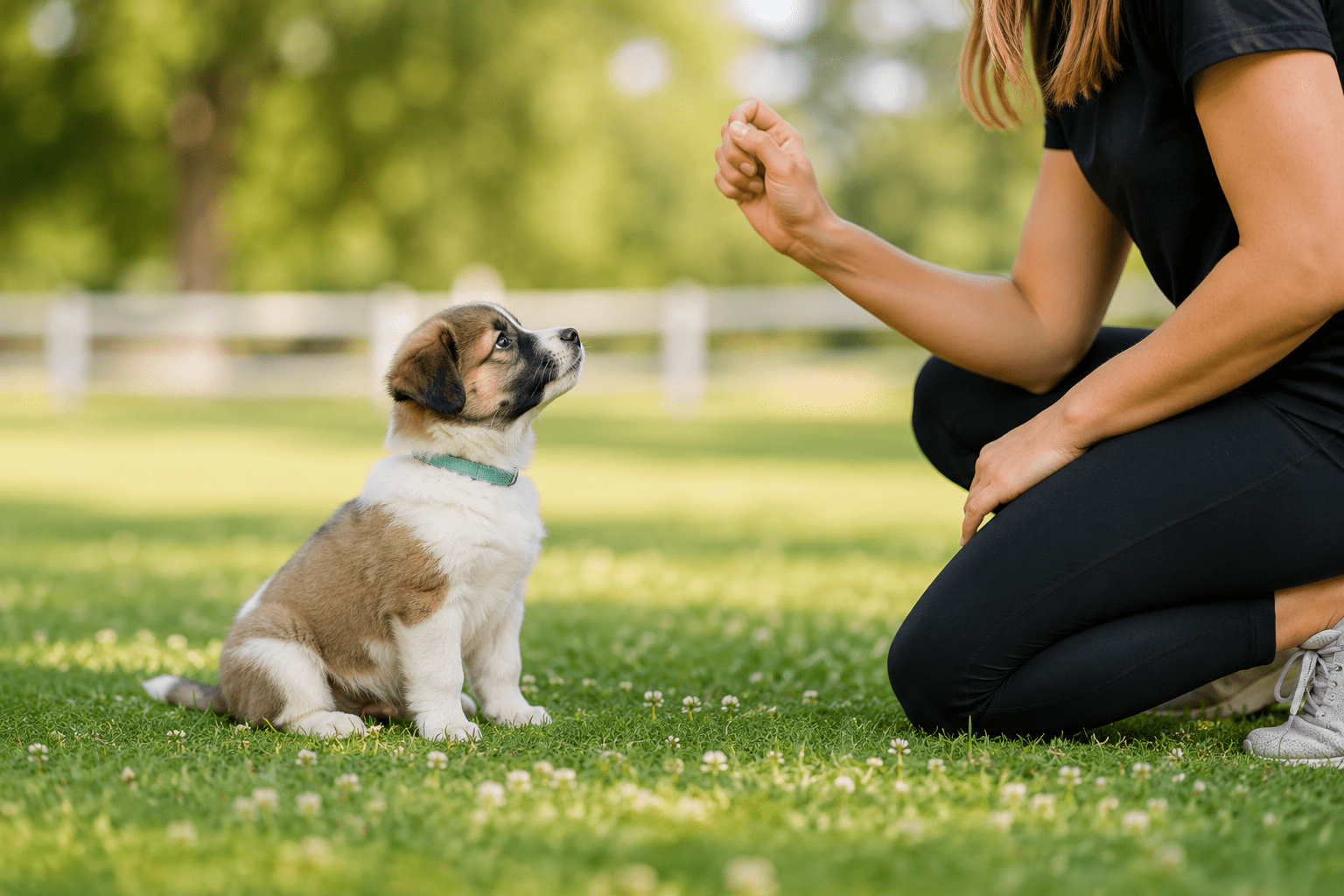
The most common misconception we hear is that puppies need to be at least six months old before any real training can begin. Some people were told to wait until after vaccinations are complete. Others were told young puppies simply can’t focus long enough to learn anything.
None of that holds up.
Puppies can begin learning from the moment they arrive in your home, which for most breeds is around 7 to 8 weeks of age. Their brains at this stage are extraordinarily receptive. According to the American Veterinary Society of Animal Behavior, the socialization window for puppies closes around 12 to 16 weeks of age. After that point, introducing your dog to new people, environments, sounds, and experiences becomes progressively harder.
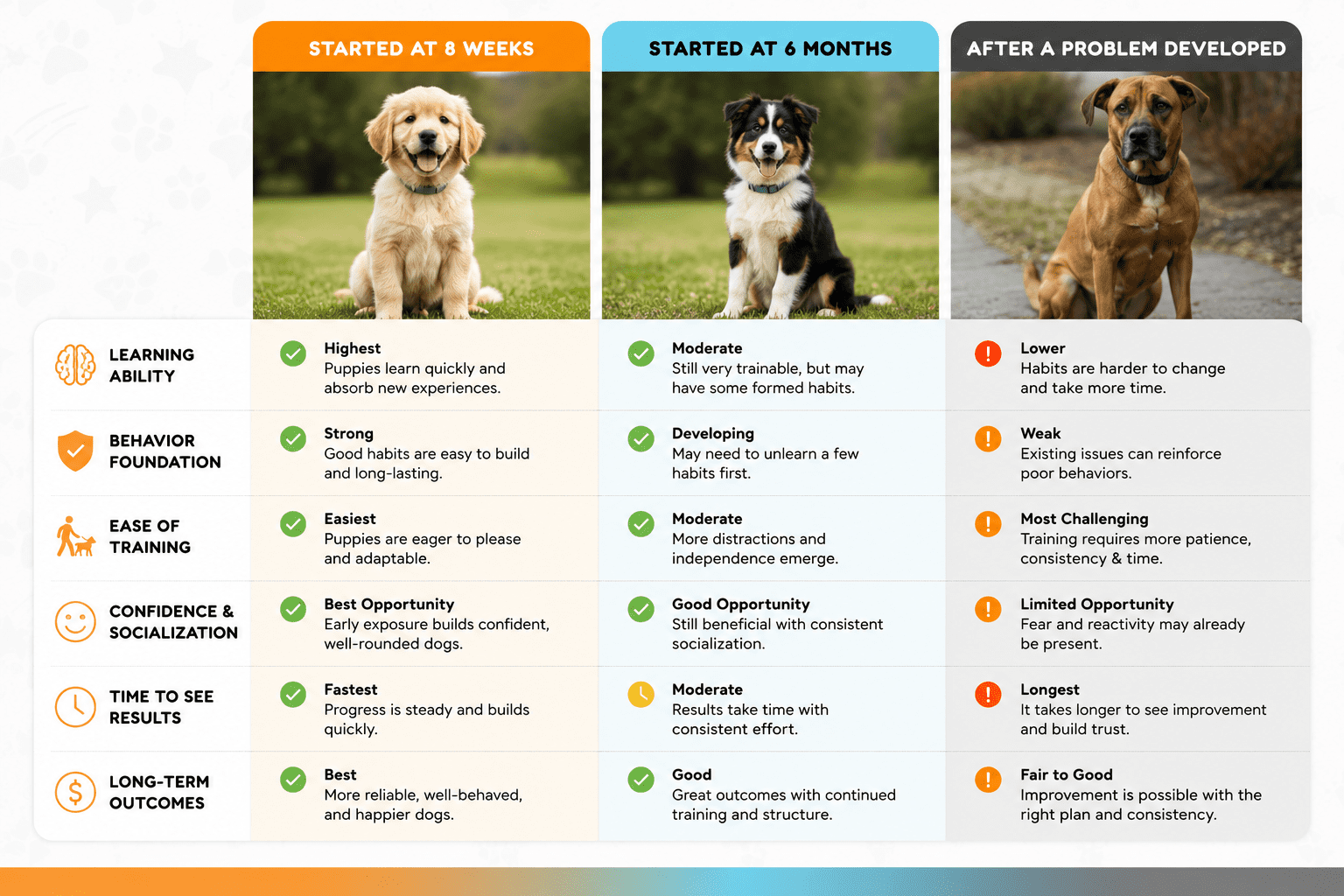
Waiting until six months to start training does not give you a blank slate. It gives you a dog that has already spent months practicing behaviors you probably didn’t want, with no structure to replace them.
What Puppies Are Actually Ready to Learn at Each Age
One of the reasons early training works so well is that young puppies are not yet set in their ways. They’re actively looking for information about how the world works and what gets them good outcomes. That’s the exact mental state you want to work with.
7 to 8 Weeks Old
This is when most puppies come home, and this is when training should start. Not intense, multi-hour sessions, but consistent, gentle guidance throughout the day.
At this age, puppies can begin learning:
- Their name and to look at you when called
- “Sit” through simple lure-and-reward repetitions
- The concept that calm behavior earns good things
- Basic boundaries around biting and jumping
- That a crate is a safe, comfortable space
Sessions should be short, two to five minutes at most, because attention spans at this age are genuinely brief. But brief and frequent is far more effective than one long session a week.
8 to 12 Weeks Old
This is the most critical window in your dog’s entire life. The socialization period is in full effect, and everything your puppy experiences now shapes how they relate to the world as an adult. A puppy that meets dozens of different people, hears traffic and city sounds, rides in a car, and visits different environments during this window grows into a far more confident, adaptable adult dog.
Training during this period should include:
- Continued name recognition and eye contact
- Sit, down, and stay in low-distraction settings
- Coming when called from short distances
- Walking on a loose leash for short periods
- Basic bite inhibition and redirecting chewing
What many people miss is that socialization itself is a form of training. Teaching your puppy that new experiences are safe and normal is foundational work that prevents fear-based behavior later on.
12 to 16 Weeks Old
The socialization window begins narrowing here. New experiences can still be introduced, but you’ll often notice a shift where your puppy becomes more cautious around unfamiliar things. This is normal and expected. It’s also a reminder that the window before this point was genuinely precious.
By this age, a puppy that has been consistently worked with should reliably respond to their name, know sit and down, understand basic leash walking expectations, and have a foundation of calm household behavior.
4 to 6 Months Old
This phase often surprises people because puppies can start to test things more. They’re growing physically, their confidence is building, and some of the early compliance you saw at 8 weeks starts to look like selective hearing at 5 months. This is completely normal.
It’s also the stage where the gaps in early training show up most clearly. A puppy that had consistent structure from 8 weeks handles this phase much more smoothly than one where training is only just starting.
This is also when more structured obedience work, distraction training, and basic obedience programs become highly productive.
Why the First 16 Weeks Shape the Dog You’ll Have for Life
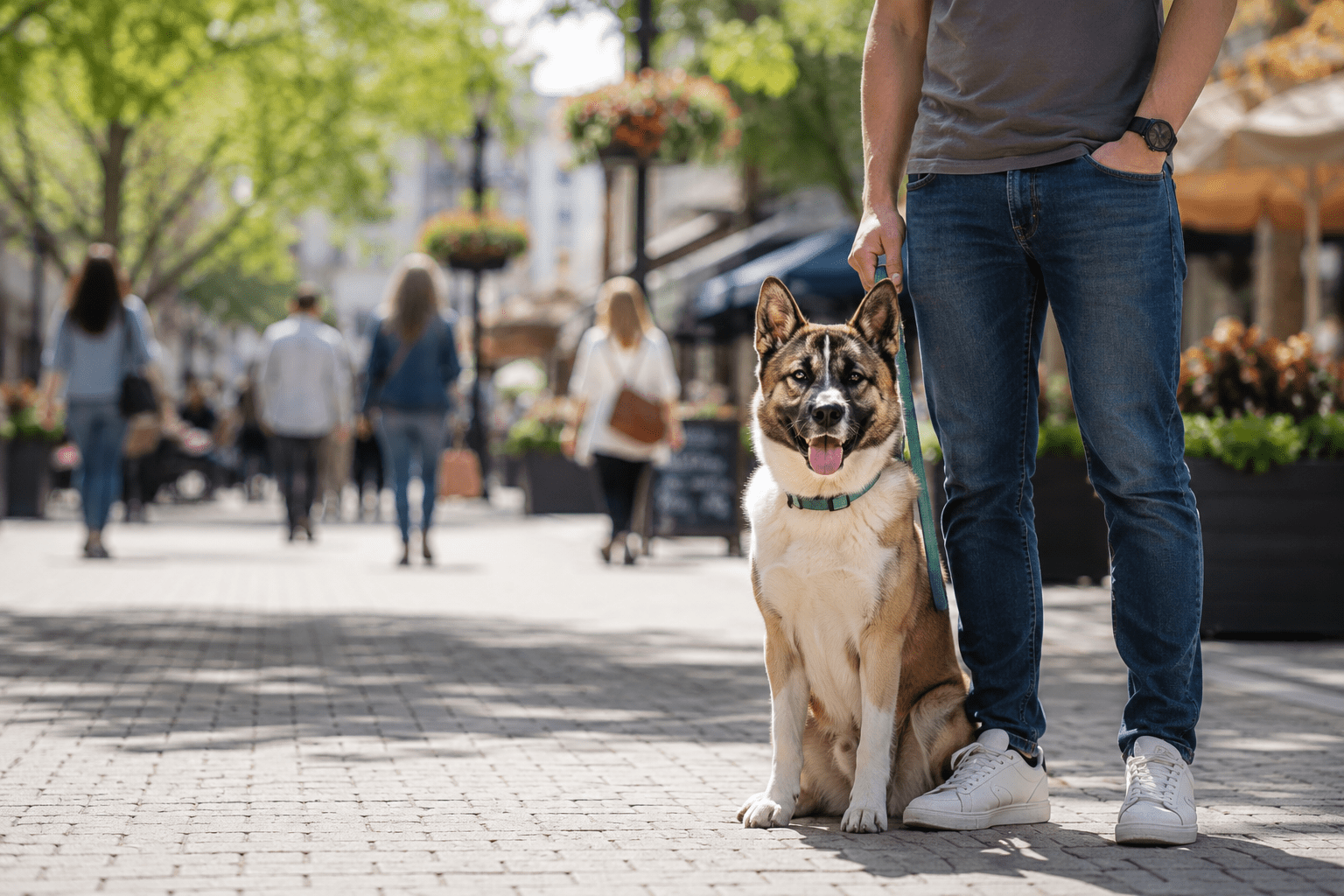
The concept of a critical period in development isn’t unique to dogs. Neuroscience research across species consistently shows that early experiences shape neural pathways in ways that are much harder to change later. With dogs specifically, the work done in the first few months has an outsized effect on:
Fear and confidence. A puppy that is properly socialized before 16 weeks is statistically less likely to develop fear-based reactivity, aggression toward strangers, or anxiety in new environments. One that misses this window often requires significantly more work later to address what early exposure would have prevented.
Bite inhibition. Dogs learn how hard is too hard when they play and interact with other dogs and with humans during early puppyhood. A puppy that doesn’t get this feedback early can grow into a dog that bites too hard in play without realizing it.
Household manners. Every day a puppy spends in your home without guidance is a day they’re forming their own opinions about where to sleep, what to chew, how to greet people, and whether jumping gets them what they want. Those opinions become habits faster than most owners expect.
Your relationship. Training early isn’t just about behavior. It’s about communication. A dog that has been taught to look to you for guidance from the beginning has a fundamentally different relationship with you than one that figured things out on its own.
The Mistakes That Make Early Training Harder Than It Needs to Be
Most early training problems aren’t about the dog. They’re about a few specific patterns that owners fall into without realizing the consequences.
Waiting for a problem before starting. Training is not a response to bad behavior. It’s the structure that prevents bad behavior from taking hold in the first place. By the time a dog has a real problem, you’re doing remedial work instead of foundational work, and that’s always harder.
Inconsistency between family members. If one person lets the puppy jump up and another corrects it, the puppy doesn’t learn not to jump. It learns that jumping works sometimes. That partial reinforcement is actually harder to extinguish than if jumping had always worked.
Sessions that are too long. Young puppies check out fast. Five minutes of focused training twice a day will produce better results than a thirty-minute session once a week. Frequency matters far more than duration at this age.
Skipping socialization because of vaccination concerns. This is one of the most consequential mistakes we see. The AVSAB position statement on this is clear: the risks of missing the socialization window outweigh the risks of controlled early exposure. Puppy classes in clean, well-managed environments with vaccinated dogs are generally considered safe and highly beneficial before the full vaccination series is complete. Talk to your vet about how to socialize safely while vaccines are still underway.
Treating every behavior in isolation. Training works when it becomes part of how you live with your dog, not a separate activity you turn on and off. A puppy that has to sit before the bowl goes down, wait before going through the door, and look at you before getting a treat is getting training built into every interaction throughout the day.
What to Teach First and What Can Wait
Not everything needs to happen on day one. Prioritizing the right things early makes the process much less overwhelming.
|
Priority |
What to Work On |
Why It Matters Early |
|
Week 1 to 2 |
Name, sit, crate comfort, house rules |
Foundation for everything else |
|
Week 2 to 4 |
Down, stay, leash introduction, recall |
Safety and control basics |
|
Week 4 to 8 |
Socialization, distraction training, loose leash |
Confidence and real-world manners |
|
Month 3 onward |
Advanced commands, off-leash work, specific behaviors |
Builds on solid foundation |
The things that can wait a little longer are advanced commands, off-leash reliability in high-distraction environments, and specialized work like service dog training or protection training. These require a foundation that takes time to build properly.
What cannot wait is socialization, bite inhibition, and basic household structure. These windows close, and closing them without the right experiences creates problems that are far harder to address later.
How Professional Training at the Right Age Changes Everything
There’s a meaningful difference between training a puppy yourself with good information and working with a professional trainer during those early months. Both have value. But what professional trainers bring is pattern recognition across hundreds of dogs, an understanding of what’s developmentally normal versus what’s a warning sign, and the ability to adjust approach based on what they’re actually seeing, not what a general guide says.
At Topanga Pet Resort, we’ve worked with puppies and dogs across every temperament, breed, and behavioral challenge you can imagine. With 50 years of combined experience across our team of six certified trainers, we’ve seen what happens when training starts early and what it takes to correct things when it starts late. The difference is real and consistent.
Our puppy training program is designed specifically for young dogs who are still in that prime learning window. We work on housebreaking, biting, early obedience commands, and the socialization experiences that make the biggest difference during those critical first months. Everything is adapted to where your puppy is developmentally, not where a standard curriculum says they should be.
We work with families throughout Los Angeles and surrounding areas from our facility at 1776 Old Topanga Canyon Rd in Topanga, where dogs have access to large indoor and outdoor areas, country views, and 5 to 6 hours of supervised playtime daily. It’s an environment that supports both training and the kind of confidence-building experiences young dogs genuinely need.
What Young Puppy Training Actually Looks Like Day to Day
People sometimes picture formal training sessions with equipment and structured drills. For a young puppy, good training looks much more like intentional living than a class.
A well-structured day for an 8 to 12 week old puppy might include:
- Name and eye contact practice during feeding
- A two to three minute sit and down session before going outside
- Leash on for five minutes in the yard to get comfortable with the feeling
- Crate time after play to build comfort with settling
- Redirect and reward every time the puppy chooses calm behavior over chaos
None of that takes special equipment or hours of your time. It takes consistency and the understanding that every interaction is an opportunity to reinforce what you want. That’s the mindset shift that makes early training work.
As your puppy moves into the 12 to 16 week range, you can start adding more structure. Recall practice from different rooms. Sit and wait before doors open. Down during meals. Short walks in new environments to build confidence. This is also an excellent time to enroll in a structured program if you haven’t already, because a trainer can see things you might miss and catch patterns before they solidify.
Ready to Start Your Puppy’s Training the Right Way?
If your puppy is between 7 and 16 weeks old right now, this is the most important window you’ll have. Starting today, even with a single consultation, puts you ahead of the timeline that most owners wish they had worked within.
Your first training session at Topanga Pet Resort is available for just $85. It’s a hands-on, one-hour session with one of our certified trainers where we assess your puppy, address your specific concerns, and build a plan that works for your dog’s temperament and your family’s life.
Call us at +1 888-818-1622 or book your first session online. You don’t need to wait for a problem to develop before asking for help. That’s the whole point.
Frequently Asked Questions About When to Start Puppy Training
When exactly should you start training a puppy?
The moment your puppy comes home, typically around 7 to 8 weeks of age. You don’t need to wait for vaccinations to be complete, and you certainly don’t need to wait until six months. The first 16 weeks are the most neurologically sensitive period of your dog’s life, and the habits and associations formed during that window carry forward into adulthood. Starting at 8 weeks with short, consistent sessions is far more effective than starting at 6 months with longer ones.
Can an 8-week-old puppy really learn commands?
Yes. Eight-week-old puppies can learn their name, sit, down, and the basics of leash walking. Their attention spans are short, so sessions need to be brief and frequent rather than long and infrequent. Lure-and-reward methods work extremely well at this age because puppies are highly food motivated and genuinely curious about cause and effect. Two to five minute sessions, multiple times a day, produce real results fast.
What if my puppy hasn’t been fully vaccinated yet? Is it safe to start training?
This is one of the most common concerns and one of the most important to get right. The American Veterinary Society of Animal Behavior recommends that puppies begin socialization before the vaccination series is complete because the risk of missing that socialization window is greater than the risk of controlled, clean-environment exposure. Well-managed puppy classes with vaccinated dogs, visits to homes with healthy dogs, and outdoor environments where unknown dogs haven’t recently been are generally considered safe options. Talk to your vet about the specifics for your area, but don’t let vaccination timing be the reason you miss the socialization window.
Is there such a thing as starting puppy training too early?
Not in any practical sense for a puppy that’s already in your home. The only real caution is making sure that early sessions are gentle, positive, and brief enough to match a young puppy’s attention span. Harsh corrections, forced repetition, or high-pressure training at a very young age can undermine confidence and create avoidance. Positive, reward-based methods work well from the very first week and build a foundation of trust alongside behavior.
My puppy is already 5 months old and we haven’t started training. Is it too late?
It’s never too late to start, though you should expect to do more work than if you’d started at 8 weeks. A 5-month-old puppy has already spent months practicing behaviors without guidance, and some of those will take consistent work to redirect. The socialization window has largely closed by this point, which means dogs with fear or reactivity issues at 5 months may need more specialized support. That said, behavioral modification training and basic obedience programs are effective at any age when done consistently and correctly.
How long should puppy training sessions be?
For puppies under 12 weeks, two to five minutes per session is ideal. From 12 to 16 weeks, you can extend to five to ten minutes. By five to six months, puppies can handle fifteen to twenty minute focused sessions if they’re engaged. The most important factor isn’t session length but frequency. Daily short sessions consistently outperform occasional long ones at every age. If your puppy starts losing focus, sniffing around, or avoiding eye contact, that’s a signal the session has run long enough.
Should I enroll in a puppy class or do private training?
Both have value, and the right choice depends on what your puppy needs. Group puppy classes are excellent for socialization, teaching your dog to work around other dogs and people, and exposing them to mild distractions in a safe environment. Private training allows a trainer to work specifically on your puppy’s temperament, your household rules, and any specific challenges that wouldn’t get enough attention in a group setting. Many owners benefit most from a combination, starting with a private evaluation and then supplementing with group work as the puppy develops. Our family dog training program is particularly useful for households where consistency across multiple people is part of the challenge.
What is the most important thing to teach a puppy first?
Name recognition and eye contact. Everything else in training depends on your puppy’s ability to tune into you in the moment. A dog that looks at you when called has a communication channel open. From there, sit is typically the next most practical command because it gives you a way to redirect almost any unwanted behavior into something you can reward. Recall, which is coming when called, is arguably the most important safety behavior and should be built from the very beginning with very high reinforcement so it becomes automatic.
Does breed affect when or how you should start training?
Breed affects training approach more than timing. Working breeds like Border Collies, Belgian Malinois, and German Shepherds often show focus and drive at a very young age and can handle slightly more complex work earlier than some other breeds. Brachycephalic breeds or more independent breeds like Basset Hounds may need a different reinforcement strategy to stay engaged. The timing rule, starting around 7 to 8 weeks, applies across breeds. What changes is how you structure sessions, what motivates your specific dog, and how quickly you can layer complexity.
What should I look for in a puppy trainer?
Certifications matter, but so does experience across real dogs with varied temperaments. Look for trainers who use positive, science-based methods with young puppies and who can clearly explain why they’re doing what they’re doing. Be wary of trainers who promise fast fixes through harsh corrections or who can’t articulate their approach clearly. Ask to see how they interact with a puppy before committing to a program. At Topanga Pet Resort, our six certified trainers bring over 50 years of combined experience across puppies and adult dogs with every behavioral profile imaginable, and we’re happy to walk you through our approach before you book anything.
