
Most dogs never need dog anal gland expression. The two small sacs beside the anus, usually called dog anal glands, empty on their own when a dog poops. When they don’t, the fluid thickens, the area gets sore, and owners notice scooting, licking, or a fishy smell. Topanga Pet Resort boards, grooms, and runs daycare for dogs in Topanga Canyon, so this guide also covers what to tell us before your dog’s next visit and when the problem belongs with a vet instead.
Key Takeaways
- Scooting, licking or chewing at the rear, a sudden fishy smell, and straining to poop are the main signs of full or impacted anal glands in dogs.
- Most dogs empty their glands naturally and don’t need routine expression, so no single schedule fits every dog.
- Dogs whose glands fill quickly may need expression on a vet’s schedule, because doing it too often can irritate the area.
- Blood, pus, swelling, an open wound, or obvious pain means a vet visit, not a grooming appointment.
- Tell your boarding, daycare, or grooming team about scooting or a recent gland problem before the visit, not at drop-off.
On This Page
- Signs Your Dog Needs Anal Gland Expression
- How Often to Express Dog Glands, and Who Should Do It
- Dog Anal Gland Expression Before Boarding, Daycare, or Grooming
- Dog Anal Gland Expression FAQs
- What to Do If Your Dog Is Scooting
Signs Your Dog Needs Anal Gland Expression
Dog scooting is the sign most owners notice first. The Merck Veterinary Manual’s overview of anal sac disease lists scooting, licking or biting at the anal area, and painful pooping as the usual signs. Watch for these:
- Dragging the rear across carpet, grass, or concrete
- Licking or chewing at the base of the tail
- A fishy smell that appears out of nowhere
- Straining or hesitating to poop
- Redness or swelling beside the anus
One scoot isn’t a diagnosis, since dogs also scoot over an itch. Several a day, or any other sign, deserves a call to your vet. Anal glands in dogs cause trouble more often in small breeds, and the American Kennel Club lists obesity, low fiber, chronic soft stool, and allergies as risk factors.
A dog that yelps or snaps when you touch the area is telling you it hurts, so get it checked before treating it as a behavior problem. If a dog stays tense about handling after the vet clears the glands, the trainers on our team can help. Beka’s specialties include confidence building.
How Often to Express Dog Glands, and Who Should Do It
There’s no calendar interval that suits every dog. PetMD’s veterinarian-reviewed guide says most dogs express their glands on their own when they poop and don’t need regular expression at home, and that over-expressing can irritate the area.
How to express dog anal glands depends on the method, and the two aren’t interchangeable:
- External expression uses gentle pressure from outside, at roughly the 4 and 8 o’clock positions beside the anus.
- Internal expression uses a gloved finger inside the rectum. Veterinary staff use this method, and it shouldn’t be done at home without a vet’s explicit instruction.
Stop if the sac feels firm but nothing comes out, the fluid is chunky or bloody, or your dog reacts with pain. Those signs can mean impaction, infection, or even a tumor, so a vet needs to look.
Dog Anal Gland Expression Before Boarding, Daycare, or Grooming
If your dog’s glands have been a problem, tell us before the visit. Dog boarding at Topanga Pet Resort means a private indoor room with air conditioning and 5 to 6 hours of supervised outdoor play a day on 6.5 acres of Topanga Canyon. A dog that’s scooting or licking itself raw will have a harder stay, so get the vet’s all-clear first.
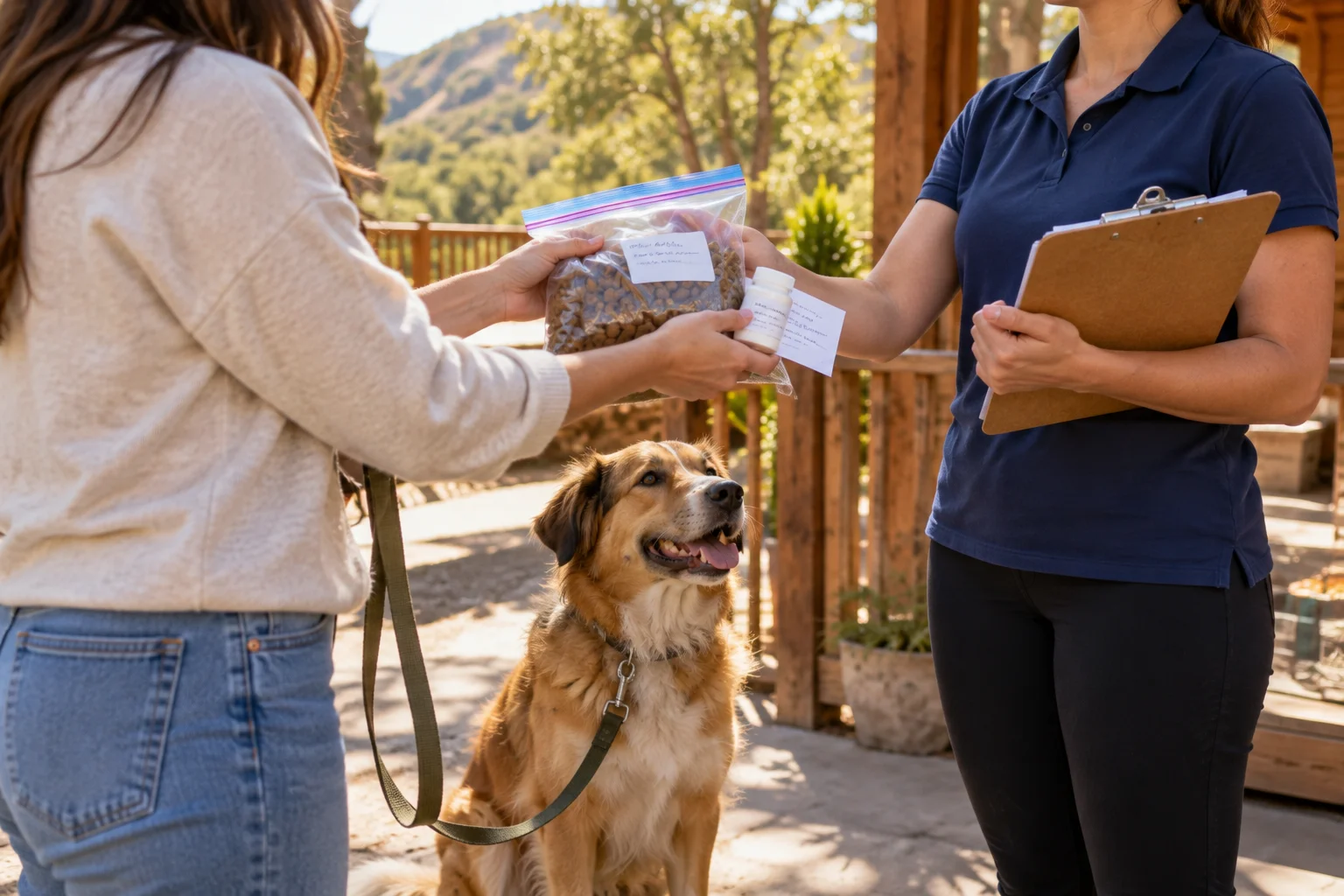
Owners bring pre-measured, labeled food and any medication with instructions. If your vet has recommended more fiber, pack that food and tell us at drop-off.
Dog daycare runs on supervised group play, so a dog in the middle of a flare-up is better off at home until the vet clears it.
Gland care appears among the à la carte add-ons on our grooming menu, and grooming can be added to a boarding or daycare visit. Book a grooming and bath appointment for a comfortable dog that needs routine care. A dog in pain needs a vet first.
Dog Anal Gland Expression FAQs
How do you know if your dog needs glands expressed?
Your dog may need its glands expressed if it scoots, licks or chews at its rear, strains to poop, or gives off a sudden fishy smell. One scoot isn’t proof, since dogs also scoot over an itch. Repeated scooting, swelling, or redness near the anus means a vet should examine your dog first.
Can I express my dog’s glands myself?
Only if your veterinarian has shown you how and confirmed your dog needs it. Owners are taught the external method, with gloves and gentle pressure at the 4 and 8 o’clock positions. The internal method belongs with veterinary staff. Expressing healthy glands too often can irritate the area.
How much does dog anal gland expression cost?
The price depends on who does it and whether your dog needs an exam. A vet visit adds the exam and any infection treatment, while a groomer’s add-on is a single line item. Topanga Pet Resort lists grooming add-ons, including gland care, on our pricing page, so you can see current rates before booking.
How often should dog glands be expressed?
Most dogs never need routine expression, so there’s no standard schedule. Dogs whose glands fill quickly or empty poorly may need it at intervals a veterinarian sets. Expressing too often can irritate the area, so ask your vet before putting it on a calendar.
What to Do If Your Dog Is Scooting
If your dog is scooting, call your vet first. Once the vet has examined your dog, you can plan the boarding, daycare, or grooming visit around what they found. Call Topanga Pet Resort at (888) 818-1622 or talk to our team about your dog’s next visit, and tell us what the vet said.





