
Kennel cough is a highly contagious respiratory infection, and most dogs with it are contagious before they ever cough. By the time you hear the honk, other dogs may already be exposed. Vets call the condition canine infectious respiratory disease complex, and it’s why many boarding and daycare facilities ask for vaccine records at the door. Most mild cases clear within about two weeks. Puppies and older dogs with other health problems can get seriously ill. Here’s how to spot kennel cough, what treatment looks like, and what we require from dogs that board or train at Topanga Pet Resort in Topanga Canyon.
Key Takeaways
- Kennel cough is the common name for canine infectious respiratory disease complex, which several bacteria and viruses can cause, including Bordetella bronchiseptica.
- The classic sign is a sudden, frequent, honking cough, though some dogs only sneeze or have a runny nose.
- Most infected dogs are contagious before symptoms appear, so a healthy-looking dog can still spread it.
- Mild cases usually improve in 7 to 10 days with rest, and vets reserve antibiotics for suspected pneumonia.
- Lethargy, fever, poor appetite, or fast or labored breathing means calling your vet right away.
- Vaccines lessen how sick a dog gets but don’t guarantee protection, and Topanga Pet Resort requires proof of Bordetella and four other vaccines before boarding or training.
On This Page
- Kennel Cough Symptoms and When to Call Your Vet
- Is Kennel Cough Contagious and How Does It Spread?
- Kennel Cough Treatment: What Vets Recommend
- How to Prevent Kennel Cough Before Boarding or Daycare
- Frequently Asked Questions About Kennel Cough
- Next Steps Before You Book a Dog Boarding Stay
Kennel Cough Symptoms and When to Call Your Vet
The hallmark of kennel cough, according to the American Veterinary Medical Association, is a frequent, honking cough that starts suddenly. It can sound like gagging or retching, and your dog may bring up white froth that looks like vomit. Coughing usually gets worse with exercise. Plenty of dogs also sneeze or have a runny nose or watery eyes. Some never cough at all.
Most cases stay mild. These signs suggest the infection has reached the lungs:
- Lethargy or low energy
- Decreased appetite
- Fever
- A wet, productive cough
- Rapid or labored breathing
Any of them means calling your vet right away, because bacterial pneumonia needs prompt treatment. Puppies and older dogs with other health problems face the highest risk. Phone the clinic before you drive over so staff can keep your dog away from other patients.
Is Kennel Cough Contagious and How Does It Spread?
Yes, and the timing makes it hard to contain. The AVMA says most infected dogs are contagious before they show any signs, and some of the organisms involved survive in the environment for weeks. Dogs pick it up through:
- Licking or nuzzling with an infected dog
- Cough and sneeze droplets
- Shared toys, bedding, and water bowls
- People’s hands
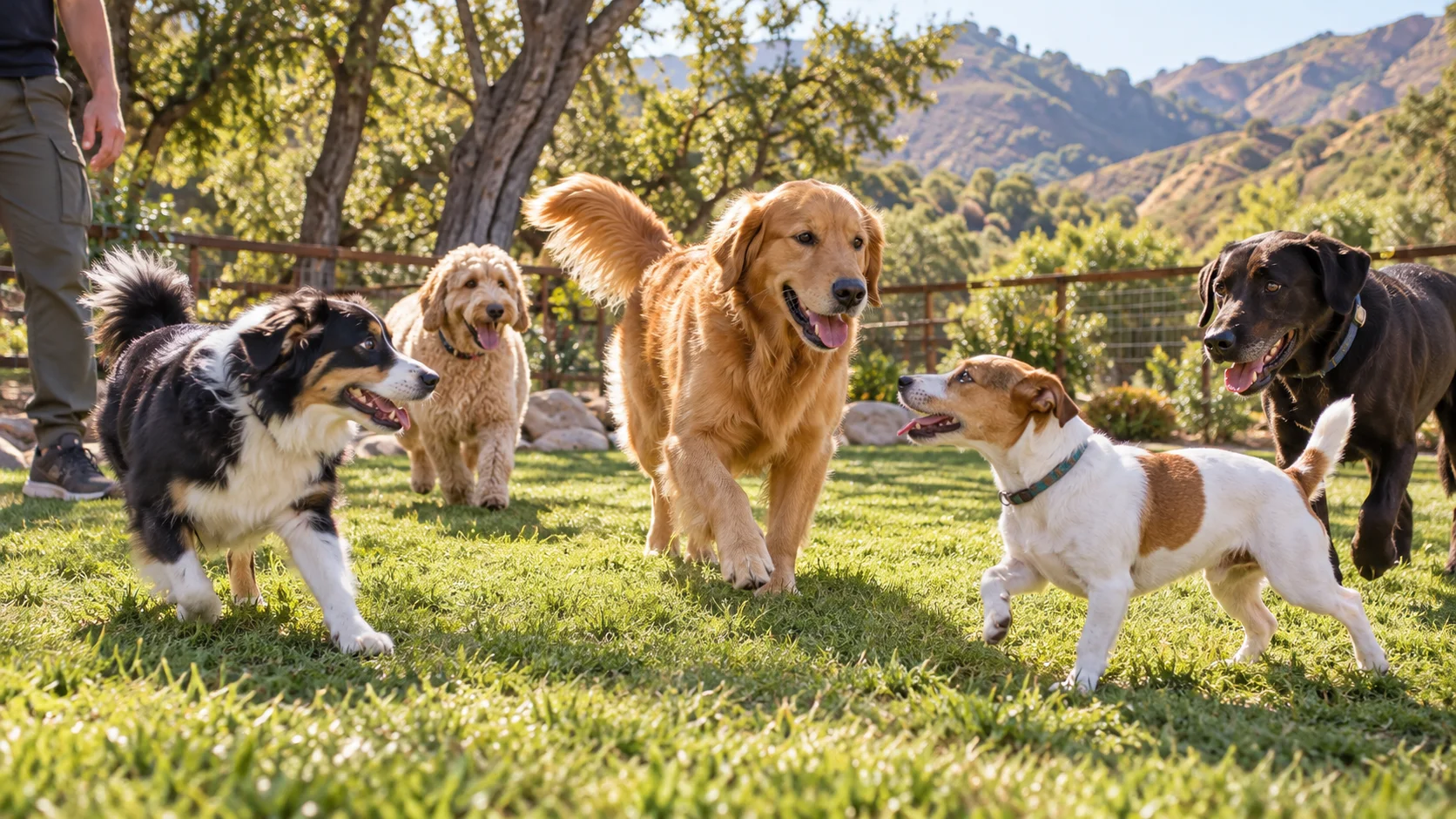
Cornell University’s College of Veterinary Medicine puts the incubation period at 2 to 10 days and ties outbreaks to close-contact places like grooming facilities, shelters, competitions, and parks. Shared air is the common thread, so supervised dog daycare and professional dog grooming carry the same risk as an overnight stay. Dogs at Topanga Pet Resort play outside in supervised groups on 6.5 acres and sleep in private indoor rooms, but no setup removes the risk entirely, because a dog can carry the infection before it shows.
Kennel Cough Treatment: What Vets Recommend
There’s no special drug for kennel cough. A mild case gets supportive care: rest, calm routines, and no pressure on the neck from a leash. The Merck Veterinary Manual calls the disease often self-limiting and says antibiotics usually aren’t needed unless there’s evidence of pneumonia. Your vet may:
- Examine your dog and rule out other causes of cough, since mild cases rarely need lab tests
- Prescribe a cough suppressant if coughing keeps your dog from resting, but not when pneumonia is suspected
- Prescribe antibiotics when pneumonia is likely, including illness that lasts more than 10 days
- Swab for lab testing if several dogs are sick or your dog worsens despite supportive care
Ask your vet before giving any medication, and keep your dog away from other dogs while it recovers.

How to Prevent Kennel Cough Before Boarding or Daycare
The kennel cough vaccine is your best tool, with one caveat. Cornell compares it to a flu shot: it doesn’t stop every infection, but it lessens how sick a dog gets and lowers the odds of pneumonia. The Bordetella vaccine is meant for dogs at least 12 weeks old that board, visit groomers, or play at dog parks. The AVMA recommends an annual intranasal vaccine for dogs in multi-dog settings, plus an injectable canine influenza vaccine where flu is circulating. Your vet decides what fits your dog.
Before a dog boards or trains with us, we require proof of five vaccines:
- Rabies
- DHPP (distemper, hepatitis, parvovirus, parainfluenza)
- Bordetella (kennel cough)
- Leptospirosis
- Canine influenza
Email your records or bring a copy before the stay. Between visits, keep your dog away from toys and bowls used by dogs outside your household, ask your vet about outbreaks before you travel, and check vaccine dates early so there’s time for a booster. Our checklist for preparing your dog for boarding covers the rest, and the page on dog boarding in Topanga Canyon explains what a stay includes.
Frequently Asked Questions About Kennel Cough
How long does kennel cough last in dogs?
Most mild cases of kennel cough clear up in 7 to 10 days, according to the AVMA. Cornell says dogs usually recover within two weeks, and the Merck Veterinary Manual notes the cough can persist 10 to 20 days. Call your vet if your dog’s illness runs past 10 days or gets worse. Stress can trigger a relapse during recovery, so keep the routine calm.
Can humans get kennel cough from dogs?
Rarely. Only Bordetella bronchiseptica, one of the organisms involved, is known to infect people, and the AVMA calls dog-to-human cases extremely rare, mostly in severely immunocompromised people. Cats can catch some of the same germs, so keep a coughing dog away from them too.
Can a dog with kennel cough go to daycare, boarding, or grooming?
No. The AVMA says to keep a dog with suspected kennel cough away from other dogs until it has fully recovered. That covers daycare, boarding, and grooming alike, because shared air and shared play yards are exactly how the cough spreads from one dog to the next. Ask your vet when your dog is clear, then call our team to talk through new dates.
Does the Bordetella vaccine prevent kennel cough completely?
No. Cornell compares the vaccine to a flu shot: it lessens how sick a dog gets and lowers the risk of pneumonia, but a vaccinated dog can still catch it. Several bacteria and viruses cause kennel cough, and the Bordetella vaccine covers only some of them.

Next Steps Before You Book a Dog Boarding Stay
Check your dog’s vaccine dates first. If everything is current, check boarding availability and we’ll go through the rest with you. If your dog has been coughing, hold off and call your vet before you book. Questions about records or dates? Call us at (888) 818-1622.


