
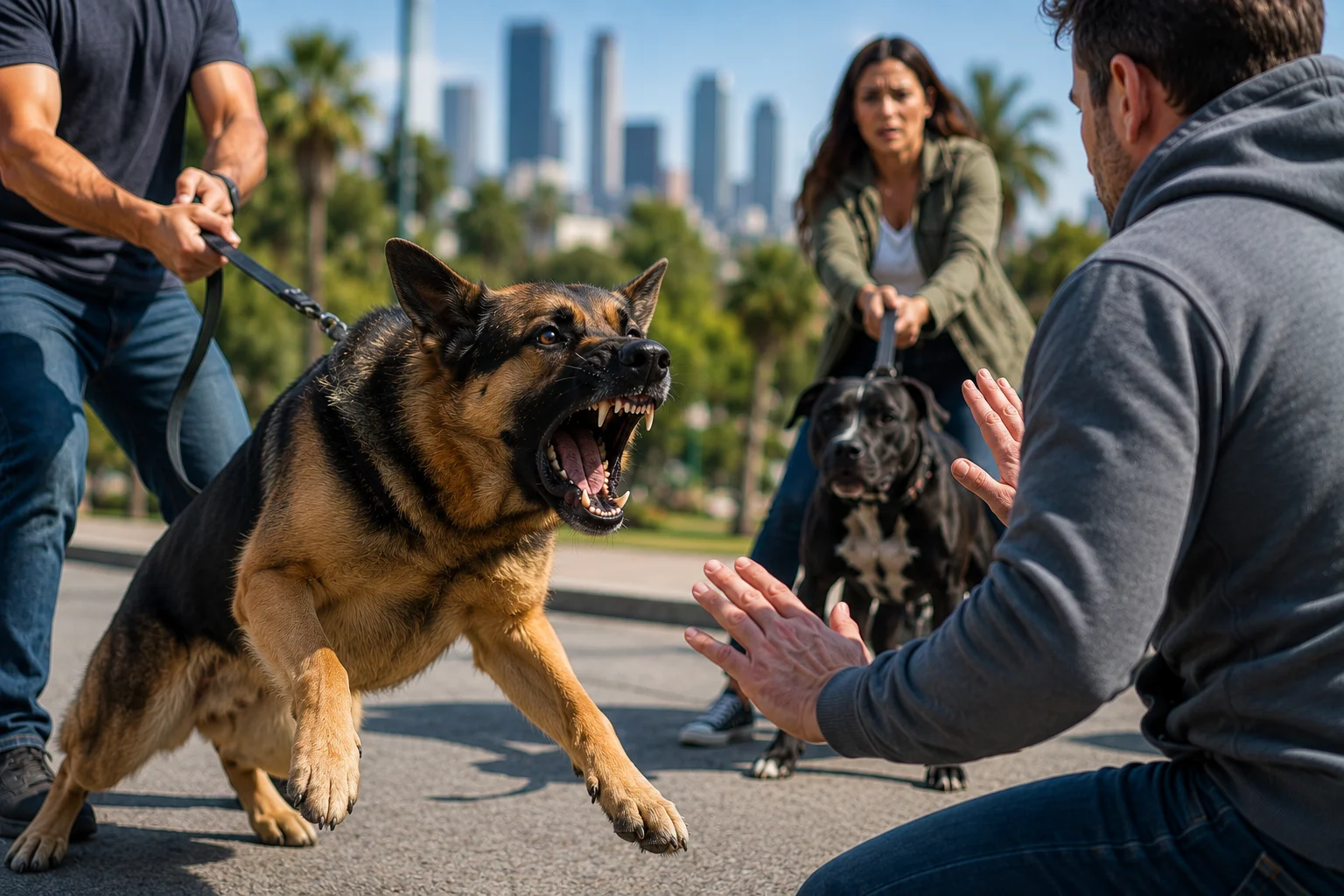
At Topanga Pet Resort, we bring over 50 years of combined experience, 6 certified trainers, and a full-service facility in California built around your dog’s wellbeing. Every dog in our care gets premium food, 5 to 6 hours of supervised playtime daily in large outdoor exercise areas, and the benefit of working with trainers who have seen and solved virtually every behavioral challenge imaginable.
Why Timing Matters: The Cost of Waiting Too Long
The longer a dog rehearses an unwanted behavior, the more neurologically reinforced it becomes. A 2021 study published in Applied Animal Behaviour Science found that dogs who received professional training intervention before 18 months showed significantly faster behavioral improvement than those trained later. Early action isn’t just easier. It’s more effective.
If you’ve been managing the problem on your own, you already know how exhausting it is. Professional training isn’t admitting defeat. It’s recognizing that some behaviors require structured, expert-led protocols that can’t be replicated with YouTube videos and good intentions.
The 10 Warning Signs Your Dog Needs a Professional Trainer
Aggression Toward People or Other Dogs
This is the most serious sign and the one that demands the fastest response. Aggression includes growling when approached, snapping, lunging at strangers or family members, and biting, even “soft” bites or mouthing that leaves marks.
According to the CDC, approximately 4.5 million dog bites occur in the United States each year, and the majority involve dogs known to the victim. This isn’t a small-dog problem or a breed problem. It’s a behavior problem that responds well to professional intervention when caught early.
If your dog has shown any aggression, read our in-depth guide on how to stop dog aggression toward guests in your home before your first training consultation.
Our Aggressive Dog Training program uses behavior modification protocols, not punishment, to address the root triggers driving reactivity.
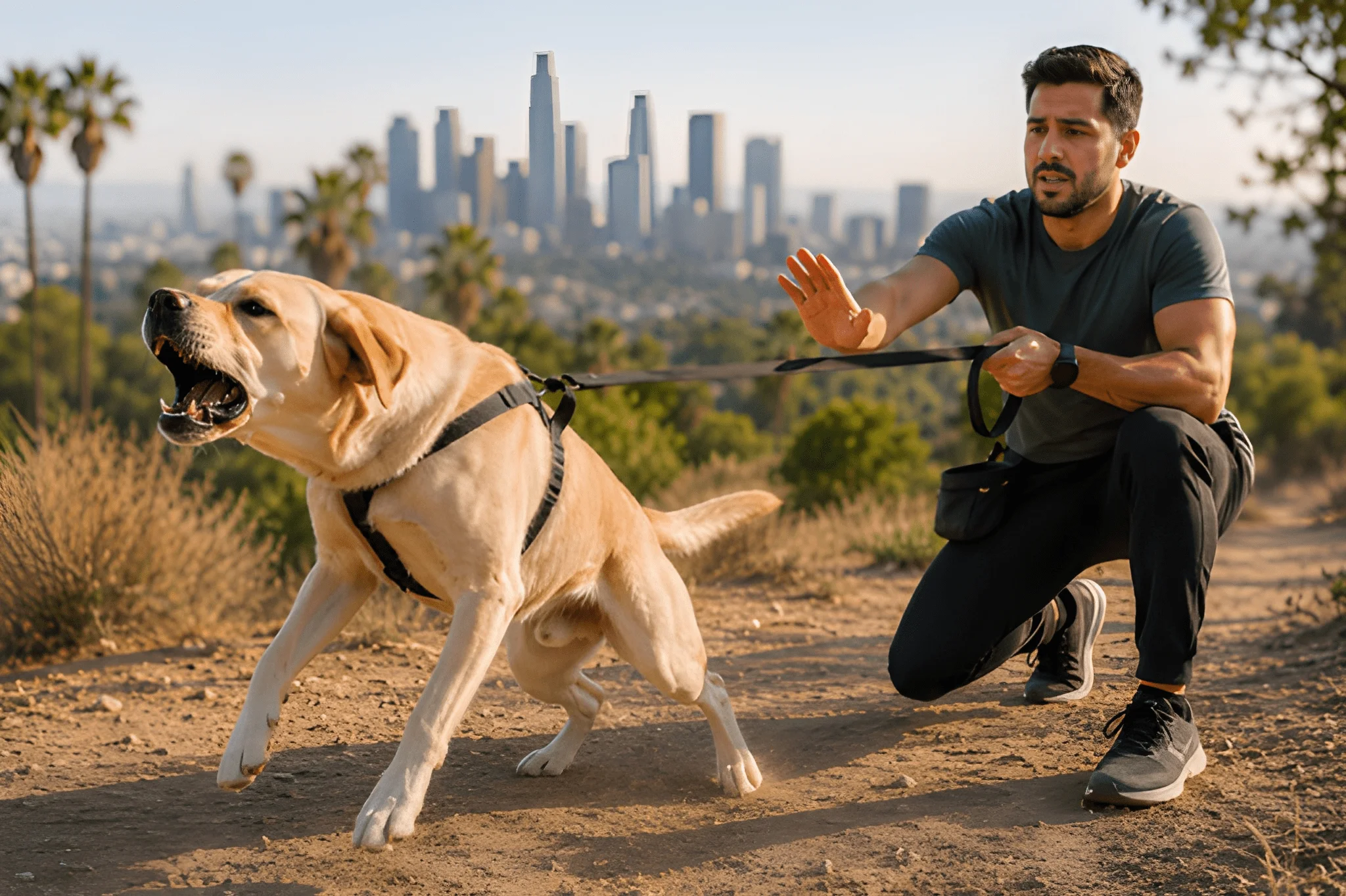
Leash Reactivity That’s Getting Worse
Leash reactivity looks like this: your dog spots another dog or person from across the street and immediately starts barking, lunging, and spinning. You brace yourself every time you head out the door.
This behavior typically stems from frustration or fear, not dominance. The leash creates a barrier that prevents the dog from controlling the social interaction, and that loss of control creates anxiety. Research from the Journal of Veterinary Behavior consistently shows that leash reactivity worsens without structured desensitization work.
A qualified trainer uses counter-conditioning and controlled threshold exposure to break the pattern. This isn’t something that improves on its own.
Separation Anxiety That Destroys Your Home and Your Dog’s Mental Health
Coming home to chewed baseboards, overturned furniture, and neighbors complaining about non-stop howling is a sign of clinical separation anxiety, not a bored dog acting out. These dogs are in genuine distress when left alone.
The ASPCA notes that separation anxiety is one of the most commonly misdiagnosed behavioral issues in dogs. Many owners confuse normal adjustment behavior with a condition that requires structured treatment. A professional trainer assesses severity and designs a gradual alone-time protocol that builds real confidence over time.
Ignoring Basic Commands Consistently
If your dog knows “sit” in the living room but completely ignores you at the dog park or when guests arrive, that’s a reliability problem, not a training success. Commands need to hold up under real-world distractions to be useful.
A dog that doesn’t reliably respond to “come,” “stay,” or “leave it” is a safety risk in Los Angeles traffic and off-leash areas. Our Basic Obedience program builds command reliability in progressively distracting environments so the behavior transfers to real life.
Resource Guarding Over Food, Toys, or Space
Growling when someone approaches the food bowl, snapping when a toy is taken away, or blocking the couch with visible tension are all forms of resource guarding. This behavior can escalate suddenly, especially in homes with children.
The American Kennel Club distinguishes between normal possessive behavior and pathological guarding. A professional trainer can assess where your dog falls on that spectrum and implement behavior modification before a bite incident occurs.
Fear Responses to Normal Stimuli
A dog that panics at car rides, trembles during walks, hides during normal household activity, or shuts down at the vet isn’t just “nervous by nature.” Chronic fear and anxiety affect quality of life and often worsen without targeted intervention.
Studies in applied animal behavioral science show that fear-based responses become more generalized over time. A dog afraid of loud noises often develops secondary fears about completely unrelated triggers. Structured desensitization and a confidence-building program can stop that progression.
Jumping on People, Especially Children and Elderly Adults
A 70-pound dog jumping on a child or senior is a genuine injury risk, even if the intent is playful. If verbal corrections and pushing down haven’t worked after weeks of trying, you’re dealing with a self-reinforcing behavior loop that needs to be interrupted by a professional.
This is one of the most common issues addressed in our Family Dog Training program, and one of the fastest to correct with the right protocol.
Destructive Behavior Beyond Puppyhood
Puppies chew. Adult dogs that are still destroying furniture, digging through walls, or shredding household items past 18 months are communicating something, usually boredom, anxiety, or an unmet need for mental stimulation and structure.
Check out our post on top behavioral issues for dogs for a breakdown of what drives destructive behavior and when it crosses into clinical territory that needs professional help.
Poor Socialization With Other Dogs or People
A dog that wasn’t properly socialized during the critical window of 3 to 14 weeks often struggles with unfamiliar people, environments, and animals throughout life. Signs include cowering, defensive snapping, excessive barking at strangers, and inability to relax in public spaces.
This doesn’t mean the dog is broken. It means the social learning gap needs to be addressed through structured, positive exposure. Los Angeles offers no shortage of environments to practice socialization, but doing it without a plan often makes things worse, not better.
You Feel Unsafe, Embarrassed, or Exhausted
This one doesn’t get talked about enough. If you dread walking your dog, avoid having guests over, feel embarrassed at the dog park, or have simply lost the enjoyment of owning your dog, that’s a sign. You don’t need to wait for a bite incident to justify getting help.
Read our guide on when to seek help for your misbehaving dog if you’re on the fence about whether professional training is warranted.
Understanding the Difference Between Aggression and Anxiety
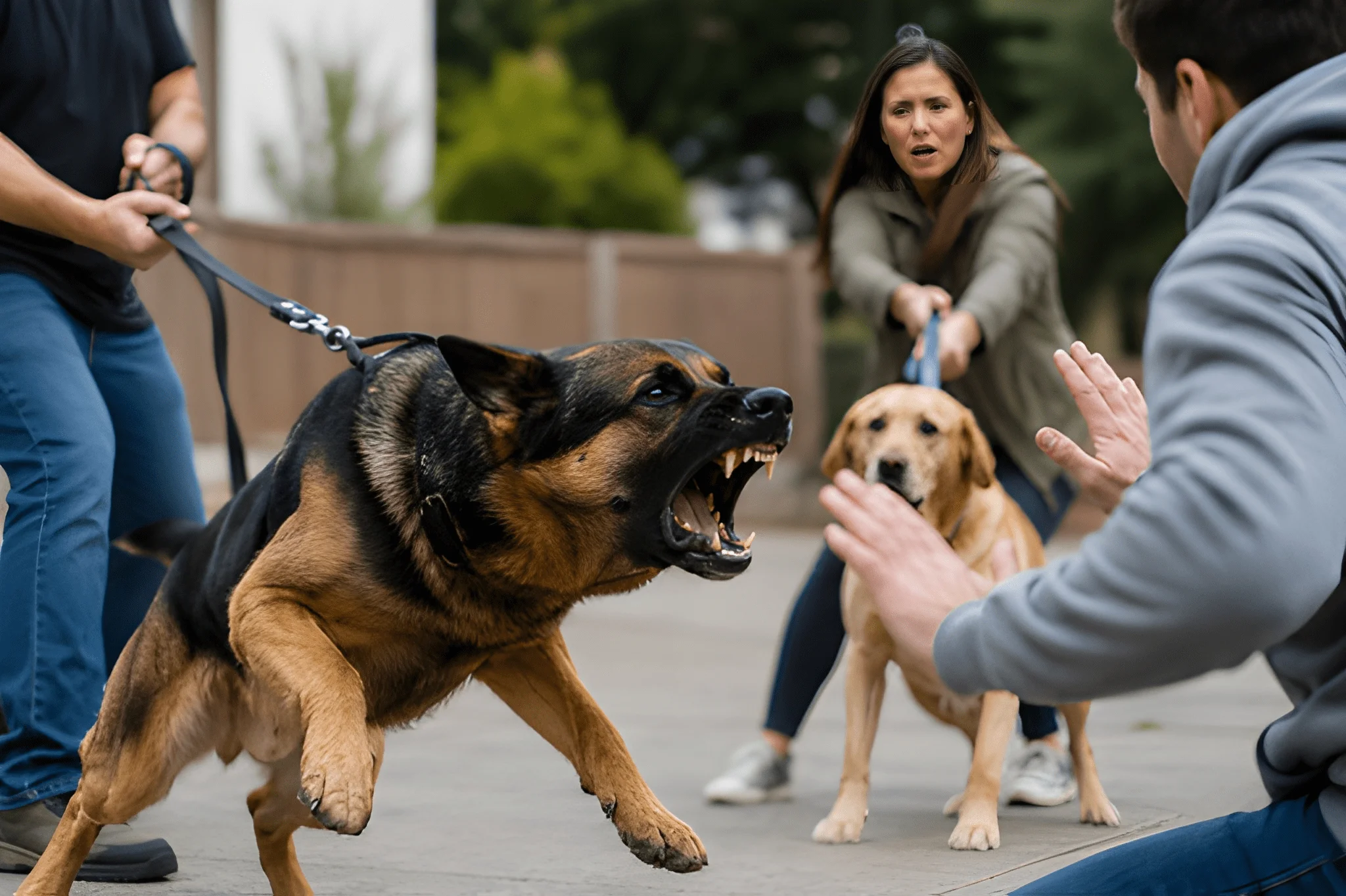
These two issues are often confused because they look similar from the outside: barking, snapping, lunging. But they require fundamentally different approaches.
Signs Your Dog Is Showing Aggression
- Direct, sustained eye contact before a reaction
- Stiff, forward-leaning posture
- Low growl with exposed teeth
- Reactions triggered by approach, perceived threats, or resource competition
Signs Your Dog Is Showing Anxiety
- Tucked tail, pinned ears, wide whale eye
- Panting or yawning in non-heat conditions
- Escape attempts, pacing, inability to settle
- Reactions triggered by unfamiliarity, separation, or unpredictable stimuli
Our 6 certified trainers assess which issue is actually driving the behavior before designing any intervention. Applying aggression protocols to an anxious dog, or vice versa, can make things significantly worse. The American Veterinary Society of Animal Behavior’s position statement on punishment makes clear that aversive methods for fear-based behavior increase anxiety rather than reduce it.
Which Training Program Is Right for Your Dog?
Puppy Training (8 Weeks to 6 Months)
The best time to train a dog is now. Our Puppy Training program covers foundational commands, bite inhibition, crate training, and early socialization, the building blocks that prevent most of the problems listed above from ever developing.
Basic Obedience Training
For adult dogs with inconsistent command response and general manners issues. Focuses on sit, stay, come, heel, and leave it, with a heavy emphasis on reliability in real-world environments. See our Basic Obedience program for full details.
Behavioral Modification Training
For dogs with established problem behaviors such as aggression, anxiety, reactivity, or guarding. Our Behavioral Modification Training program is built around evidence-based counter-conditioning and desensitization protocols designed by certified specialists.
Family Dog Training
Designed for multi-person households where the dog needs to behave reliably around children, guests, and varying daily schedules. The Family Dog Training program teaches every member of the household how to communicate consistently with the dog.
Aggressive Dog Training
For dogs with documented aggression toward people, animals, or both. This is our most intensive program. Learn more about our Aggressive Dog Training approach and what the process involves.
Not sure what fits your budget? Our post on how much to budget for dog training services in Los Angeles breaks down realistic cost ranges across program types.
Why Los Angeles Dog Owners Choose Topanga Pet Resort
There’s no shortage of trainers in Los Angeles. Here’s what sets Topanga Pet Resort apart:
50+ Years of Combined Experience
Our team has worked through virtually every behavioral case you can imagine, from mild disobedience to serious multi-trigger aggression. Experience means faster diagnosis, fewer wasted sessions, and better outcomes.
6 Certified Trainers on Staff
Every program is delivered by a credentialed specialist, not an assistant or intern. Certification means your dog’s training is grounded in current behavioral science, not guesswork.
A Facility Built for Dogs
Our large indoor and outdoor runs offer country views and genuine space to move. Dogs in our care aren’t confined to small kennels. They get 5 to 6 hours of supervised playtime every day in our expansive outdoor exercise areas.
Premium Nutrition Included
What a dog eats directly affects their energy, focus, and temperament during training. We feed premium food as standard, not an upgrade.
Training and Boarding Under One Roof
Dogs enrolled in board-and-train programs stay with us full-time, giving trainers maximum daily interaction and accelerating behavioral progress significantly. Our boarding program and daycare run alongside our training services seamlessly.
Read more about what advanced training programs actually deliver and why the environment your dog trains in matters as much as the method.
What Happens in Your First Training Session
Your first session is a behavioral assessment, not a standard training class. Here’s what the process looks like:
Step 1: Intake Questionnaire. You complete a detailed history form covering your dog’s breed, age, daily routine, trigger situations, prior training attempts, and your specific goals. This shapes the entire program.
Step 2: Behavioral Observation. One of our certified trainers observes your dog’s responses to common stimuli in a controlled setting. This identifies severity, threshold, and whether the behavior is fear-driven, conflict-driven, or operantly conditioned.
Step 3: Program Recommendation. Based on the assessment, you receive a recommended training plan with clear milestones, realistic timeline estimates, and a breakdown of what each phase involves. No guesswork, no vague promises.
Step 4: First Active Work. If time allows, the first active session begins. Typically this covers foundational engagement exercises to establish the trainer-dog relationship and start building the communication framework.
Want to know what professionals look for that most owners miss? See our guide on what Los Angeles dog obedience training experts actually do differently.
How to Book Your Consultation
Getting started takes less than 5 minutes:
- Call or text: +1 888-818-1622
- Email: topangapet@gmail.com
- Visit: 1776 Old Topanga Canyon Rd, Topanga, CA 90290
Your first session, which includes a full Behavioral Assessment plus Active Training, is available for $85. Limited availability. Book early.
Frequently Asked Questions
How do I know if my dog’s behavior is serious enough to need professional help?
If you have been trying to correct the behavior consistently for more than 2 to 3 weeks with no improvement, or if the behavior poses any safety risk to people or other animals, professional help is warranted. You do not need to wait for an incident. See our full breakdown of when to seek help for a misbehaving dog.
Can older dogs be trained, or is it too late?
It’s never too late, but it does take longer. Older dogs have more ingrained behavioral patterns, which means behavior modification requires more repetitions and more time. Dogs of any age can make significant improvements with consistent, professional-led training.
My dog is only aggressive at home. Does that still need professional attention?
Yes, and arguably more so. Home-environment aggression often involves resource guarding, territorial behavior, or conflict with family members. These situations carry the highest bite risk because they involve people the dog knows well. Our guide on stopping dog aggression toward guests is a good starting point before your first consultation.
How long does it take to see results from professional dog training?
Simple command reliability issues often improve within 4 to 8 weeks of consistent work. Complex issues like separation anxiety or multi-trigger aggression can take 3 to 6 months of structured intervention. The key variable is how consistently the owner reinforces the training at home between sessions.
What training methods does Topanga Pet Resort use?
We use positive reinforcement-based methods aligned with AVSAB’s evidence-based position statements. This means reward-based conditioning, desensitization, counter-conditioning, and structured management protocols. We do not use punishment, prong collars, or shock-based tools.
Is group class or private training better for an aggressive dog?
Private training is strongly recommended for dogs with any level of aggression. Group classes expose reactive dogs to uncontrolled triggers before they have the skills to handle them safely. Once behavior has stabilized through private work, group exposure can be introduced as a controlled socialization exercise.
How much does dog training cost in Los Angeles?
Costs vary significantly based on program type and intensity. Our post breaking down average dog training costs in Los Angeles covers what to expect across private sessions, board-and-train programs, and group classes, with no hidden fees.
Can I train my dog at home without professional help?
Basic commands like sit, stay, and come can be taught at home with consistency and positive reinforcement. But behavioral issues involving aggression, severe anxiety, or reactivity carry real safety risks and require professional assessment. Attempting to modify these behaviors without expertise often reinforces them. Our post on why professional obedience training matters explains the difference in detail.
What should I do if my dog bites someone?
Secure the dog immediately, provide first aid to the person bitten, document the incident, and contact a professional trainer the same day. Do not wait. A bite incident is both a safety escalation and a potential liability issue. Early professional intervention addresses both.
Does Topanga Pet Resort offer boarding alongside training?
Yes. We offer boarding and daycare as standalone services, and these can be combined with training programs for owners who want an immersive approach. Dogs in our board-and-train program benefit from 5 to 6 hours of supervised outdoor playtime daily alongside structured training work, which accelerates progress significantly compared to weekly private sessions alone.





