
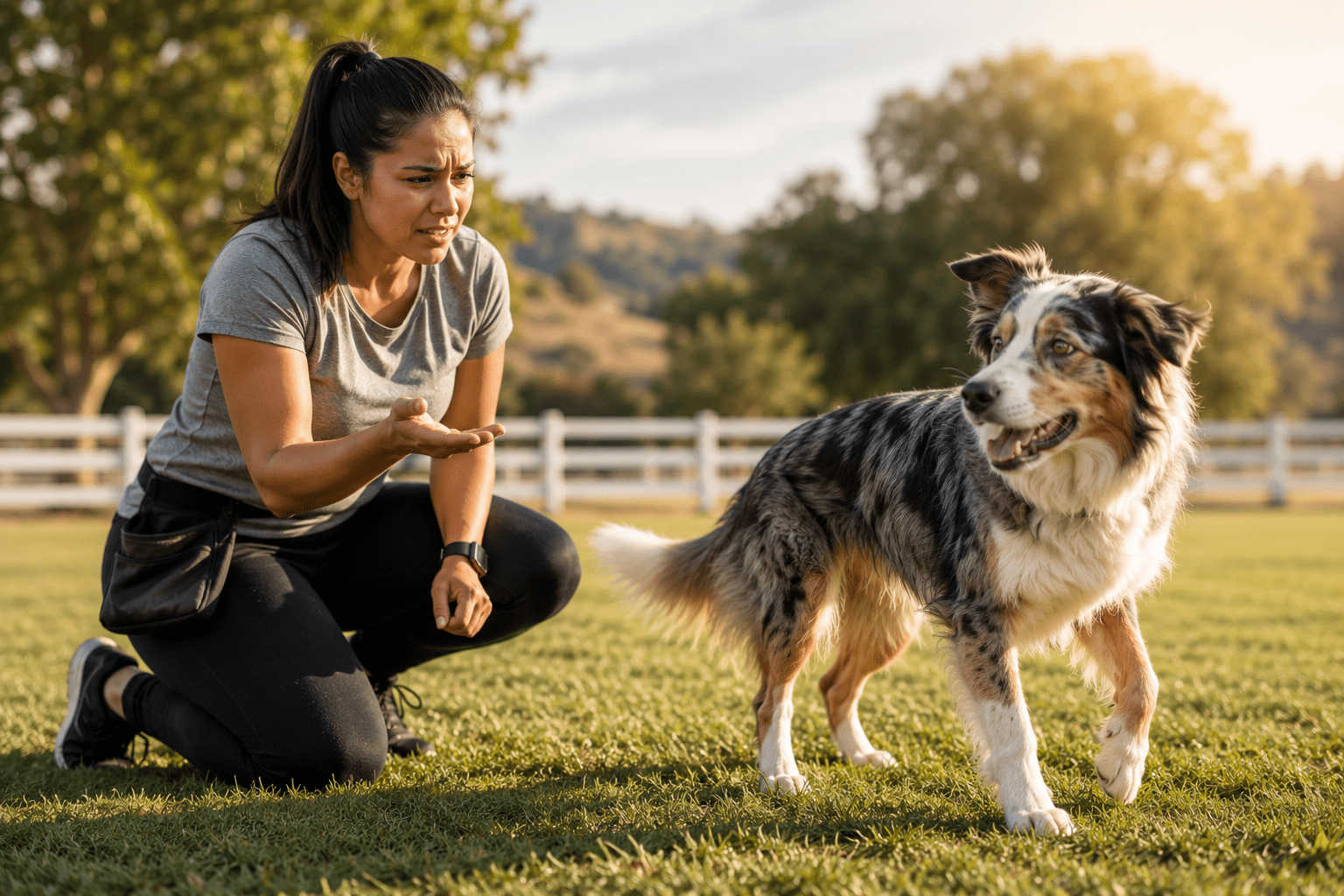
If your dog suddenly stops listening, ignores commands they used to know, or seems impossible to train no matter how hard you try, you are not alone.
One of the most frustrating parts of owning a dog is feeling like all your effort is going nowhere. You spend time teaching commands, watching videos, buying treats, repeating the same exercises, and then one day your dog acts like they forgot everything.
That usually leaves people wondering:
- Why is my dog training not working?
- Did my dog regress in training?
- Am I doing something wrong?
- Is my dog stubborn?
- Should I start over?
In many cases, the issue is not that your dog cannot learn. It is that the training approach is inconsistent, confusing, rushed, or not built around how dogs actually learn and retain behavior.
At Topanga Pet Resort, we work with dogs of all ages, breeds, and temperaments every day. With more than 50 years of combined experience and a team of 6 certified trainers, we have seen nearly every type of training struggle imaginable. Many clients come to us after months of frustration, feeling stuck with dog training and unsure what to do next.
Why Does Dog Training Stop Working
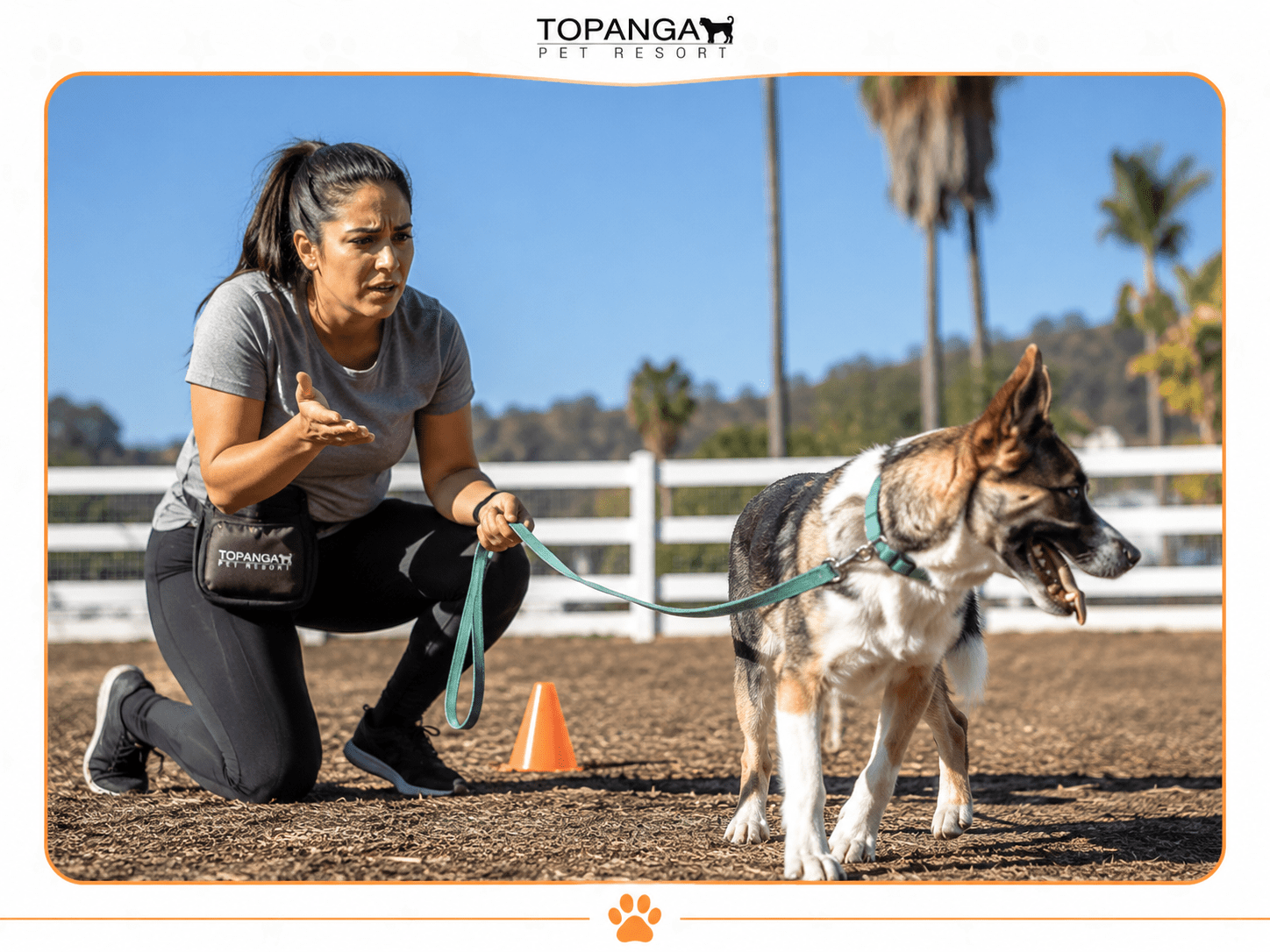
Dog training usually stops working because the dog is confused, overwhelmed, under-stimulated, over-stimulated, or receiving inconsistent feedback.
Most dogs are not refusing to learn out of defiance. They are reacting to the environment, unclear communication, stress levels, energy levels, or repeated mixed signals.
A dog may respond perfectly at home but completely ignore commands outside. That does not mean training failed. It means the dog has not fully generalized the behavior across different environments.
Some of the most common causes include:
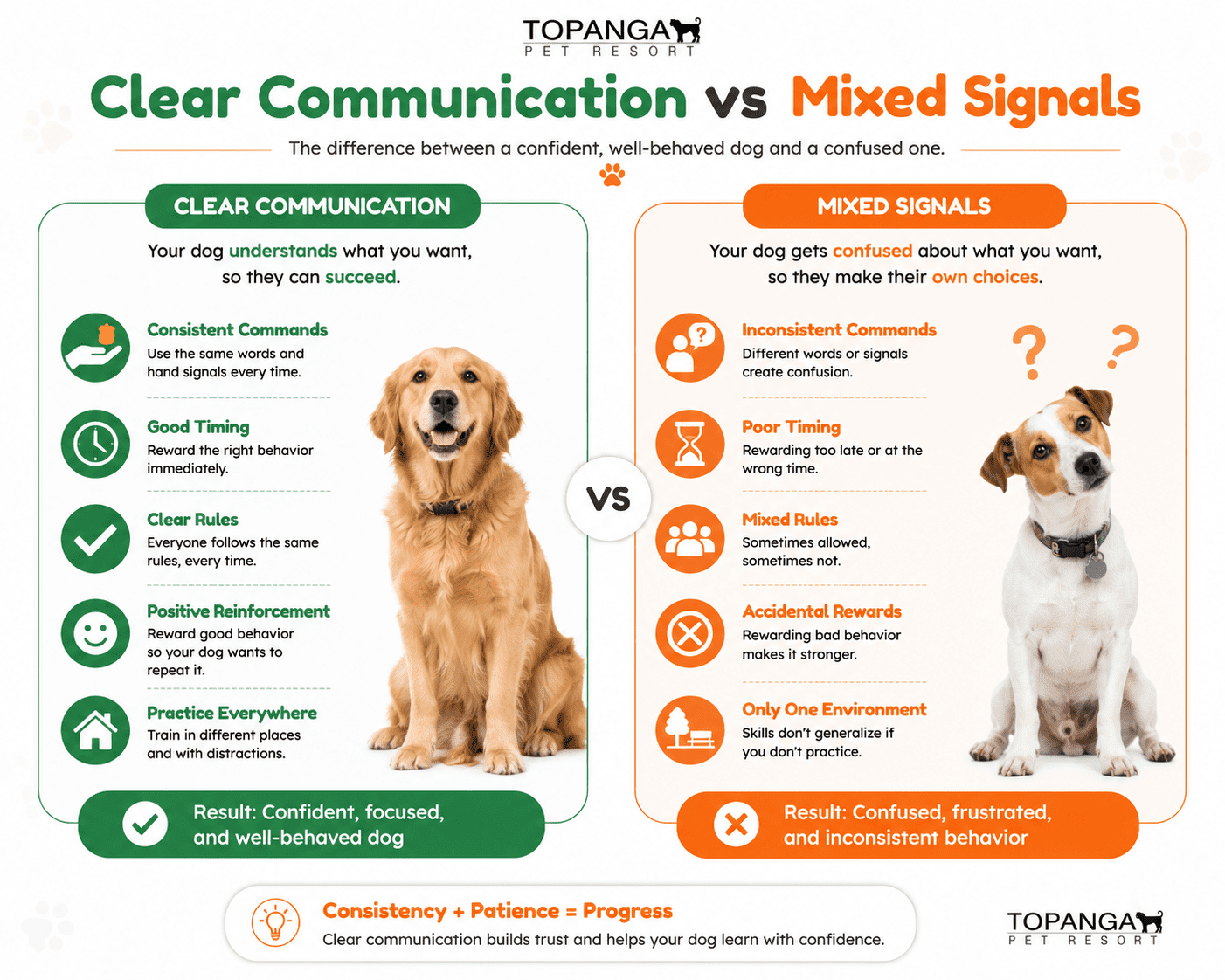
- Inconsistent commands
- Training sessions that are too long
- Lack of repetition
- Poor timing with rewards
- Family members using different rules
- Unrealistic expectations
- Anxiety or overstimulation
- Physical exercise imbalance
- Training only in one environment
- Punishment-based methods causing fear or confusion
Dogs learn through consistency and repetition. When either of those disappears, behavior becomes unreliable.
Is Your Dog Actually Stubborn Or Just Confused
Many people describe their dog as stubborn when the real issue is communication.
Dogs do not naturally understand human expectations. They learn patterns through repetition, rewards, timing, and environment.
For example:
- Saying “down” sometimes means lie down, but other times means get off furniture
- Rewarding jumping occasionally but correcting it other times
- Allowing pulling during walks when in a hurry
- Repeating commands multiple times until the dog tunes them out
That inconsistency creates uncertainty.
A confused dog often looks stubborn because they stop responding confidently.
At Topanga Pet Resort, we spend a lot of time helping owners simplify communication. Once dogs clearly understand what behavior earns rewards, progress becomes much faster.
What Usually Goes Wrong During Dog Training
Most training fails dog owners experience come from a few repeated mistakes.
Training Sessions Are Too Long
Dogs learn best in short, focused sessions.
If you train for 45 minutes straight, your dog will mentally check out long before the session ends.
A better structure is:
|
Training Stage |
Ideal Duration |
|
Puppies |
3 to 5 minutes |
|
Young dogs |
5 to 10 minutes |
|
Adult dogs |
10 to 15 minutes |
Multiple short sessions throughout the day work far better than one long session.
You Only Train At Home
Dogs do not automatically transfer skills into new environments.
A dog that sits perfectly in your kitchen may completely ignore you at the park.
That is normal.
Dogs need gradual exposure to:
- Different environments
- New sounds
- Distractions
- People
- Other dogs
This is one reason structured social environments matter so much.
At Topanga Pet Resort, dogs benefit from supervised playtime in large outdoor exercise areas, helping them learn focus and confidence around real-world distractions instead of isolated training setups.
You Accidentally Reward Bad Behavior
Dogs repeat behaviors that get results.
Common accidental rewards include:
- Giving attention when barking
- Letting dogs pull and eventually reach what they want
- Picking dogs up when they panic
- Offering treats after unwanted behavior instead of before calm behavior
Timing matters more than most owners realize.
Your Dog Is Understimulated
An under-exercised dog struggles to focus.
Mental and physical enrichment directly impact training success.
Dogs that spend all day indoors without proper stimulation often develop:
- Excessive barking
- Hyperactivity
- Destructive chewing
- Poor impulse control
- Difficulty focusing
This is why structured activity matters.
Dogs staying at Topanga Pet Resort enjoy 5 to 6 hours of supervised playtime daily, which helps balance energy levels and improves responsiveness during training sessions.
Why Dogs Regress In Training
Dog regressed training issues are extremely common.
Regression does not mean failure. It usually means something changed.
Common reasons include:
Adolescence
Teenage dogs often “forget” commands between 6 and 18 months.
Hormonal changes, confidence shifts, and distraction sensitivity all increase during this phase.
This is one of the biggest reasons owners feel stuck dog training adolescent dogs.
The key is consistency, not restarting from zero.
Lack Of Reinforcement
Behaviors weaken when they stop being reinforced.
Even well-trained dogs need ongoing practice.
Think of training like maintaining fitness. If you stop completely, performance drops over time.
Environmental Changes
Dogs are sensitive to changes like:
- Moving homes
- New pets
- New babies
- Schedule changes
- Boarding experiences
- Loud environments
- Stress within the household
Behavior shifts often reflect emotional stress rather than disobedience.
Negative Training Experiences
Harsh corrections or punishment-based methods can reduce confidence and damage trust.
Dogs may become hesitant, anxious, or avoidant during training.
That slows learning dramatically.
How Can You Fix Dog Training That Is Not Working
The first step is simplifying your expectations and rebuilding consistency.
Go Back To Basics
Even advanced dogs benefit from revisiting fundamentals.
Focus on:
- Sit
- Stay
- Recall
- Loose leash walking
- Place command
- Eye contact
Build reliability again before layering difficulty.
Reward More Often
Many owners phase out rewards too quickly.
Early consistency matters more than reducing treats.
Rewards can include:
- Food
- Praise
- Toys
- Play
- Affection
- Access to activities
The reward simply needs to matter to your dog.
Train In Different Locations
Dogs need proofing.
Practice commands in:
- Your backyard
- Front yard
- Sidewalks
- Parks
- Pet-friendly stores
- Around distractions
Start easy and gradually increase difficulty.
Focus On Calmness
Many dogs struggle because they never learn emotional regulation.
Training is not only about obedience. It is also about teaching calm behavior.
Structured downtime matters just as much as activity.
How Long Does It Take To Fix Training Problems
That depends on:
- Your dog’s age
- Consistency
- Breed tendencies
- Energy levels
- Previous training history
- Emotional state
- Frequency of practice
Some dogs improve within days once communication becomes clearer.
Others may need several months of consistent work.
What matters most is avoiding the cycle of:
- Overtraining
- Getting frustrated
- Stopping completely
- Restarting inconsistently
Steady repetition almost always beats intensity.
Should You Use Professional Dog Training Help
If you feel overwhelmed, frustrated, or stuck, professional guidance can save enormous amounts of time and stress.
Many owners wait too long before asking for help.
Professional trainers can identify problems owners often miss, including:
- Timing issues
- Body language confusion
- Reinforcement mistakes
- Anxiety signals
- Environmental triggers
At Topanga Pet Resort, our certified trainers work with dogs across a wide range of behavioral challenges. Because dogs spend time in both structured training and supervised social environments, we can observe behavior patterns in real-world situations instead of only isolated sessions.
That gives us a much clearer understanding of what is actually causing the issue.
What Makes Consistent Structure So Important
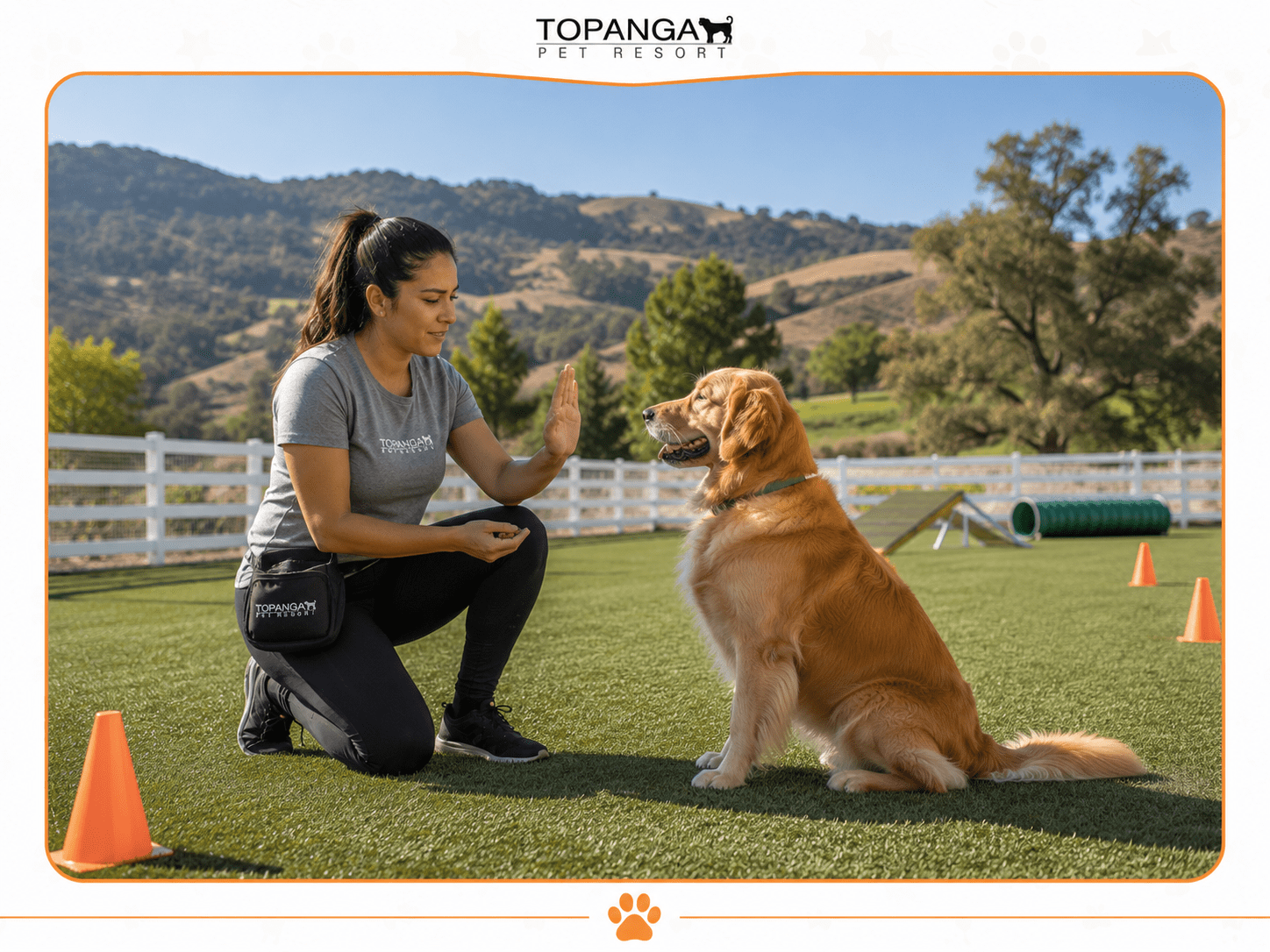
Dogs thrive when life feels predictable.
A stable routine improves:
- Confidence
- Focus
- Emotional regulation
- Sleep quality
- Responsiveness
- Social behavior
That includes consistency with:
|
Area |
Why It Matters |
|
Feeding schedule |
Supports emotional stability |
|
Exercise |
Reduces excess energy |
|
Sleep |
Prevents overstimulation |
|
Commands |
Builds clarity |
|
Rewards |
Reinforces learning |
|
Boundaries |
Prevents confusion |
At Topanga Pet Resort, dogs benefit from a highly structured environment that balances exercise, rest, socialization, enrichment, and training support. Our large indoor and outdoor runs with peaceful country views help reduce stress while creating a calmer learning environment.
Are Some Dogs Harder To Train Than Others
Yes, but harder does not mean impossible.
Some breeds are naturally:
- More independent
- More energetic
- More sensitive
- More distracted
- More stubborn
- More anxious
Personality also matters just as much as breed.
A highly intelligent dog can actually become harder to train if they are under-stimulated mentally.
What matters most is adapting the training style to the individual dog.
That includes:
- Motivation style
- Attention span
- Energy level
- Emotional sensitivity
- Social confidence
Why Socialization Affects Training Success
Dogs that lack proper socialization often struggle with focus and emotional control.
Socialization is not just meeting other dogs.
It also means positive exposure to:
- Sounds
- Surfaces
- Environments
- Handling
- New people
- Controlled activity
Poor socialization often leads to:
- Reactivity
- Fearfulness
- Anxiety
- Hyperfocus
- Poor recall
Structured supervised play can dramatically improve confidence and adaptability.
This is one reason many dogs thrive during extended stays at Topanga Pet Resort. Daily supervised interaction and exercise help dogs build healthier behavioral patterns while learning how to remain calm and responsive around distractions.
What Training Methods Usually Work Best
Modern reward-based training consistently produces the best long-term outcomes for most dogs.
That does not mean permissive training.
Dogs still need:
- Boundaries
- Structure
- Consistency
- Guidance
But fear-based corrections often suppress behavior temporarily rather than truly teaching better behavior.
Reward-based systems help dogs:
- Learn faster
- Build confidence
- Stay engaged
- Trust handlers
- Retain behaviors longer
The best training creates clarity, not fear.
What Should You Do If Your Dog Completely Stops Listening
First, avoid assuming your dog is trying to challenge you.
Instead:
- Reduce distractions
- Return to simple commands
- Increase rewards temporarily
- Keep sessions short
- Stay emotionally neutral
- Rebuild consistency
- Rule out health issues if behavior changed suddenly
If behavior changes appear extreme or sudden, veterinary evaluation is important. Pain, discomfort, hearing loss, or anxiety can directly impact responsiveness.
Why Environment Changes Everything In Dog Training
Dogs do not learn in a vacuum.
The environment directly affects:
- Stress
- attention
- emotional regulation
- focus
- impulse control
A chaotic environment makes learning much harder.
That is why calm, structured spaces matter so much during training and boarding.
At Topanga Pet Resort, we designed our indoor and outdoor areas to support healthy stimulation without overwhelming dogs. Spacious exercise areas, supervised activity, quality nutrition, and balanced routines all contribute to better behavioral outcomes.
Premium food and consistent care also play an important role in energy stability and overall well-being, both of which affect training responsiveness.
How Can You Tell If Training Is Actually Improving
Progress is not always linear.
Good signs include:
- Faster recovery after distractions
- Improved eye contact
- Reduced reaction intensity
- Better focus duration
- Faster response times
- Increased calmness
- More consistency in new places
Even small improvements matter.
Most successful training journeys happen gradually.
Why Owners Often Feel Stuck With Dog Training
Many people expect progress to happen faster than it realistically does.
Social media often creates unrealistic expectations.
You see polished clips of perfectly trained dogs without seeing:
- The repetition
- The setbacks
- The months of practice
- The structured routines
Real training is messy sometimes.
What matters is staying consistent long enough for the dog to understand what is expected.
That is where support, structure, and professional guidance make a huge difference.
Ready To Rebuild Better Training Habits
If your dog training is not working, you do not need to give up or start over completely.
Most training problems come down to clarity, consistency, environment, and emotional balance.
With the right structure, most dogs can improve dramatically.
At Topanga Pet Resort, we combine experienced trainers, supervised socialization, structured exercise, and supportive care to help dogs build confidence and stronger behavior patterns in real-world environments.
Whether your dog has regressed in training, struggles with focus, or simply needs more structured guidance, our team is here to help.
Contact Topanga Pet Resort today to learn more about our training support, boarding environment, and personalized care programs.
Frequently Asked Questions
Why Is My Dog Suddenly Ignoring Commands
Dogs often stop responding because of distractions, inconsistent reinforcement, adolescence, stress, or environmental changes. Sudden behavior changes can also indicate health issues.
Can Dogs Forget Training Completely
Dogs rarely forget entirely, but behaviors weaken without practice and reinforcement. Most skills can be rebuilt faster the second time around.
How Long Should Dog Training Sessions Be
Short sessions usually work best. Most dogs learn more effectively with 5 to 15 minute sessions repeated consistently throughout the day.
Why Does My Dog Listen At Home But Not Outside
Dogs need gradual exposure to distractions. Commands learned indoors are not automatically generalized to parks, sidewalks, or busy environments.
What Causes Dog Training Regression
Regression often happens during adolescence, after routine changes, inconsistent practice, stressful experiences, or long periods without reinforcement.
Should I Punish My Dog For Not Listening
Punishment often creates confusion or anxiety. Reward-based methods with consistent boundaries generally create stronger long-term results.
Is Professional Dog Training Worth It
Professional training can dramatically speed up progress, especially when owners feel stuck dog training difficult behaviors or dealing with regression.
Does Exercise Affect Dog Training Success
Yes. Dogs with balanced physical and mental stimulation usually focus better and learn faster than under-stimulated dogs.
Can Boarding Help With Training
Structured boarding environments with supervised activity, socialization, and consistent routines can help improve confidence, emotional balance, and responsiveness.
What Age Is Hardest To Train A Dog
Adolescence is often the most challenging phase. Many dogs test boundaries and become more distracted between 6 and 18 months old.





