
By Topanga Pet Resort Editorial Team · Updated 2026-09-07
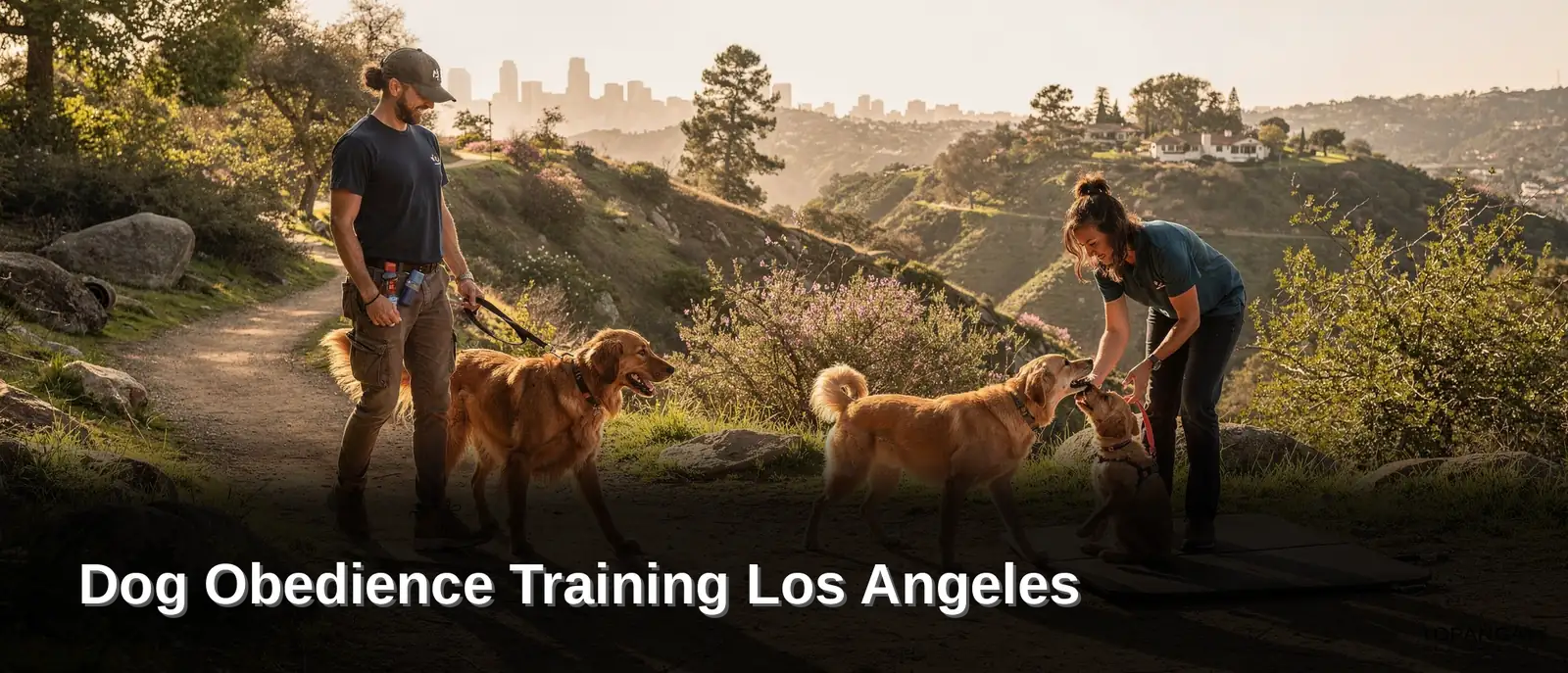
A dog that pulls on leash, barks at every delivery driver, or won’t settle when guests arrive isn’t a “bad dog” — it’s a dog that hasn’t been taught what to do instead. Effective dog obedience training in [Los Angeles](https://topangapetresort.com/?p=7260) combines certified expertise with structured, real-world practice, not just a handful of tricks. At Topanga Pet Resort, six certified trainers bring over 50 years of combined experience to programs in basic obedience, family manners, and advanced behavioral work, backed by 5–6 hours of daily supervised outdoor exercise. Good behavior sticks — at home, on the sidewalk, and everywhere in between.
Key Takeaways
- Topanga Pet Resort’s 6 certified trainers bring 50+ years of combined experience to every obedience program.
- Our proven methods empower owners and dogs to build strong, lasting bonds through effective training — not just short-term compliance.
- 563 happy clients trust Topanga Pet Resort for professional dog obedience training and behavioral results.
- Contact us at +1 888-818-1622 to transform your dog’s obedience and strengthen your communication.
Why Do Los Angeles Dogs Need Obedience Training?
Busy Los Angeles households create daily friction points that untrained dogs simply aren’t equipped to navigate. Leash pulling on crowded sidewalks, barking at delivery drivers, jumping on guests, and destructive chewing rank among the most common behavioral challenges local owners report. Dog obedience training Los Angeles programs tackle these issues head-on, giving dogs of any breed, size, or age the structure they need to succeed alongside their owners. Lasting obedience grows from a strong bond between dog and handler — not from one-off corrections after the fact.
Beyond everyday nuisances, many Los Angeles owners are dealing with something harder: aggression, reactivity toward other dogs, or separation anxiety. These show up often in consultations, especially in dense neighborhoods where dogs face constant stimulation from people, traffic, and other animals. Left alone, these issues rarely resolve on their own — they tend to get more entrenched, not less.
What household behaviors does family obedience training fix?
Family-focused programs target the friction points that disrupt daily life at home:
- Jumping on kids and visiting guests
- Excitement or pushiness around mealtime
- Squabbles between resident pets
A customized family training plan helps each dog settle into the household as a calmer, more predictable presence — instead of the family adapting around the dog’s behavior.
Can obedience training work in a busy Los Angeles home?
Yes. Structured training gives dogs the tools to stay calm and reliable even when a household is loud, crowded, or unpredictable. Consistency matters far more than square footage — a small apartment with a clear routine will out-train a big backyard with no structure.
Owners weighing their options should start by asking what their dog struggles with most:
- Leash pulling, jumping, or excessive barking
- Aggression or reactivity toward people and other dogs
- Separation anxiety when left alone
- Poor manners around children, guests, or mealtime
Matching the training approach to the specific behavior produces faster, more durable results than a generic, one-size-fits-all program.

What Core Skills Should Obedience Training Include?
Strong obedience programs build five foundational skills: leash manners, sit and stay commands, reliable recall, crate comfort, and impulse control around distractions. Los Angeles dogs face constant stimulation, from crowded sidewalks in Santa Monica to off-leash parks near Griffith Park, so these basics carry real weight. A dog that ignores a recall command near busy foot traffic risks far more than an owner’s frustration — it risks a dangerous street crossing or a lost pet in unfamiliar territory.
Dog obedience training Los Angeles programs succeed when they focus less on rote commands and more on communication. Trainers who build a genuine feedback loop between owner and dog create commands that hold up outside the training yard, not just during a quiet backyard session.
What age should a dog start obedience training?
Puppies benefit from structured learning as early as 8 weeks old, well before formal obedience work begins. Early sessions target housebreaking and bite inhibition rather than complex commands, since young puppies absorb social and behavioral patterns fastest during this window. Skipping this stage often means retraining later, which takes longer and demands more patience from the household.
Does physical activity support obedience learning?
Yes. Agility-based exercises reinforce core obedience skills by pairing physical challenges with mental focus. Structured courses build responsiveness and concentration, turning a dog’s excess energy into an asset rather than a liability during training sessions.
A well-rounded curriculum typically layers these elements together:
- Leash walking and loose-leash control in populated environments
- Sit, stay, and down commands with distraction proofing
- Recall training reinforced across varied settings
- Puppy-stage housebreaking and bite inhibition work
- Agility drills that sharpen focus and physical responsiveness
Each skill reinforces the next, creating a dog that responds reliably at home and throughout Los Angeles’s busy neighborhoods.

How Does Board And Train Compare To Day Training?
Day training and full boarding-and-train solve different scheduling problems for Los Angeles dog owners, and picking the right one comes down to your routine as much as your dog’s needs.
- Day training suits owners who can drop off a dog once or twice weekly for professional instruction, socialization, and structured outings, then bring the dog home each evening.
- Board and train removes the back-and-forth entirely, placing the dog in continuous supervision and structured routine around the clock rather than during scattered weekly sessions.
Both formats build Dog Obedience Training Los Angeles results on the same foundation: strengthening how owner and dog communicate. Our trainers focus on methods that are easy for owners to repeat at home, so progress made during sessions doesn’t fade once the leash changes hands. That owner-dog communication piece matters no matter which format a family chooses — a trained dog only stays trained if the household reinforces the same cues.
Which Format Fits A Busy Los Angeles Household?
Owners juggling work commutes and school pickups often lean toward day training, since it slots into an existing weekly rhythm. Households needing faster behavioral change — or owners traveling for work — typically benefit more from a boarding stay, where structure never pauses.
| Feature | Day Training | Board & Train |
|---|---|---|
| Schedule | 1–2 visits weekly | Continuous, multi-day stay |
| Supervision | Session hours only | Around-the-clock |
| Home life | Dog returns nightly | Dog stays on-site |
| Added services | Training-focused | Grooming and bath services available |
Families choosing a boarding stay also gain access to grooming and bath services, keeping a dog clean and comfortable throughout an extended training program without a separate appointment.
Which Obedience Program Fits Your Dog’s Needs?
Five distinct paths cover most behavioral goals for Los Angeles dog owners, from a new puppy’s first weeks to advanced physical conditioning. Dog Obedience Training Los Angeles programs work best when matched to a dog’s age, temperament, and household role rather than forced into a one-size-fits-all curriculum. Skipping that match wastes months of effort and leaves problem behaviors unresolved.
Puppy programs target the critical early development window, when housebreaking and bite inhibition form lasting patterns — waiting past this stage makes the same lessons harder to teach later. Family-focused training addresses a different set of pressures: safe interactions with children, better manners around guests, and calm coexistence among multiple dogs in one home. These skills matter daily, not just during formal sessions.
What if my dog struggles with reactivity or aggression?
Reactive dogs benefit most from root-cause behavioral work rather than repetitive drills built on treats or fear. Los Angeles trainers increasingly favor this approach because it addresses the trigger behind the reaction, not just the symptom. Dogs that graduate this style of training tend to hold their progress in real-world settings, including crowded sidewalks and busy dog parks.
Are there programs beyond basic obedience?
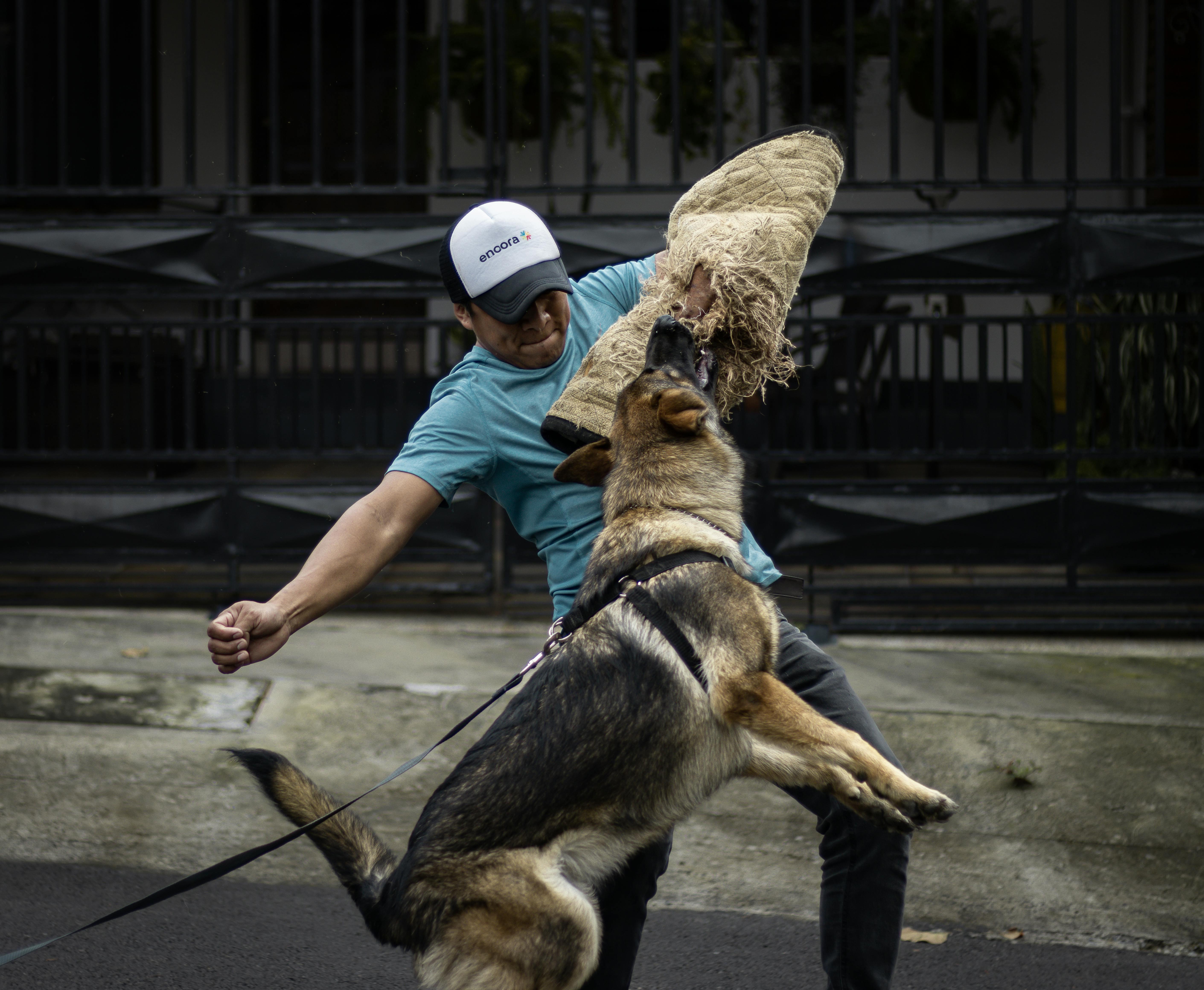
Two specialized tracks extend past standard commands:
- Service [dog training](https://topangapetresort.com/protection-dog-training/) delivers task-based instruction for people with disabilities, covering mobility support and related assistance work.
- Agility and sports training suits high-energy dogs, building fitness, coordination, and confidence while reinforcing obedience through structured movement.
| Program | Best For |
|---|---|
| Puppy Training | Housebreaking, bite inhibition, early habits |
| Family Dog Training | Kids, guests, multi-dog households |
| Reactivity/Aggression | Root-cause behavioral cases |
| Service Dog Training | Disability-related task work |
| Agility & Sports | Active dogs needing structured outlets |
How Do You Choose A Qualified LA Trainer?
Qualified trainers demonstrate real credentials, measurable experience, and a philosophy built around lasting results rather than temporary fixes. Los Angeles pet owners face a crowded market of trainers claiming expertise, so verifying track record matters before committing a dog’s routine to anyone’s hands. Credentials separate hobbyists from professionals capable of handling Dog Obedience Training Los Angeles families can rely on long after the sessions end.
Experience level offers the clearest signal of competence. Topanga Pet Resort’s training team brings over 50 years of combined experience to obedience work, spanning countless breeds, temperaments, and behavioral challenges found throughout the region’s neighborhoods. That depth means fewer surprises and faster problem diagnosis when a dog struggles with leash reactivity, jumping, or command consistency.
What certifications should a Los Angeles dog trainer hold?
Certification confirms a trainer studied recognized methods rather than relying on guesswork. Topanga Pet Resort employs six certified trainers, each dedicated to building individualized obedience programs tailored to a dog’s age, breed, and household needs. Owners should ask prospective trainers directly about certification credentials before enrolling.
Does a good trainer teach the owner too?
Yes — sustained obedience depends on the owner learning alongside the dog. Trainers who hand back a “finished” dog without teaching the household how to maintain commands set families up for regression. The stronger approach empowers owners with lifelong skills and reinforces lasting bonds between dog and handler, not just short-term compliance.
Reputation built over time also signals reliability. Topanga Pet Resort has served 563 happy clients across the Greater Los Angeles Area, a track record that reflects consistent outcomes rather than isolated success stories. Owners weighing a training investment should prioritize trainers who combine credentials, communication skills, and a documented history with Los Angeles dogs.
Ready To Start Training?
Frequently Asked Questions
Who provides the dog obedience training at Topanga Pet Resort?
Six certified trainers with 50+ years of combined experience deliver Topanga Pet Resort’s obedience programs, covering basic obedience, family manners, and advanced behavioral work for dogs of any breed, size, or age.
What core skills do obedience programs at Topanga Pet Resort teach?
Programs build leash manners, sit and stay commands, reliable recall, crate comfort, and impulse control around distractions, paired with 5–6 hours of daily supervised outdoor exercise for lasting behavior.
What household behaviors does family obedience training address?
Family-focused programs correct jumping on kids and guests, excitement around mealtime, and squabbles between resident pets, helping each dog become a calmer, more predictable presence at home.
Conclusion
In closing, effective dog obedience training in Los Angeles requires more than instruction—it demands experienced professionals, a structured environment, and genuine commitment to each dog’s individual needs. Topanga Pet Resort combines certified expertise with comprehensive care, integrating training, boarding, and wellness services within a supportive setting designed for measurable behavioral progress. Whether your dog needs foundational skills or advanced behavioral work, partnering with seasoned trainers who understand canine development ensures lasting results that strengthen the bond between you and your companion.
Conclusion
In closing, effective obedience training rests on structured methodology, experienced guidance, and an environment where dogs feel secure enough to learn. Our certified trainers bring decades of combined expertise to every program, translating that knowledge into measurable, lasting results for Los Angeles-area families. Whether the goal is foundational manners or more advanced behavioral work, we design each engagement around the individual dog’s temperament and needs. Paired with attentive boarding, grooming, and bath services, our approach reflects a comprehensive commitment to canine well-being, giving owners confidence that their dogs are growing into calmer, more capable companions at home and in public.
If your dog is pulling on leash, barking at every knock, or struggling to settle around guests, you don’t have to figure it out alone. Our certified trainers will build a plan around your dog’s age, temperament, and your household’s routine — whether that’s day training, a full board-and-train stay, or a family manners program. Call us at +1 888-818-1622 or reach out at [email protected] to talk through what your dog needs and get started.
