
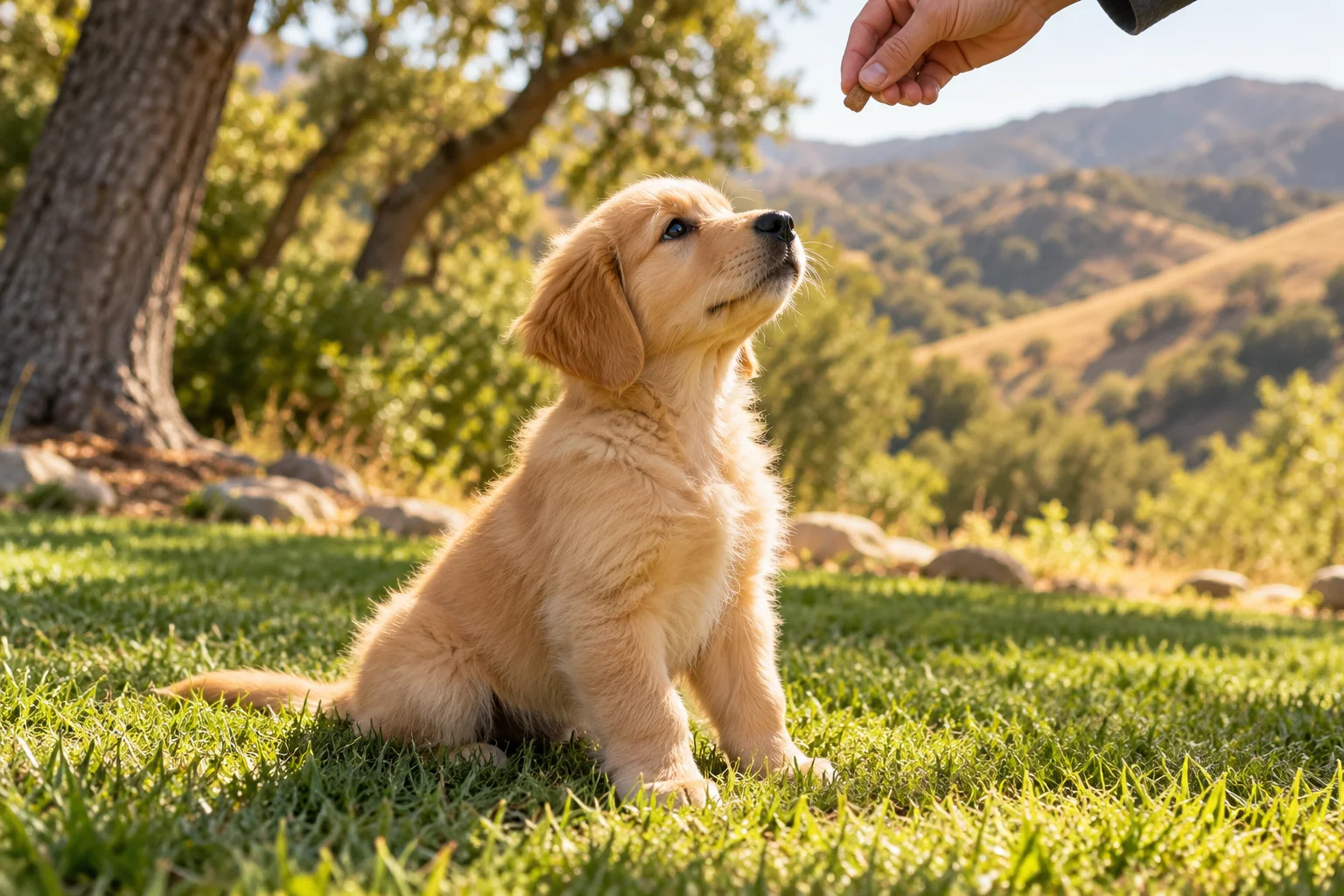
A puppy that comes home at eight weeks can hold it for about two hours, and less once it’s awake and playing. That’s why learning how to potty train a puppy comes down to a routine you repeat daily, not a trick you teach once.
At Topanga Pet Resort, our puppy training program covers housebreaking for puppies from 8 weeks to 6 months. This guide gives you the daily routine, a schedule by age, and a realistic timeline, so you can start tonight.
Key Takeaways
- A puppy can usually hold it for about as many hours as its age in months, so a two-month-old needs a break every two hours.
- Repeat one routine daily: out first thing, after naps, meals, and play, and last thing at night.
- Reward your puppy the moment it finishes outside, and skip the scolding after accidents.
- Reliable habits take anywhere from days to several months, depending on age and consistency.
On This Page
- How to Potty Train a Puppy, Step by Step
- Puppy Potty Training Schedule by Age
- How Long Does It Take to Potty Train a Puppy?
- Frequently Asked Questions About Puppy Potty Training
- Get Help Potty Training Your Puppy in Topanga Canyon
How to Potty Train a Puppy, Step by Step
House training a puppy means teaching it to go in one chosen spot and hold it everywhere else. Mismatched rules between family members are one of the most common puppy training mistakes, so agree on the routine first.
- Choose one outdoor potty spot and walk your puppy there on a leash every time.
- Take your puppy out first thing, last thing at night, and after naps, meals, drinks, and play.
- Say a short cue like “go potty” as your puppy starts, then reward with praise and a small treat the moment it finishes.
- Supervise indoors. If you use a crate, size it so your puppy can stand, turn, and lie down, but no more.
- Watch for sniffing, circling, whining, or suddenly stopping play, and head outside right away.
- After an accident, skip the scolding. Clean with an enzymatic cleaner so the smell doesn’t draw your puppy back.
Reward-based training is what the American Veterinary Society of Animal Behavior recommends for all dog training, so keep treats small and the mood upbeat.
Until the vaccine series is finished, usually at 16 weeks or older, the American Veterinary Medical Association advises caution around places where dogs gather, so ask your vet which outdoor spots are safe.
Puppy Potty Training Schedule by Age
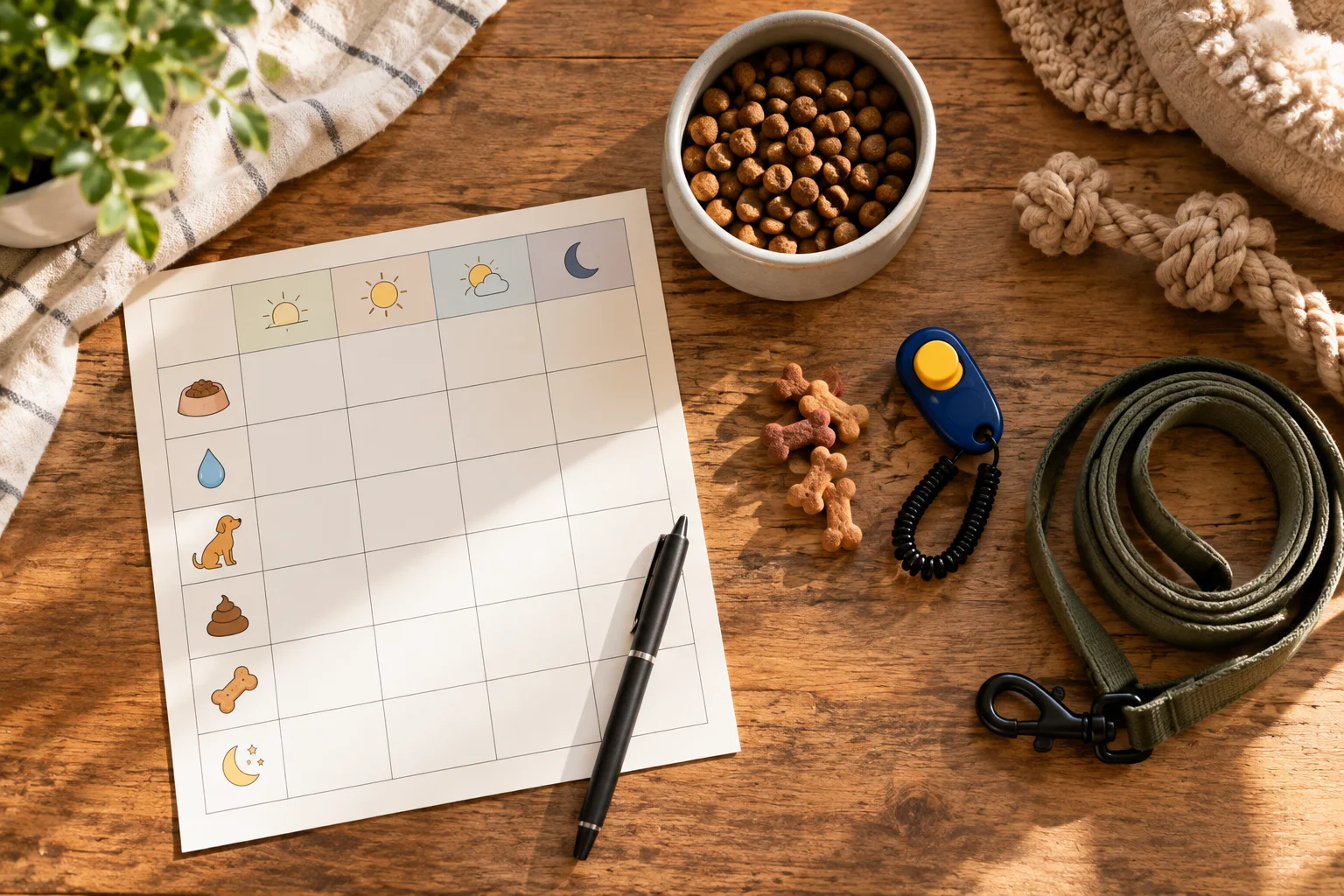
The American Kennel Club’s potty training guide gives a common rule of thumb: puppies can hold their bladder for about as many hours as their age in months, up to roughly 9 months to a year. Treat those numbers as a ceiling. Young, active puppies often need a break every one to two hours.
| Puppy Age | Longest Gap Between Breaks |
| 8 weeks | About 2 hours |
| 3 months | About 3 hours |
| 4 months | About 4 hours |
| 6 months | About 6 hours |
A sample day for a three-month-old: out at wake-up, breakfast, out again, outside after every nap and play session, a midday meal, dinner, and one last trip before bed. The pattern matters more than the clock.
How Long Does It Take to Potty Train a Puppy?
Plan on days at the fast end and several months at the slow end. Age, earlier routines, and consistency all change the timeline, and a five-month-old starts with better bladder control than an eight-week-old.
Accidents don’t mean the routine failed. If they continue anyway, book a vet visit before adding more training, because a medical problem can cause house soiling.
Starting early helps, and our guide on what age to start dog training explains why 8 weeks isn’t too young. Our puppy training program adds trainers to the routine, and we coach owners as well as dogs. Once the routine holds, the same consistency carries into basic obedience training for sit, stay, and leash manners.
Frequently Asked Questions About Puppy Potty Training
How Often Should I Take My Puppy Outside to Potty?
Very young puppies usually need a break every one to two hours while awake, plus right after waking, eating, drinking, chewing, and playing. That can add up to a dozen trips or more a day. As your puppy’s bladder control improves, the gaps stretch out.
Are Puppy Pads a Good Idea for Potty Training?
Puppy pads can help when you can’t get home often during the day, or when a very small dog faces harsh weather. The trade-off is that pads teach two places to go, which can slow the switch to outdoors. If you use them, plan to phase them out as your puppy matures.
Why Does a House-Trained Puppy Start Having Accidents Again?
The usual cause is too much freedom too soon. Expand your puppy’s access to the house gradually and keep supervising until the habit is firm. If accidents continue despite a consistent routine, see your vet, because persistent house soiling can signal a medical problem.
When Should I Get Professional Help to Potty Train My Puppy?
Check with your vet first if accidents continue despite a consistent routine. If your vet finds nothing, a trainer can fix gaps in the routine and coach the household. Our puppy program covers housebreaking from 8 weeks, and you can read about the trainers who work with puppies before you call.
Get Help Potty Training Your Puppy in Topanga Canyon
Set up the routine yourself with the steps above, or have a trainer build it with you. If a trip comes up mid-training, our guide on how to prepare a puppy for a boarding stay covers what to ask first. Boarding and training at Topanga Pet Resort require proof of rabies, DHPP, Bordetella, leptospirosis, and canine influenza vaccines, so ask how that applies to your puppy’s age.
Tell us about your puppy and your schedule, and we’ll come back with the right starting point. Prefer to talk? Call (888) 818-1622, Monday through Saturday during business hours. A one-hour First Training Session is where we assess your puppy and build a plan.


